Chiller components form the core of every cooling system used in commercial and industrial facilities. Each part plays a defined role. When one component fails, the entire system’s performance drops. Understanding how these parts work helps facility managers make better decisions about operation, inspection, and long-term reliability.
Understanding the Core Chiller Components
A standard chiller works on a simple refrigeration cycle. The process repeats continuously to remove heat from water and maintain stable temperatures.
The four primary chiller system components include:
- Compressor
- Evaporator
- Condenser
- Expansion valve
Each component handles a specific stage of the cooling cycle. Together, they maintain pressure balance and heat transfer efficiency.
Large commercial units also include controls, sensors, pumps, and safety systems. These are considered industrial chiller components and are designed for heavy-duty operation in demanding environments.
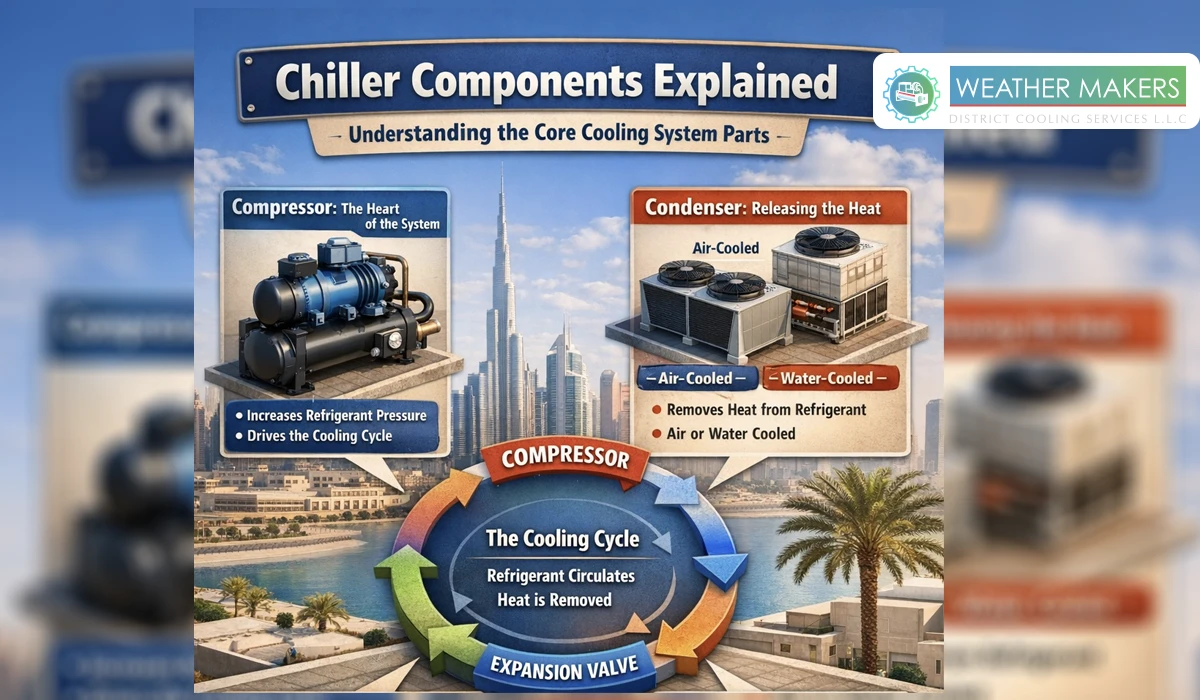
Compressor: The Heart of the System
The compressor is the driving force of a chiller. It moves refrigerant through the system. It increases refrigerant pressure and temperature before sending it to the condenser.
Common compressor types include:
- Scroll compressors
- Screw compressors
- Centrifugal compressors
- Reciprocating compressors
The selection depends on cooling load and system size.
Why the Compressor Matters
- Maintains refrigerant circulation
- Controls system pressure
- Directly affects energy efficiency
- Impacts the overall system lifespan
The system will stop operating if a compressor breaks down. The chiller repair process needs to be completed promptly because any delay will result in higher repair costs and longer equipment unavailability. Maintenance checks enable the identification of vibration problems and overheating issues, and oil quality defects before equipment fails.
Evaporator: Where Cooling Happens
The evaporator absorbs heat from water. This is where the actual cooling process takes place.
Inside the evaporator:
- Warm water flows through tubes.
- Refrigerant surrounds the tubes.
- Heat transfers from water to refrigerant.
- Water leaves at a lower temperature.
This cooled water then circulates to air handling units or process equipment.
Common Evaporator Concerns
- Tube fouling
- Scale formation
- Refrigerant leakage
- Reduced heat transfer
Poor water treatment leads to performance decline. Regular chiller maintenance prevents buildup and improves thermal efficiency.
Condenser: Releasing the Heat
The condenser removes heat from the refrigerant. It transfers this heat to air or water, depending on the system type.
There are two main types:
- Air-cooled condensers
- Water-cooled condensers
In air-cooled units, fans push air across condenser coils. In water-cooled systems, cooling towers assist heat rejection.
Key Performance Factors
- Clean condenser coils
- Proper airflow
- Stable water flow
- Correct refrigerant charge
Blocked airflow or scaling can increase pressure. High pressure reduces efficiency and increases power consumption. Many HVAC maintenance companies focus heavily on condenser cleaning because it directly impacts operational cost.
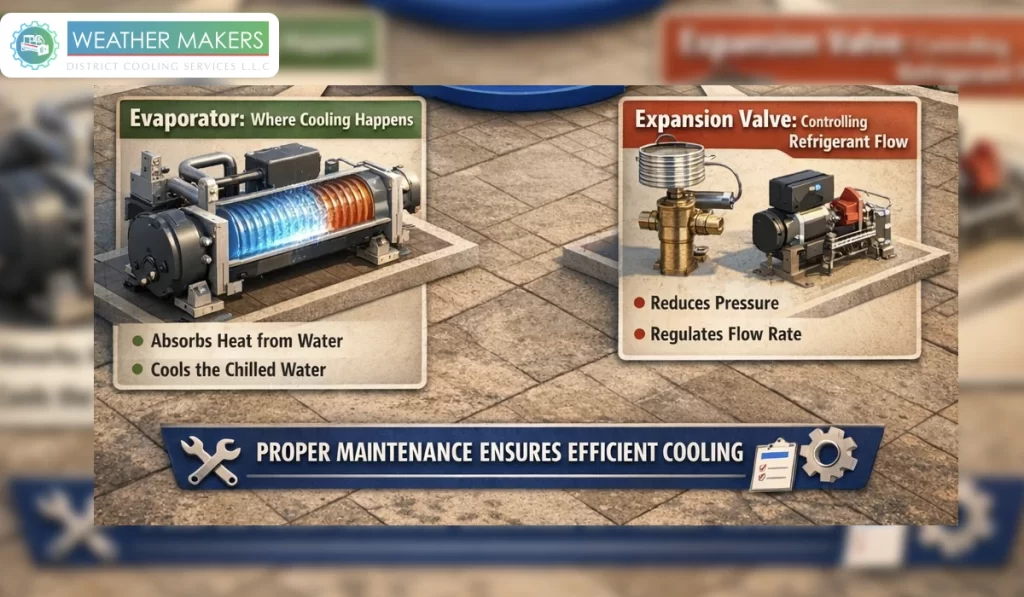
Expansion Valve: Controlling Refrigerant Flow
The expansion valve regulates refrigerant entering the evaporator. It reduces pressure and controls flow rate. This small component plays a critical role. If it malfunctions, the cooling balance is disturbed.
Common valve types include:
- Thermostatic expansion valves
- Electronic expansion valves
Signs of Expansion Valve Issues
- Inconsistent cooling
- Ice formation
- Low suction pressure
- Sudden performance fluctuation
Timely chiller service ensures proper calibration and stable refrigerant control.
How All Components Work Together
The cooling cycle follows a continuous sequence:
- The compressor pressurizes the refrigerant.
- The condenser releases heat.
- The expansion valve reduces pressure.
- The evaporator absorbs heat.
This loop continues without interruption.
When one part underperforms, the entire system suffers. That is why chiller maintenance services focus on system-wide diagnostics rather than isolated checks.
Understanding these components makes maintenance decisions more strategic.
Importance of Professional Maintenance
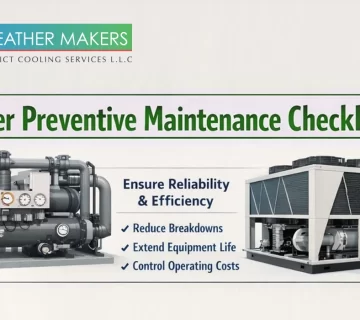
Complex cooling systems require technical expertise. Preventive inspections help identify wear before breakdown occurs.
A qualified chiller maintenance company typically performs:
- Pressure testing
- Oil analysis
- Refrigerant level checks
- Electrical inspection
- Tube cleaning
- Vibration monitoring
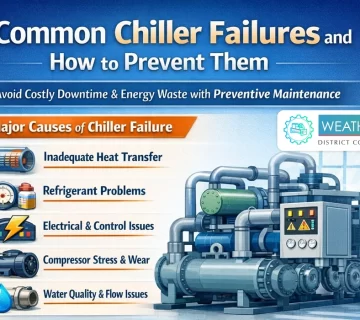
Neglecting maintenance increases the risk of sudden failure. Emergency chiller replacement is costly and disruptive.
Many facilities partner with chiller maintenance companies in uae that offer scheduled contracts. Planned servicing ensures consistent cooling and better budgeting.
Industrial Systems Require Specialized Attention
Large plants operate under continuous load. These systems include advanced controls and high-capacity compressors. When a breakdown occurs, expert industrial chiller system repair in Dubai becomes essential. Industrial setups demand precise diagnostics and fast response.
Professional chiller companies understand load variations, pressure balancing, and safety compliance. They use advanced tools to detect internal issues before visible damage occurs.
Warning Signs That Indicate Attention Is Needed
Facility managers should not ignore early symptoms.
Watch for:
- Unusual noise
- Rising energy bills
- Inconsistent cooling
- Oil leaks
- Frequent shutdowns
- High discharge pressure
Delaying inspection increases the need for major chiller repair.
Timely action protects major chiller system components and reduces long-term expense.
Best Practices for Long-Term Performance
To extend equipment life:
- Schedule routine inspections
- Clean condenser coils regularly
- Monitor refrigerant levels
- Check water quality
- Maintain proper airflow
- Keep electrical panels secure
Working with experienced chiller companies ensures structured maintenance planning. Professional chiller service contracts assist organizations in maintaining both warranty obligations and safety regulations. The systems achieve better performance through proper maintenance. Clean heat transfer surfaces reduce compressor workload.
Benefits of preventive care include:
- Lower electricity consumption
- Stable cooling output
- Fewer emergency breakdowns
- Extended equipment lifespan
- Improved safety
A structured maintenance program from a trusted chiller maintenance company protects capital investment and operational continuity.
Conclusion
The knowledge of chiller components enables facility owners to choose technical solutions that are accurate. The compressor circulates refrigerant through each component of the system. The evaporators function to extract thermal energy from their environment. The condensers function to emit thermal energy into their environment. The expansion valves function to control the distribution of fluids throughout the system. The system achieves consistent cooling operation through the specific function of each component.
The system ensures protection against failures through scheduled inspections and expert chiller servicing, and prompt chiller damage restoration. The organization benefits from service partnerships with skilled providers that deliver dependable performance across extended periods. The cooling systems achieve optimal performance because organizations implement maintenance activities before system problems occur.
Frequently Asked Questions
Why do the chiller components matter for system performance?
Chiller system components control pressure, heat transfer, and refrigerant flow. The cooling system becomes less effective when any component stops working.
How often should chiller maintenance services be scheduled?
Most systems require quarterly inspections, but critical facilities may need more frequent checks.
When should a facility consider chiller replacement instead of repair?
Replacement becomes necessary when repair expenses exceed acceptable levels, while equipment displays inefficient performance and operational outages occur frequently.


No comment