
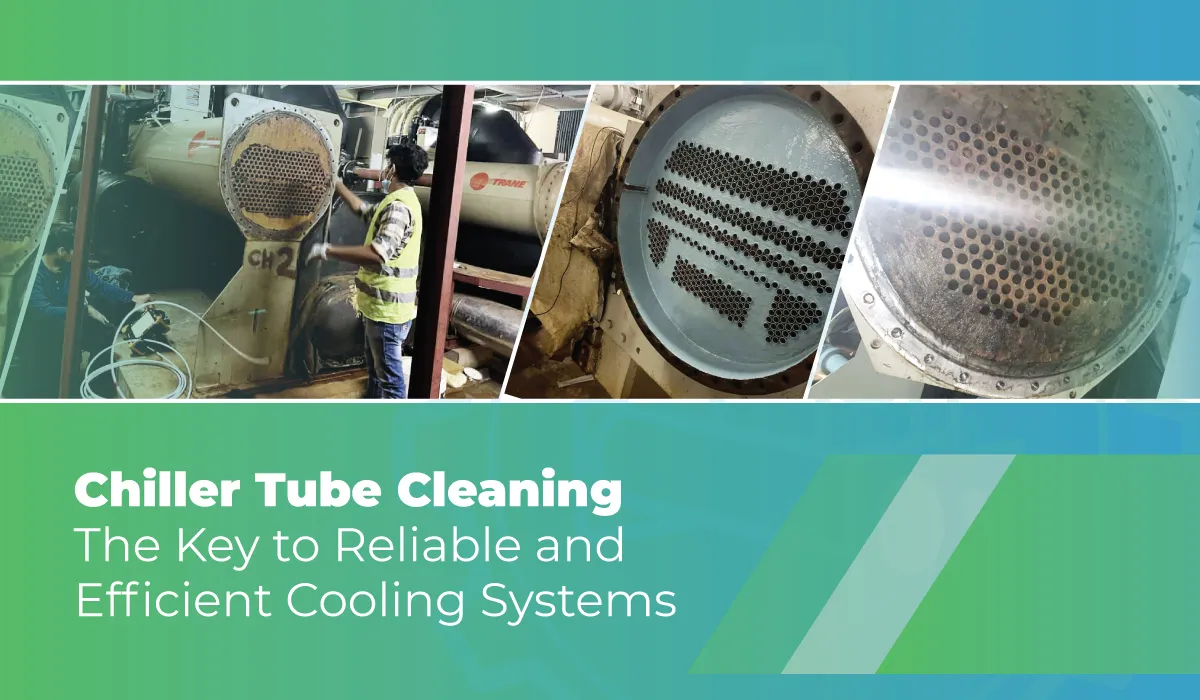
Chiller tube cleaning is among the most significant preventive maintenance tasks for ensuring cooling systems are in an effective and reliable working condition. Whether your plant has a small or large chiller, the way its tubes are maintained greatly affects system health. Just as veins in the human body transport blood, chiller tubes transport cooled and condenser water to transfer heat. When such channels are constricted, performance is reduced, energy consumption is increased, and repair expenditure rises. These problems can be easily averted by carrying out routine tube maintenance.
In extreme climatic conditions, where cooling systems run without break, chillers are required to operate non-stop. If the interior of the tubes continues to go without proper cleaning, the chiller will be unable to perform its job correctly. Even a small layer of buildup in the tubes can impair the heat exchange system and cause inefficient system performance that translates to increased energy operating costs. Because of this, chiller service company professionals emphasize the importance of scheduling regular tube cleaning as part of a preventive maintenance plan to prevent reduced system performance and costly upkeep.
The Importance of Cleaning Chiller Tubes
All chillers, regardless of size, operate in the same manner for heat transfer. The chilled water and condenser exchanges in the tubes while the system is cooling down the building from an indoor to outdoor heat exchange process. For the system to operate correctly, the tubes must be clear and unobstructed.
When impurities such as scale, sediment, and biological growth are present within the tubes, they accumulate into the fouling layer that hinders the process of heat transfer.
Fouling may seem small, but it packs a big punch. Just a thin layer inside your chiller tubes can steal efficiency, hike energy bills, and cut cooling power. The solution? Keep your tubes spotless and your system unstoppable.
Industry estimates fouling to lower heat transfer efficiency by as much as 15%, and by a further 10–20% in extreme circumstances because of permanent scale or iron buildup. It not only impacts performance but also contributes to energy cost and possible system downtime.
Understanding Fouling and Its Effects
Fouling is an inherent issue in any water-cooled chiller plant. Even when the water utilized is properly filtered or treated, natural impurities and minerals settle within the tubes over a period of time. During the design process, designers incorporate a small fouling factor to accommodate this. But once past the predicted level, the chiller begins to lose its intended efficiency.
As the thickness of the fouling layer increases, the system has to operate for a longer duration to provide the same amount of cooling. This additional stress degrades mechanical parts more quickly, makes more energy usage, and ultimately results in system failure. A clean chiller tends to work near its designed capacity, while a dirty chiller may use 10–30% more energy than required.
Manufacturer Recommendations
All manufacturers of chillers make annual cleaning of tubes for chillers an essential part of maintenance. Most high-efficiency centrifugal chiller operating manuals require shell-and-tube heat exchanger tubes to be cleaned yearly. Based on water quality and operating conditions, there are some systems that are required to be cleaned more often.
Avoiding this maintenance process may result in scale buildup, corrosion, and permanent damage to tube surfaces. Corrosion will weaken the metal and decrease the life of the chiller. Preventive cleaning prevents expensive repairs and ensures optimum heat transfer efficiency all year long.
How the Tube Cleaning Process Works
A large water-cooled chiller will potentially have hundreds or even thousands of tubes, which must be thoroughly cleaned in order to operate at peak efficiency. It is achieved through using high-technology rotary cleaning machinery, which cleans the interior of each tube while also cleaning out dislodged contaminants and debris.
A chiller service company typically uses high-performance, portable rotary tube cleaning units that ensure safety. Flexible shafts and the appropriate brushes for specific tube sizes and types are employed in the equipment. The brush rotates as water discharges loosened deposits. It provides a clean surface within the tube and allows for efficient heat transfer when the system comes back online.
For additional protection, corrosion inhibitors are also commonly applied by technicians during cleaning. The protective fluids prevent the formation of new deposits and biofilm, keeping the tube free for longer and its integrity for longer.
Advantages of Regular Chiller Tube Cleaning
Apart from making the chillers more energy efficient, regular tube cleaning of chillers has numerous advantages. Some of them include:
- Improved Heat Transfer: Clean tubes allow for more efficient heat transfer, maximizing cooling output.
- Less Energy Cost: An efficient system in clean condition uses less power to attain the desired cooling rates.
- Longer Equipment Life: Deposit removal prevents corrosion and scaling, extending the chiller’s life.
- Lower Maintenance Costs: Preventive cleaning provides a low risk of major breaks or surprise shutdowns.
- Glitch-Free Operations: Clean systems offer consistent performance and temperature stability throughout the building.
Selecting the Right Experts
Chiller maintenance needs trained professionals with mechanical system experience as well as cleaning techniques expertise. Hiring experienced HVAC maintenance companies means the job is completed with correct techniques, sanctioned tools, and protection.
Professional technicians examine tube conditions prior to and subsequent to cleaning, perform fouling factor tests, and verify that all tubes comply with necessary thermal performance requirements. They also supply maintenance reports and advice to assist in planning future servicing schedules optimally.
Environmental and Operational Benefits
Aside from performance and cost benefits, tube cleaning of chillers helps make the world a greener place. Energy-efficient chillers take less energy, and as such, there is less carbon footprint on building cooling processes. This aligns with future energy efficiency regulations and environmental sustainability objectives for commercial and industrial buildings.
Clean chillers also operate more quietly, with less vibration and mechanical stress, leading to a more level and comfortable area in buildings. Preventive maintenance not only safeguards the investment but also ensures law compliance for green building and energy management regulations.
Conclusion
Routine chiller tube cleaning is a crucial maintenance activity with direct system performance, reliability, and cost-effectiveness. By the absence of scale, sediment and fouling in the tubes, chillers can operate at peak efficiency capacity, using less power and providing stable cooling capacity.
Whether it’s a large-scale industrial cooling plant or a commercial HVAC system, partnering with a professional chiller service company for scheduled tube cleaning ensures your system operates smoothly all year round. Remember, cleaner tubes mean lower energy bills, fewer repairs, and longer equipment life, a simple step with significant long-term rewards.
Frequently Asked Questions
Why is chiller tube cleaning necessary?
It promotes effective heat transfer, prevents scaling and corrosion, and saves energy by allowing the chiller to operate at its intended capacity.
How frequently should I clean the tube on my chiller?
Yearly cleaning is the general recommendation by most professionals, though a firm that services chillers, based on water conditions and use, may recommend more regular cleaning.
Does tube cleaning of the chiller lengthen system lifespan?
Yes, tube cleaning eliminates toxic deposits and corrosion, making the equipment function optimally and last longer.