HVAC heat exchanger systems are the center of heating and cooling operations. Their simple purpose is to transfer heat from one medium to another effectively. However, if the heat exchanger isn’t clean or well-maintained, it cannot operate efficiently, leading to higher energy use, system stress and inferior performance. Cleaning and regular maintenance are thus imperative in order to enhance long-term reliability and safe operation.
Cleaning of a heat exchanger maintains maximum heat transfer performance at all times and lowers operating costs as well. It also prevents fouling and corrosion that lead to expensive breakdown or replacement in the future.
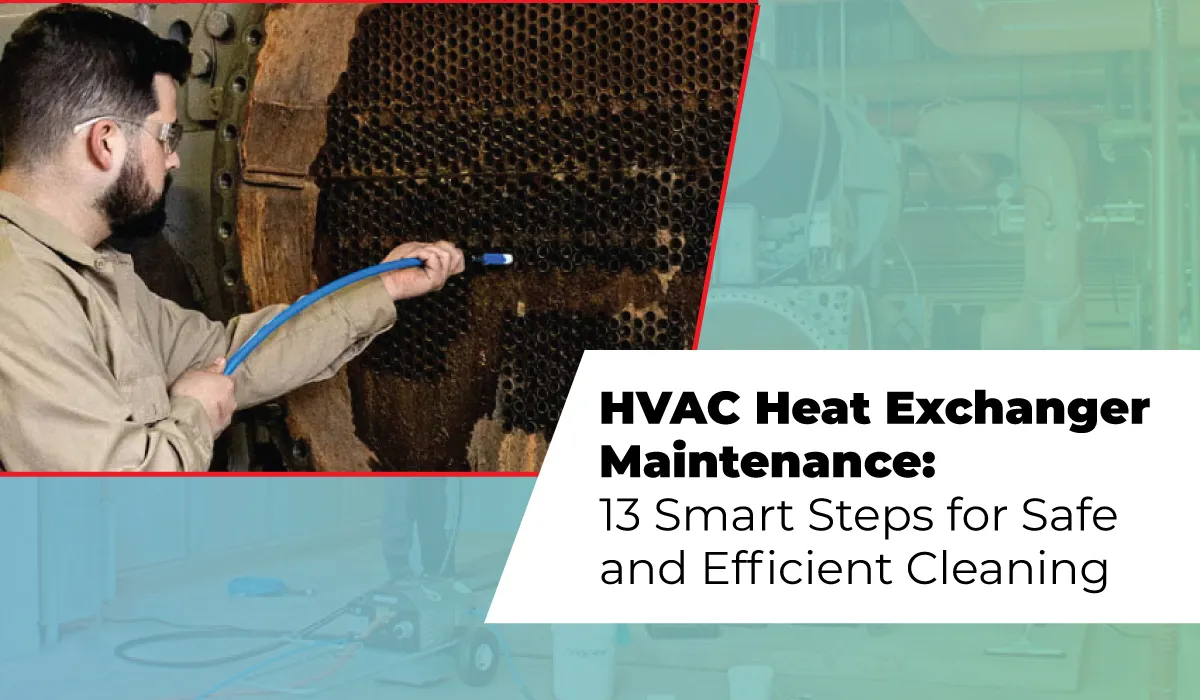
Cleaning becomes even more important where hard water or raw water is present. Depending on the type of heat exchanger of HVAC your system uses, cleaning can include mechanical tube cleaning techniques, such as rotary tube cleaners or projectile tube cleaning, or chemical cleaning techniques with descalers that can be safely and effectively applied.
Safety first: Safety should always come first while dealing with heat exchanger cleaning. Protective gear and precautions, as far as electrical and mechanical hazards, are required before attempting to perform any regular maintenance.
Identifying the Different Types of HVAC Heat Exchangers
Before you are able to provide a heat exchanger with the proper care, you need to figure out what type you have. There are various types, and they need various types of cleaning and care policies.
Some of the most popular types are:
- Tube and Shell: A Big shell that houses many tubes inside it. Very prevalent in Chillers, heavy industry, such as refineries, manufacturing plants, and chemical plants.
- Plate and Frame: Comprises layered metal plates with alternating flow directions for cold and hot fluids. Very common in HVAC, refrigeration, and food processing.
- Finned Tube: Fins are available on the outside surface of the tube to boost the surface area for heat transfer. Very common in air conditioning, refrigeration, and energy recovery systems.
Each HVAC heat exchanger type is utilized for a particular type of condition and fluid characteristics. Knowing your system type makes it easier to decide on the appropriate cleaning method — mechanical cleaning (projectile or rotary systems) or chemical cleaning (descalers).
13 Easy Steps to Clean Heat Exchangers Safely
The following is a convenient step-by-step guide for maintenance technicians and professionals on how to clean heat exchangers properly and safely with chemical cleaning agents.
1. Read the Manufacturer’s Instructions
Begin always by citing the manufacturer’s guidelines or user manual. The manuals contain generic guidelines on suggested cleaning procedures, chemical compatibility, and safety. A checklist drawn from such information brings consistency to cleaning operations and minimizes damage, such as cracked heat exchanger surfaces.
2. Use Protective Gear
You will want to have all your personal protective equipment (PPE) in place before commencing. These can be goggles, gloves, and masks. You might need extra protection depending on the cleaner solution or chemical you use — always read product labels.
3. Switch Off and Isolate the Unit
Tightly close the inlet and outlet valves and tag them so that they are not accidentally opened. Close the water supply and return line. Tagging any sources of electricity available for power and following the lockout procedure would also be required for safety in cleaning.
4. Visual Inspection
Visually inspect the HVAC heat exchanger for corrosion, cracking, fouling, or other obvious conditions. Monitor inlet and outlet temperatures for differences. Cracked or plugged tubes, when discovered, should be replaced before cleaning.
5. Drain All Fluids and Release Pressure
Vent pressure completely prior to unit service. Use a pressure relief valve to get a zero reading. Allows systems to cool completely to prevent burns or direct handling of hot fluid.
6. Circulation Hoses connect
If using a descaling system, connect the hoses as necessary — one to inject the cleaning solution in at the bottom and one to drain fluid back from the top. This configuration gives complete internal coverage and prevents air pockets or CO₂ bubbles.
7. Charge and Conduct a Hydrostatic Test
Fill with sanitary water for hydrostatic testing and system charging. Circulate the water to ensure that all valves close tightly. Drain off the quantity equal to the volume of the cleaning chemical you will introduce. Complete circulation guarantees total chemical contact and prevents spot cleaning.
8. Observation of Valves During Cleaning
Since the solution circulates, inspect isolation valves at regular intervals. Valve seating can change due to the movement of dissolved scale, and thus, monitoring prevents leaks or chemical loss.
9. Permit Adequate Cleaning Time
Allow the cleaning solution to act for the duration specified by the manufacturer. Do not hurry this; allowing adequate time enables the particulates and scale to dissolve properly.
10. Clean Properly
After that, slowly drain the chemical solution once cleaned. Flush the system with water until the output is clear. Reverse hoses, as well, to force out any remaining bits of debris or deposits that may have formed.
11. Check and Rebuild
Flush again later. Inspect the unit again. Replace gaskets as needed and secure fittings tightly so there are no leaks. Close all chemical cleaning valves and open valves for regular water flow when reassembling.
12. Test and Restart
Run all tests of performance required to ensure that the heat exchanger is healthy. If possible, bring the system back gradually and monitor for off sound, temperature fluctuation, or pressure.
13. Obey Environmental Laws
Finally, dispose of cleaning residues and water drainage according to the environmental regulations of the region. Proper disposal is required for safety and sustainability.
Why Routine Heat Exchanger Maintenance Is Absolutely Necessary
Well-maintained, clean, and serviced heat exchangers of HVAC guarantee trouble-free operation, enhanced performance, and extended equipment life. Proper maintenance will reduce energy consumed and render your system efficient all year round.
Even the procedure can be simplified with a chiller service company. They possess the required equipment, experience, and knowledge about safety protocols to properly perform chemical cleaning and system checking. Maintenance assures greater reliability as well as adherence to operating and safety specifications.
If your business uses large HVAC systems, employing a quality HVAC maintenance company or quality chiller service company helps prevent downtime and costly repairs. They will be able to schedule preventive maintenance cleaning, test scaling and corrosion and recommend the best available cleaning solutions based on the condition of your system.
While others would use mechanical cleaning, others would use chemical cleaning based on the type of fouling and based on what the heat exchanger is made of. Regularity is of most importance — regular checking and maintenance go a long way in both performance as well as life span.
Even leading-rated HVAC service companies recommend that facility managers clean the equipment and check it every other month, and keep a cleaning log. This is so they can detect any buildup, leaks, or pressure imbalance before it takes place and correct the problem once and for all.
Conclusion
Maintenance is not just a technical necessity; it is an investment in energy efficiency, safety and performance over the long term. A clean heat exchanger heats more efficiently, uses less energy and puts less pressure on the system.
Whether cleaned by hand or through a qualified chiller service company, safe cleaning practices and periodic inspections will keep your HVAC system operating safely and efficiently for years to come.
Frequently Asked Questions
Why must I clean the heat exchanger of the HVAC?
Maintenance cleaning of the heat exchanger enhances heat transfer rate, minimizes operating cost, and eliminates corrosion or scaling that can destroy the system.
How frequently must I clean my HVAC heat exchanger?
Depending upon the application, water characteristics, and operating conditions, most equipment can be professionally cleaned every one to two years.
May a chiller service firm clean my heat exchanger of HVAC?
Yes, a chiller service company technician can safely clean and inspect it using accepted mechanical or chemical processes.