Air-cooled chiller systems have become an integral part of cooling systems. They have gained popularity for their applications where there is a restriction on water usage and where flexibility is preferred during installation. Noise has become an important operational issue, as unmanaged noise directly affects building comfort, regulatory compliance, and overall perception. Noise management is essential to ensure uninterrupted operation in large-scale installations where sound can travel over long distances.
Noise reduction is not a cosmetic aspect. It is a technical specification. Engineers have included acoustic design from the initial design stage. This helps increase acceptability in sensitive environments. It also helps meet long-term efficiency objectives.
Understanding Sources of Noise in Chiller Operations
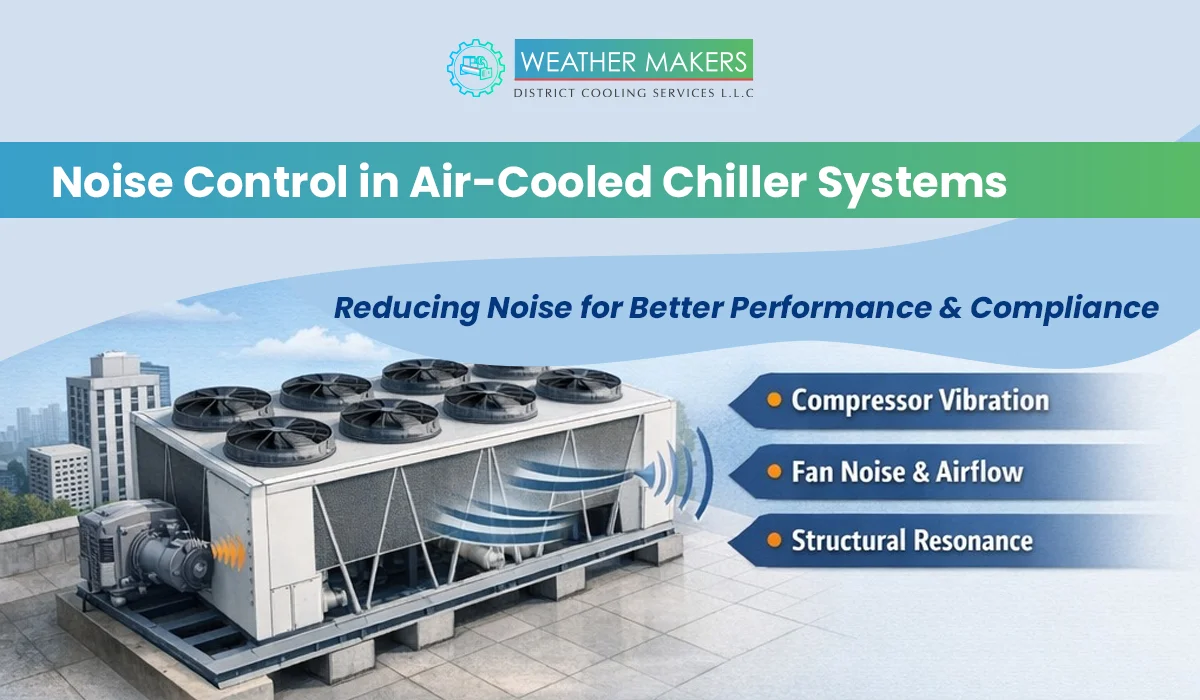
Mechanical and aerodynamic processes in the unit cause noise. Each part affects the noise uniquely. Minimizing noise issues early on can help enhance the overall behavior of the system. Key noise contributors include:
- Compressor vibration during load changes
- Air movement across condenser coils
- Fan blade rotation and flow turbulence
- Startup vibration
- Structural resonance within the casing
This is why noise management in air-cooled chillers cannot be addressed in isolation.
Noise Control in Modern HVAC Design
Sound levels impact building functionality. High sound levels can affect work areas, living spaces, and customer spaces. Government standards are also rising.
Effective air-cooled chiller noise control helps:
- Improved occupant comfort and satisfaction
- Compliance with project specifications and regulatory requirements
- Enhanced system reputation and stakeholder confidence
- Reduced frequency of noise-related complaints
Air-Cooled Chiller Systems and Acoustic Design Considerations
Structural Design and Material Selection
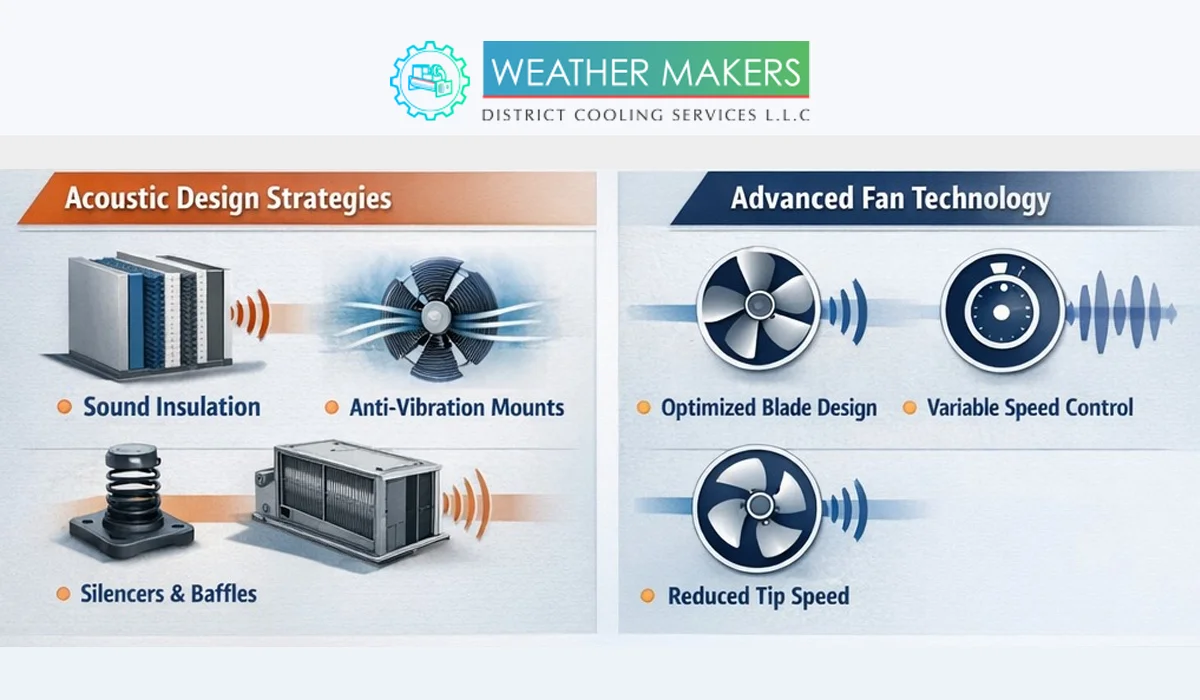
The acoustic design for air-cooled chillers starts with the arrangement and materials. Panel thickness, internal damping, and isolation mounts suppress sound propagation. Design teams concentrate on:
- Rigid frames to limit vibration transmission
- Sealed panels to prevent sound from escaping
- Strategic airflow paths to prevent whistling
These help to reduce noise levels without inhibiting airflow.
Sound Attenuation Techniques
Modern systems also incorporate silencers and internal linings. These serve to absorb sound waves prior to their escape into the surrounding atmosphere. The objective is to perform well under varying operating conditions.
Application of Fan Technology in Noise Reduction
Aerodynamic Improvements
Fan technology in air-cooled chillers has come a long way. Fan blade design focuses on smooth airflow rather than high speed. Important enhancements include:
- Optimized blade angles
- Lower tip speed
- Even air distribution
This reduces tonal noises and mechanical stresses.
Variable Speed Control
The fans have variable speed systems that change performance according to the desired speed. It helps prevent continuous high-speed operation; thus, the devices work to minimize noise when operating at partial loads. This method promotes energy efficiency and acoustic comfort simultaneously.
Low Noise Chiller Configuration Benefits
Low-noise air-cooled chillers are designed for acoustic-sensitive zones. These devices provide cooling solutions without disturbing the acoustic environment. There are several practical reasons for selecting low-noise chiller configurations:
- Enhanced adaptability for mixed-use buildings
- Streamlined planning approvals
- Improved image of property owners
A reduction in noise levels also means reduced stress on mechanical components.
Role of Insulation and Enclosures
Chiller acoustic insulation is also an extremely important factor. It absorbs sound from inside, so there are no reflections.
Good insulation primarily emphasizes:
- Compressor housings
- Fan compartments
- Structural contact points
Properly used, the material will work against both airborne and structure-borne sound.
Integrated HVAC Noise Reduction Strategies
Noise control can be made more effective with system-level planning. HVAC noise reduction solutions include equipment location, installation, and operational strategies.
Common strategies:
- Installing vibration insulators
- Ensuring good airflow passages
- Avoiding reflective surfaces near units
These measures improve acoustic performance without restructuring the entire system.
Choosing the Right Equipment for Long-Term Performance
Not all air-cooled chillers are designed to be quiet. Chillers should be chosen based on both the capability and noise level.
Decision-makers must view:
- Verified sound data
- Performance under real operating conditions
- Integration compatibility with building design
It avoids costs incurred through retrofitting.
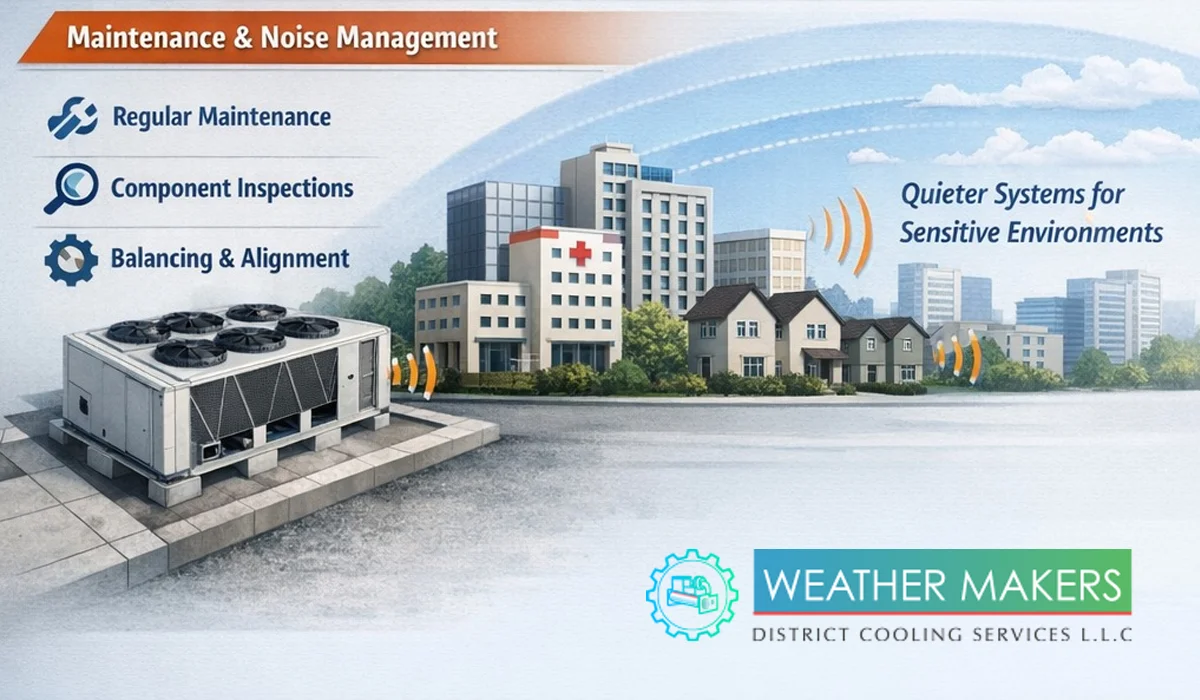
Maintenance and Noise Performance
Noise levels will be higher in systems that have been neglected. When there are loose components and bearings in the system, this contributes to increased noise levels. Maintenance-related factors include:
- Fan imbalance
- Compressor wear
- Panel looseness
Regular chiller system maintenance eliminates noise amplification.
Service Support and Technical Assistance
A good quality chiller maintenance company will understand the acoustic performance aspects of reliability. System commissioning and maintenance ensure that design specifications are met. Expert assistance allows for early determination of noise indicators of impending failure.
Application-Specific Noise Planning
An air-cooled chiller for HVAC systems must be compatible with its working context. Load profile, working time, and occupant proximity must be considered. A good plan must correspond to actual usage.
Repair, Maintenance, and Noise Control
On-time chiller repairing and maintenance addresses performance problems and acoustic imbalance in chillers. Unaddressed problems may result in complaints about noisy operations. Preventive measures are essential in protecting equipment as well as reputation.
Noise Management in Commercial Sectors
Chillers for commercial buildings have a higher standard for acoustic performance. Offices, shopping malls, and combined facilities must be acoustically conditioned. Noise compliance promotes tenant satisfaction and asset value.
Preventive Maintenance & Acoustic Stability
Chiller preventive maintenance contributes to the preservation of the desired sound levels. It enables the parts to work well under varying loads. Preventive schedules help avoid unexpected acoustic deviations.
Continuous Service and Performance Assurance
Trustworthy chiller maintenance services help maintain the efficiency and sound quality of the chiller. Regular maintenance of the chiller helps in building trust in its operation. The quality of service has a direct effect on the lifetime and noise characteristics of the system.
Conclusion
Noise mitigation is an area that demands technical vision and practical implementation. For air-cooled chiller systems, success comes through expert noise consideration and fan development coupled with sound maintenance strategy application. Planned noise mitigation becomes successful in minimizing noise effects while maintaining cooling performance. Noise consideration is not a marginal aspect. It is an essential performance criterion.
Frequently Asked Questions
What are the noise reduction methods in air-cooled chiller systems?
In air-cooled chillers, noise is reduced through optimized fan design, acoustic insulation, and controlled airflow paths.
Why is acoustic insulation necessary for chiller units?
It absorbs internal noise, thus stopping any possible vibrations from reaching other buildings.
Is routine maintenance helpful in minimizing chiller noise?
Yes. It keeps everything in balance and prevents noises created by wear or loose components.