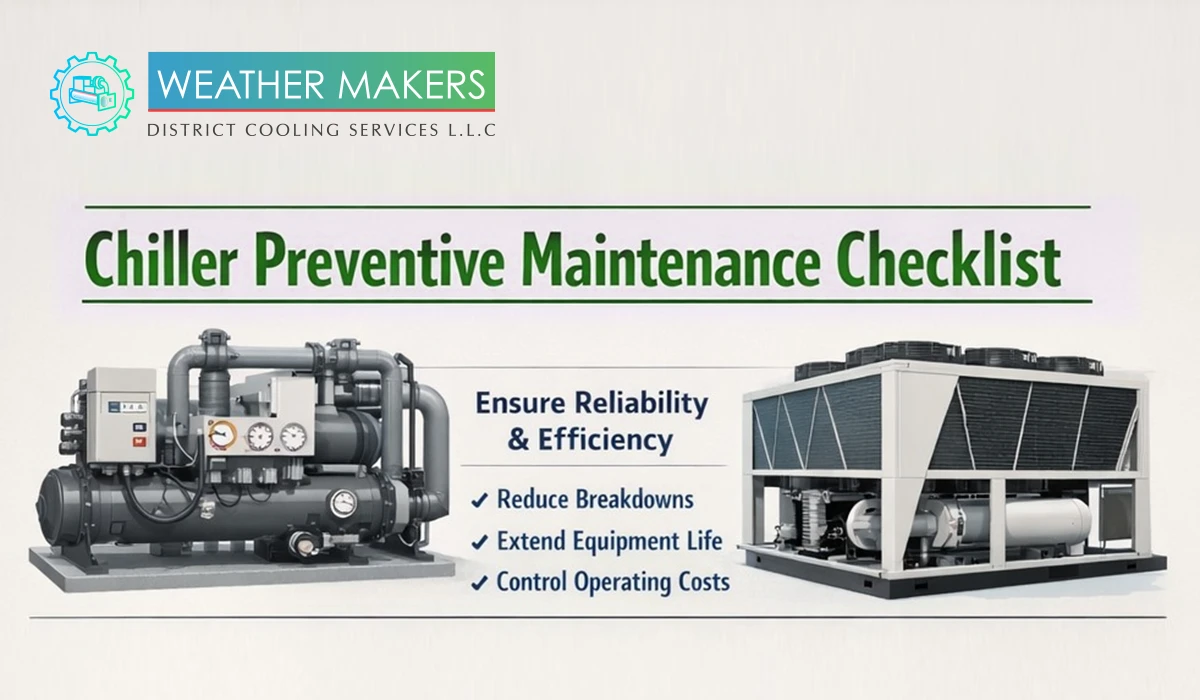
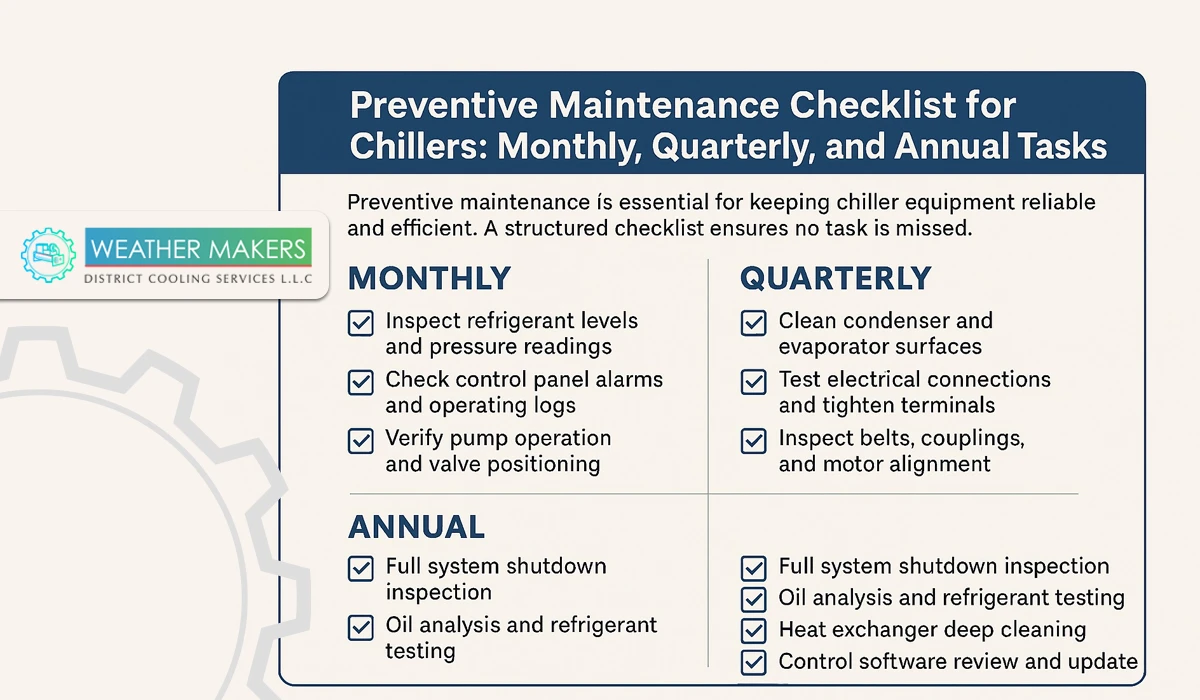
Preventive maintenance is essential for keeping chiller equipment reliable and efficient. It reduces breakdown risks. It protects operating budgets. It supports long service life. A structured checklist ensures no task is missed. It also improves system safety and energy control.
Chillers operate under constant load. Small issues grow fast when ignored. Regular checks reduce emergency repairs. They also improve performance consistency. This guide explains what to inspect monthly, quarterly, and annually. It applies to different cooling configurations and operating environments.
Understanding Chiller Maintenance Requirements
Chillers support cooling for critical operations. They work continuously. They handle heavy thermal loads. Maintenance must be planned and documented.
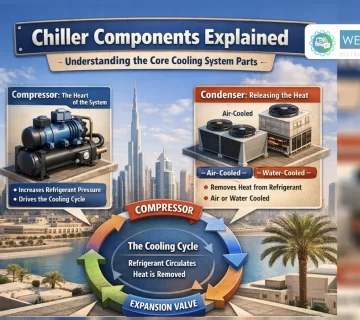
Different systems need different care. Water cooled chiller systems require attention to water quality and flow. Air cooled chiller systems depend on clean airflow and condenser condition. Each system type has unique service priorities.
Maintenance planning also varies by capacity. An industrial chiller runs at higher loads and needs strict inspection routines. A commercial water chiller focuses more on efficiency and uptime. Both benefit from a structured checklist.
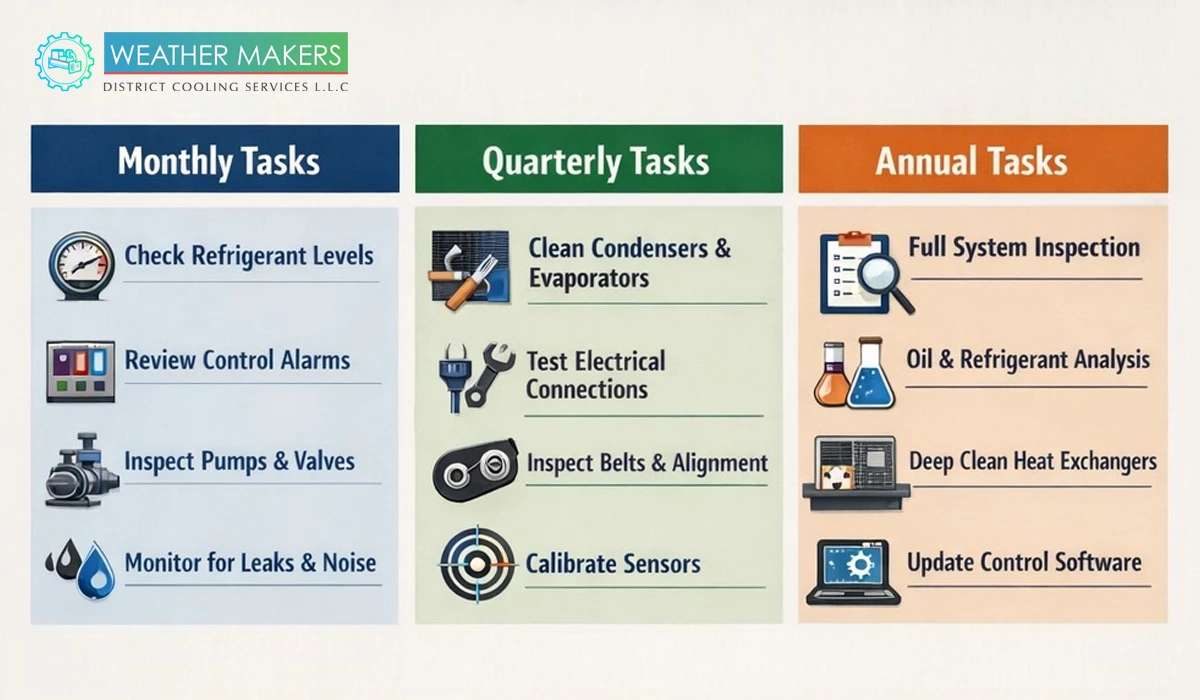
Monthly Preventive Maintenance Tasks
Monthly checks focus on visible issues and operating stability. These tasks prevent early chiller failure signs from spreading.
Key monthly actions include:
- Inspect refrigerant levels and pressure readings
- Check control panel alarms and operating logs
- Verify pump operation and valve positioning
- Review safety interlocks and shutdown history
Monthly inspection supports consistent chiller system maintenance. It helps detect leaks, vibration, and abnormal noise. These checks also reduce unplanned downtime. This schedule supports facilities using chillers for commercial buildings where daily cooling demand is constant.
Quarterly Scheduled Maintenance Inspection Areas
Quarterly inspections go deeper. They focus on performance trends and component wear.
Recommended quarterly tasks:
- Clean condenser and evaporator surfaces
- Test electrical connections and tighten terminals
- Inspect belts, couplings, and motor alignment
- Verify sensor accuracy and control calibration
Quarterly inspections support structured chiller preventive maintenance planning. They improve energy efficiency. They also reduce seasonal performance loss.
Professional teams often combine these checks with chiller maintenance services to maintain compliance and documentation accuracy.
Annual Planned Maintenance Overhaul Tasks
Annual service is comprehensive. It focuses on reliability and system health.
Annual maintenance should include:
- Full system shutdown inspection
- Oil analysis and refrigerant testing
- Heat exchanger deep cleaning
- Control software review and update
Annual work often overlaps with chiller repairing and maintenance planning. It allows component replacement before failure occurs. This approach improves budget forecasting. Annual checks also support overall chiller maintenance strategies by reducing long-term operational risk.
System-Specific Maintenance Considerations
Each system type has specific requirements. Maintenance planning must reflect this. A water cooled chiller requires monitoring of scaling and corrosion risks. Water chemistry must remain within limits. Flow balance must be verified. An air cooled chiller depends on clean condenser coils. Airflow restrictions reduce capacity. Fan performance must remain stable. Specialized water cooled chiller service ensures proper heat transfer. Reliable air cooled chiller service prevents overheating issues.
Common Risks Caused by Poor Chiller Maintenance
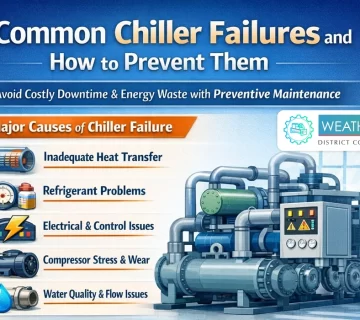
Poor maintenance creates avoidable risks. These risks affect performance and cost control. Minor faults often remain hidden until failure occurs. This leads to sudden system shutdowns.
Unmaintained components increase energy consumption. Cooling output becomes unstable. Equipment strain occurs during peak demand. All these factors reduce the lifespan of the system and increase the cost of operation.
Lack of routine inspection also has an effect on the overall safety of the system. For example, electrical and pressure faults may not be detected. Regular maintenance reduces the risk of electrical and pressure faults.
Documentation and Record-Keeping Best Practices
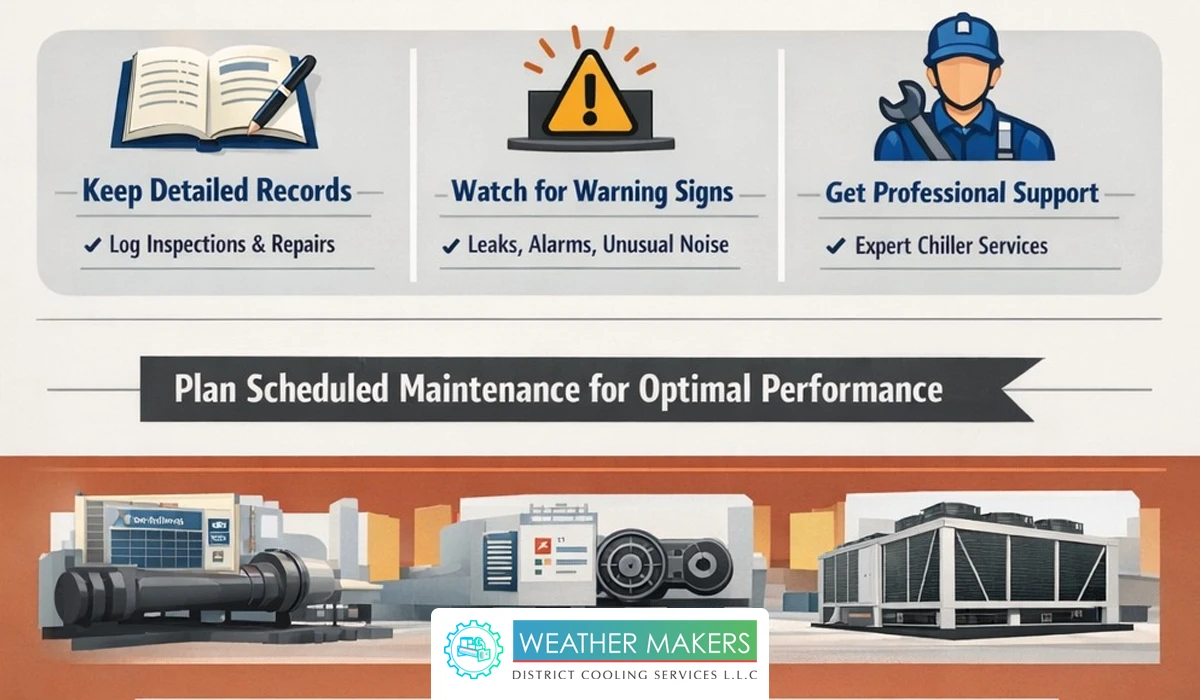
Documentation and record-keeping of maintenance activities are crucial. The records provide valuable insight into the condition of the system. The log provides information on the recurring faults of the system.
The maintenance records include the inspection dates and the inspection results. The repair activities of the system should be well recorded. The performance results of the system should be regularly checked.
Good maintenance of the documentation and record-keeping of the activities of the maintenance team is crucial. It provides a basis for audits and reviews. The information in the records ensures that the maintenance activities of the system are consistent.
Signs That a Chiller Requires Immediate Attention
The signs that a chiller needs attention must not be ignored. Unusual noise indicates mechanical stress within the system. The system’s alarms must not be ignored. The increase in the rate of consumption of the system’s power indicates that the system’s performance is declining. Performance is affected when cooling capacity fluctuates. The system’s leaks and vibrations must not be ignored.
Role of Professional Service Support
Many facilities rely on external support. This ensures technical accuracy and safety compliance. Professional chiller service teams bring diagnostic tools and expertise. They identify inefficiencies early. They also provide documented reports.
Ongoing chiller services improve asset reliability. They reduce emergency shutdown risks. They also align maintenance with warranty conditions.
Preventive Planning for Long-Term Performance
Long-term planning improves lifecycle value. Maintenance should follow a clear structure. A defined preventive chiller maintenance plan aligns tasks with system age. It also aligns with operating hours and load patterns.
Each chiller system benefits from consistent documentation. Logs help identify performance decline trends. They also support audit readiness.
A structured preventive chiller system approach improves coordination between operators and technicians.
Maintenance Strategy Integration
Maintenance must integrate with facility operations. It should not disrupt production or occupancy. Standardized chiller maintenance procedures improve staff coordination. They also reduce service variability. A reliable preventive chiller service schedule supports energy efficiency goals. It ensures tasks are not skipped. Advanced facilities integrate preventative maintenance systems into digital management platforms. These systems track service history and alerts.
Conclusion
Preventive maintenance safeguards chiller investments. It increases dependability. It regulates operational risk. The use of a checklist is a structured approach to ensure consistency in monthly, quarterly, and annual activities.
Facilities that practice scheduled maintenance minimize equipment failures. Facilities also achieve consistent chiller performance. Long-term efficiency improves with disciplined maintenance planning.
Frequently Asked Questions
What is planned maintenance for chillers?
Preventive maintenance for chillers is a scheduled inspection and maintenance process to prevent equipment failure and performance degradation.
How often is chiller maintenance performed?
Monthly, quarterly, and annual activities are scheduled for chiller maintenance.
Why is scheduled maintenance important for chiller systems?
It increases dependability, minimizes repair costs, and extends equipment lifespan.