
Air-cooled chillers in hot climates face constant pressure from high ambient temperatures and extended cooling seasons. These conditions affect output, stability, and energy demand. Understanding seasonal behavior helps decision-makers plan better systems. It also supports long-term performance goals.
Hot environments demand reliable cooling throughout most of the year. Equipment must handle sustained heat without efficiency loss. Seasonal variations still exist, even in warm regions. These shifts influence system load and maintenance priorities.
Understanding Air-Cooled Chiller Operation
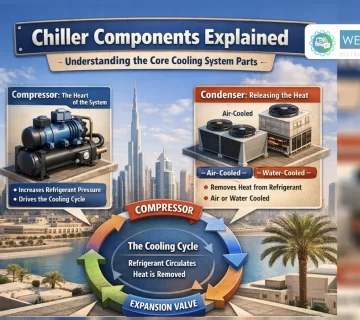
In contrast to water-rejecting heat, air-cooled chillers reject their heat by using outside, ambient air. A fan forces ambient air over a set of condenser coils for the purpose of removing heat from the refrigerant. This design suits areas with limited water resources. It also simplifies installation and reduces infrastructure needs.
These systems perform best when airflow is stable. Ambient temperature directly affects condenser pressure. Higher temperatures increase compressor workload. This leads to higher energy consumption during peak seasons.
System sizing plays a major role. Undersized units struggle in extreme heat. Oversized units cycle inefficiently during moderate periods.
Seasonal Performance of Air-Cooled Chillers
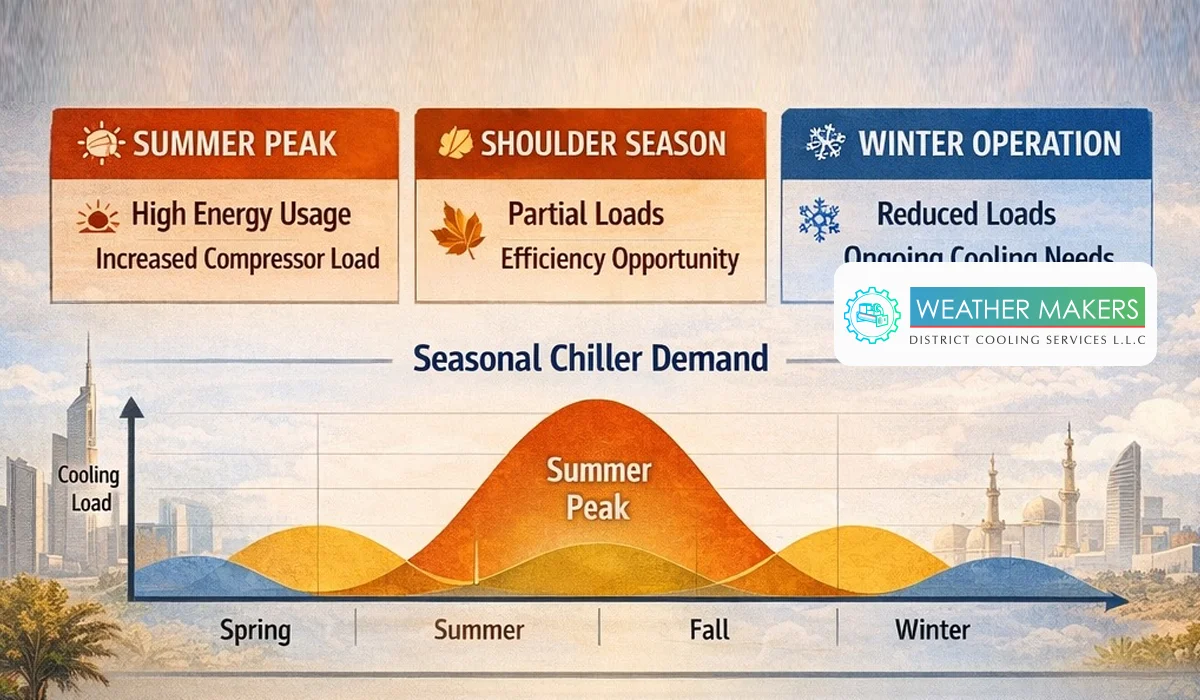
Air-cooled chillers do not operate uniformly throughout the year, as their capacity depends on external conditions. There is a surge in demand during the summer due to warmer external temperatures. The shoulder period offers the chance to operate at partial loads, though cooling is still a requirement during the winter.
Here, there is a difference in the type of facility, as offices peak during the daytime, whereas cooling is required 24/7 in retail, data centers, or similar premises. In assessing system performance, there is a need to take into account the external conditions, as well as the duration the equipment operates at varying loads.
Performance varies depending on the season, though maintaining a balanced result is the end goal, without excessive compressor cycling.
Performance of Air-Cooled Chillers in Hot Climates
Air-cooled chiller performance in summer is exposed to the most demanding operating conditions. Increased ambient temperatures raise condenser pressures, requiring compressors to operate under a greater load to achieve the setpoint, resulting in increased power consumption. Summer conditions include:
- Higher power consumption in peak periods
- Loss of cooling effectiveness when the heat is severe
- Increased wear on moving parts
- More susceptible to obstructed airflow
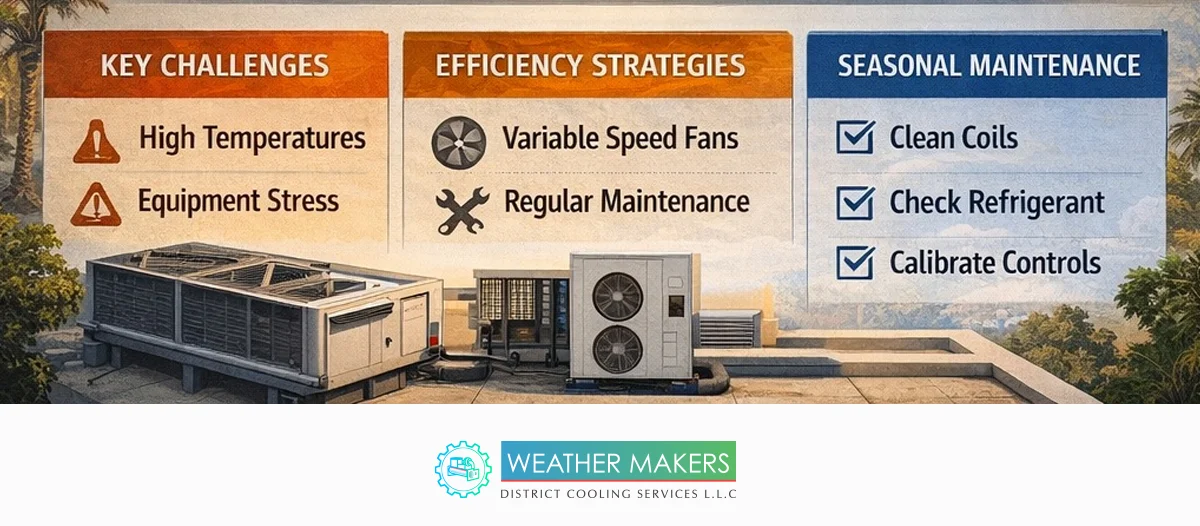
Effective control strategies can help. Employing variable-speed fans improves operational efficiency and reduces system stress. Providing adequate spacing between machines enhances airflow. When combined, these measures help maintain stable operation during maximum load conditions.
Efficiency in Hot Climate Conditions
The efficiency of processes in hot environments is a function of design, control, or maintenance. Modern compressors perform well in varying loads, while efficient cooling coils perform effectively in hot environments. The sources of efficiency losses in chiller systems include unmaintained equipment, where dirty cooling coils reduce airflow and faulty sensor data misleads control logic processing. Designing equipment specifically for hot environments enhances efficiency and delivers more reliable performance over extended operating periods in chiller systems due to prolonged operating times.
Seasonal Care of Chillers
Chiller system maintenance directly affects seasonal reliability. Chiller maintenance is a continuous process that supports reliable operation throughout all seasons. Regular, preventive care cuts down surprise outages and keeps performance steady when the weather tests the system.
Recommended seasonal maintenance actions include:
- Clean the coils before summer sets in.
- Check fans and motors
- Check refrigerant levels
- Control calibration
Keep maintenance on a clear schedule. Seasonal checks stop performance dips and help the equipment last longer.
Choosing the right partner and system
Chiller companies vary in expertise, and selecting the right provider is important for system selection and ongoing support. The experienced provider is fully aware of the climate-specific challenges and will guide you in preparing the system for extended periods of high ambient temperatures.
Match the system to needs. An air-cooled chiller for HVAC systems should follow a building’s load curves, which would have flat profiles with long operating hours for commercial applications. These various spaces-office, retail, and mixed-use-would have very unique cooling demands according to different occupations and internal gains.
Maintenance to ensure the performance lasts
Be proactive with chiller repair and maintenance. Waiting for failures drives downtimes and costs upwards. A planned maintenance approach improves reliability.
Practical strategies to do this include:
- Low-load window inspections
- Monitoring performance trends
- Early fault detection by diagnostics
Chiller preventive maintenance reduces seasonal stress and prepares the system for summer peak demand.
Professional chiller maintenance services deliver specialized expertise, ensure compatibility with manufacturer standards, and help to sustain seasonal output at consistent levels.
Conclusion
Seasonal planning is one of the most important areas of stable cooling operations. The design of air-cooled chillers in hot climates should be carefully designed, with reliable controls and regular upkeep. Demands are usually highest in summer, so preparing for that season matters.
Understanding seasonal behavior empowers informed decisions and long-term cost control. In its entirety, the correct plan maintains performance at a steady rate throughout the year.
Frequently Asked Questions
How do air-cooled chillers in hot climates manage year-round cooling demand?
They are designed to operate constantly. Provided that they are properly sized and maintained, they should be able to meet the demand for continuous cooling over prolonged cooling seasons.
Why does summer place the highest operational demand on chillers?
Hot ambient temperatures raise both compressor load and energy usage at the season’s highest demand.
How often should seasonal chiller maintenance be performed?
Seasonal inspections should be completed before peak summer and after high-load periods to ensure consistent performance.