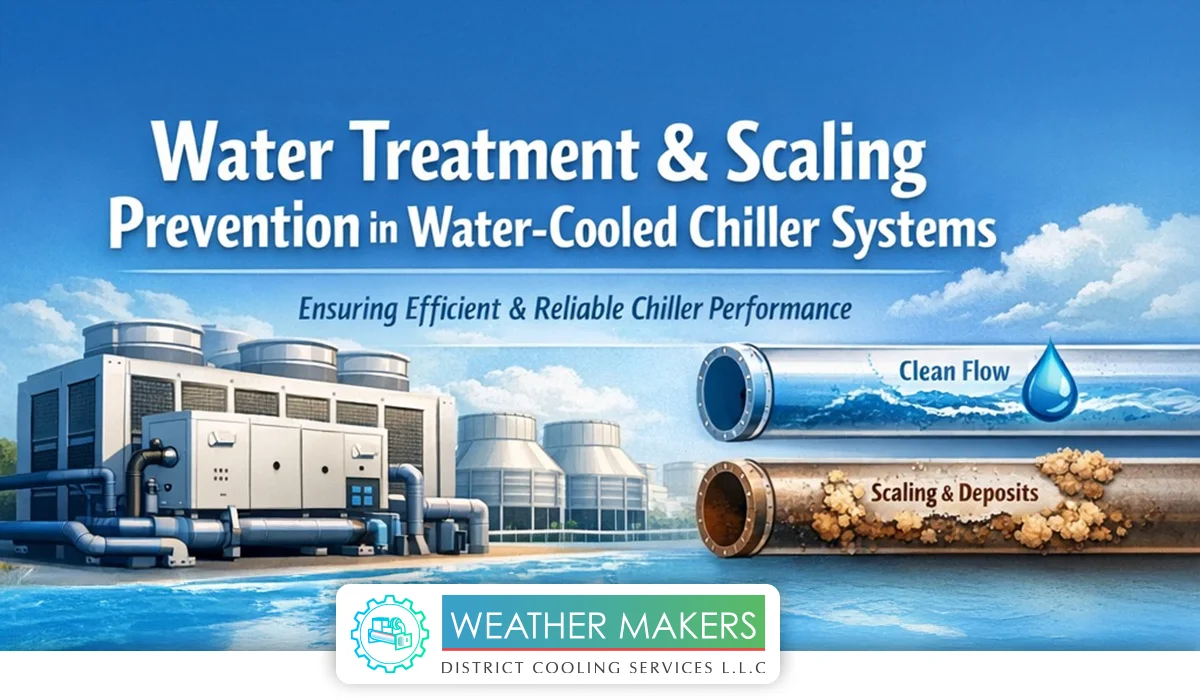
Water-cooled chiller systems are very important where stable cooling performance is required. Water-cooled chillers are beneficial where continuous cooling is needed. Water-cooled chillers can be affected depending on the type of water used. Water affects the efficiency of the system.
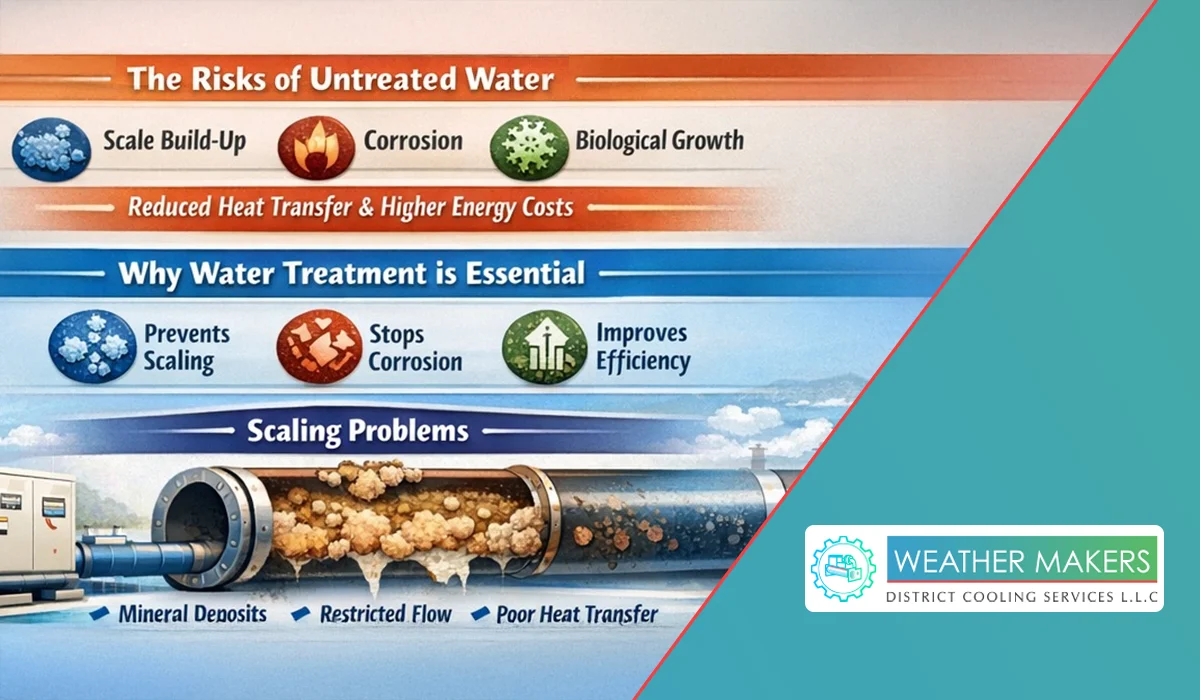
In the absence of proper treatment of the water, we can expect the buildup of mineral deposits and contaminants. This results in the development of scale and reduced heat transfer rates in the equipment. As a consequence of this, the equipment ends up using higher energies.
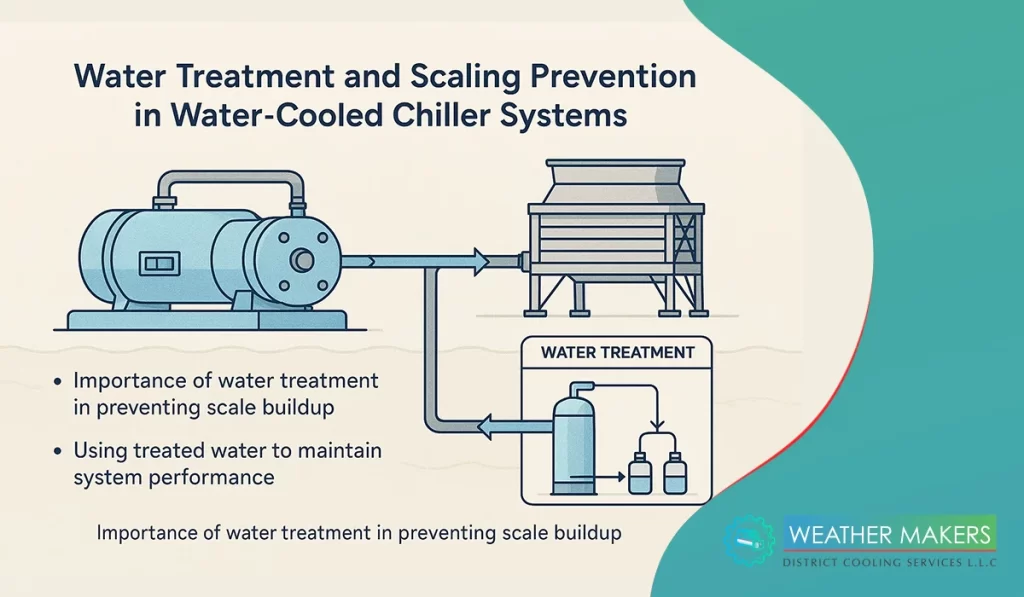
A well-structured water treatment process helps control scale formation and maintain system performance. It is important to have in mind the correlation between scaling and water treatment as both related to each other.
Water Dynamics in the Chiller Process
The chiller systems require a constant water circulation process. Minerals, dissolved substances, and impurities can be transported with water. Over time, these elements affect internal components. Heat transfer surfaces become vulnerable. Flow paths narrow. Energy consumption increases.
Water quality management is not optional. It is a core operational requirement.
Why Water Treatment Is Essential
Water treatment controls chemical balance. It protects metal surfaces. It improves heat transfer efficiency. It also extends equipment life. Water treatment for chillers and cooling towers ensures system stability across interconnected equipment. It creates consistency in performance and reduces unexpected failures.
Without treatment, scale forms quickly. Corrosion accelerates. Biological growth spreads. These issues increase downtime and operating costs.
Common Scaling Challenges in Chiller Systems
Scaling occurs when minerals crystallize and attach to surfaces. Calcium and magnesium are common causes. High temperatures accelerate this process. Scaling prevention in chiller systems requires early control. Once scale forms, removal becomes costly and disruptive. Scaling prevention in chillers focuses on keeping minerals dissolved. It also limits surface attachment through chemical control.
Water Treatment Methods for Chillers
Chemical Control Strategies
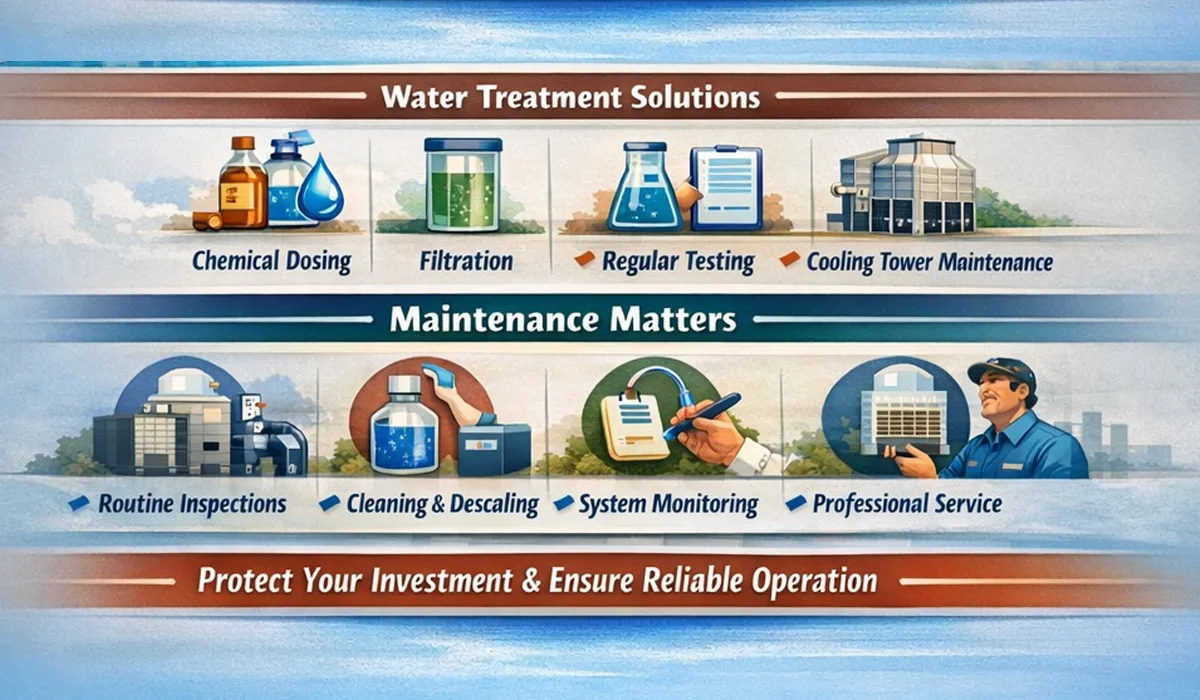
Chiller water treatment chemicals are used to manage mineral content and pH levels. These chemicals prevent scale formation and slow corrosion. They also support system cleanliness. Chiller water treatment programs are customized to system load and water quality. Testing ensures correct dosage and balance.
Cooling Tower Integration
Chiller cooling tower water treatment addresses evaporation and concentration cycles. Cooling towers intensify mineral buildup. Proper treatment prevents carryover into the chiller loop.
Equipment Type and System Design Considerations
An industrial chiller handles heavy loads and continuous operation. These systems demand strict water quality control. Any imbalance affects production stability. A commercial water chiller supports comfort cooling and operational spaces. Efficiency and reliability are essential to avoid service disruption. Water-cooled chillers rely on external water loops. This makes them more sensitive to scaling risks than air-based systems.
Water-cooled Chiller Systems and Preventive Maintenance
Planned Maintenance Benefits
Chiller system maintenance focuses on inspection, cleaning, and testing. It prevents small issues from becoming system failures. Chiller preventive maintenance improves energy efficiency. It also stabilizes operating pressure and temperature.
Service and Support Scope
Chiller maintenance services include water analysis, chemical dosing, and mechanical checks. These services ensure continuous compliance with operating standards. They also help identify early signs of scaling and corrosion.
Chiller repairing and maintenance become necessary when preventive actions are ignored. Repairs are expensive and very disruptive. They almost always involve long down times and even higher operational risk. Routine chiller maintenance keeps systems aligned with performance expectations. It supports stable efficiency and extends overall system life.
Role of Professional Support
A qualified chiller company provides technical expertise. It understands system design, water chemistry, and load requirements. This expertise helps prevent operational errors and long-term system damage. Professional teams apply correct treatment strategies based on system conditions. Commercial chiller systems require consistent performance that matches daily operations. Professional support ensures safe operation and regulatory compliance. It also improves system reliability and reduces the risk of unexpected downtime.
Best Practices for Scaling Prevention
Effective scaling prevention follows structured actions.
- Regular water testing and analysis
- Controlled chemical dosing
- Scheduled system inspections
- Proper blowdown and filtration
- Continuous monitoring of heat transfer efficiency
These steps reduce long-term risk and improve reliability.
Operational Impact of Poor Water Quality
Untreated water causes:
- Reduced heat transfer
- Higher energy consumption
- Increased mechanical stress
- Unexpected shutdowns
- Shortened equipment lifespan
Water treatment protects both performance and investment.
Long-Term Value of Water Treatment Programs
Structured water treatment delivers measurable benefits. It stabilizes system operation. It controls operating costs. It supports sustainability goals.
Maintenance teams gain predictability. Management gains cost control. Operations gain reliability.
Conclusion
Water-cooled chiller systems perform reliably when water quality is consistently controlled. Scaling prevention protects heat transfer surfaces and supports stable system operation. Water treatment processes decrease operational risks. Unplanned shutdowns are also minimized.
Well-organized maintenance ensures better energy efficiency and longer lifespan. It also helps to overcome problems in advance and prevent expensive maintenance. When water treatment and maintenance are done properly, the overall system functions in a balanced and predictable way.
Frequently Asked Questions
Why is water treatment important for water-cooled chiller systems?
It prevents scale, corrosion, and efficiency loss. It helps maintain stable and reliable system performance.
What causes scaling in chiller systems?
Scaling occurs due to mineral buildup from untreated or poorly balanced water. High temperatures increase this risk.
How often should chiller systems be maintained?
Chiller systems should follow scheduled preventive maintenance plans. Regular checks reduce failure risk and operating costs.