
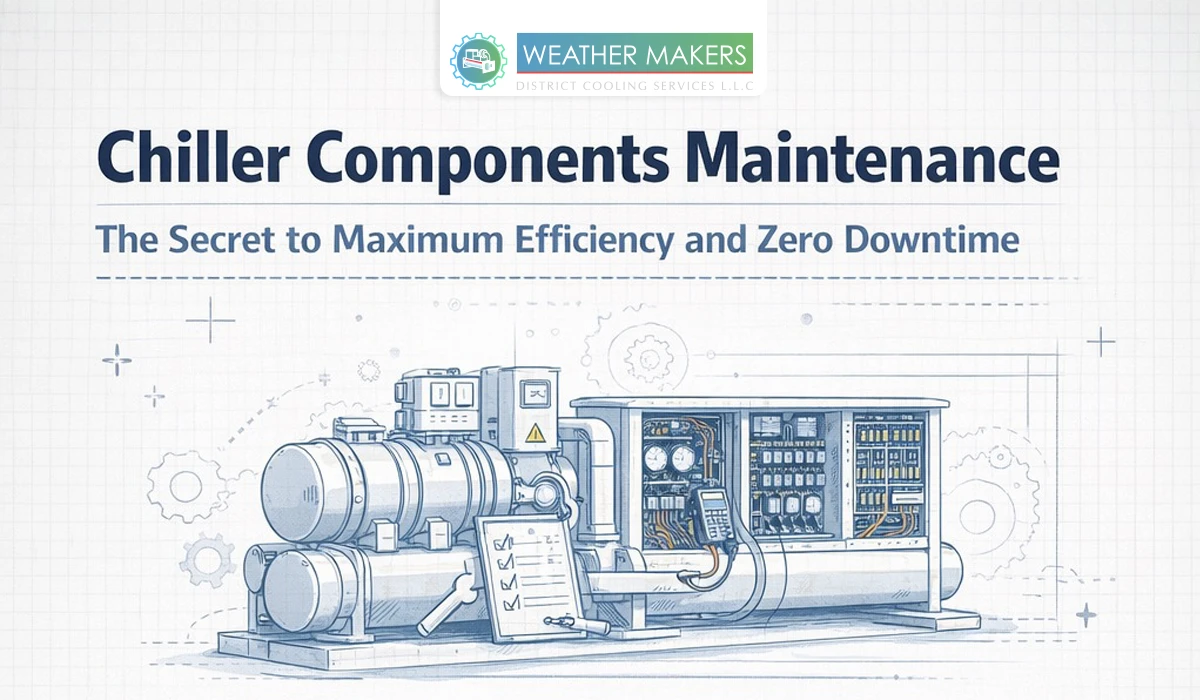
Chiller Components Maintenance is the foundation of reliable cooling performance in any commercial or industrial facility. A chiller works under continuous load. Every component must operate in balance. When one part underperforms, the entire system suffers. Energy bills increase. Equipment life shortens. Unexpected shutdowns disrupt operations. Proper maintenance prevents these risks and protects long-term performance.
Chillers are complex systems. They combine mechanical, electrical, and control elements. Each section must function with precision. Routine inspections and timely servicing ensure stable operation. Businesses that invest in structured maintenance plans experience higher reliability and improved cost control.
Understanding How a Chiller System Operates
A chiller removes heat from a process or building space and transfers it to another location. The system depends on coordinated movement between the compressor, condenser, evaporator, expansion valve, and control systems. When these parts operate efficiently, overall chiller system efficiency improves.
Even minor issues such as dirt buildup, refrigerant imbalance, or sensor faults can reduce output. Poor performance does not happen suddenly. It develops gradually. Early detection is critical. This is where structured industrial chiller maintenance becomes valuable. It keeps all components aligned and prevents progressive damage.
Why Component-Level Maintenance Matters
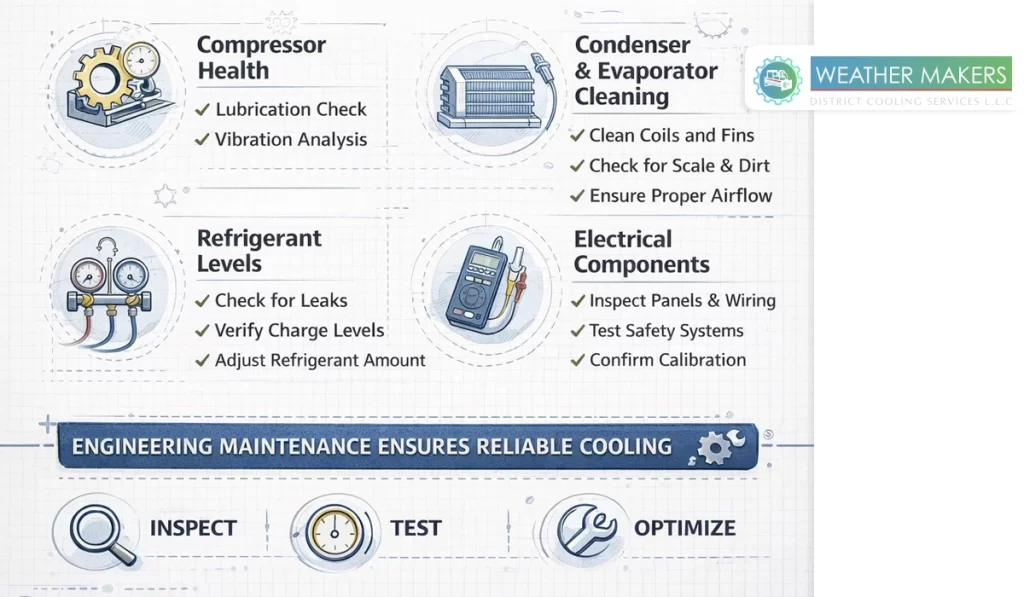
Many operators focus only on general servicing. Instead of general servicing alone, each component must be inspected and analysed individually. These elements include:
- Regulating the flow and the pressure exerted by the refrigerant compressors.
- Such apparel as a condenser is used for heat rejection.
- Another is the heat-absorbing element called evaporators.
- The fourth device is the one that controls the admission of the refrigerant to the cooler, the expansion valve.
- The fifth device is the electric control panel linked to the cooling tower. Electrical panels control system processes.
Even if the issue does not directly result in localized failure, it can accelerate wear and imbalance across interconnected components. Such inspections are aimed at preventing emergency chiller repair and prolonging their useful life of our chiller systems.
Key Elements that Need Early Intervention
1. Health of the compressor
The compressor is the central part of the system. It is the most energy-consuming part of the system. Insufficient lubrication, overheating, or an imbalance of pressure could be very dangerous. Vibration monitoring in a scheduled manner ensures that the operations run smoothly and enhances RCM (Reliability-Centered Maintenance) analysis, diminishing the occurrence of failure.
2. Condenser Coil and Evaporator Fin Maintenance
Dust accumulation and scale build-up on coils reduce the efficiency of heat transfer. This causes increased usage of energy. Therefore, in HVAC chiller maintenance systems of the best professionals, it is critical to follow the steps of cleaning the coil and air flow check.
3. Refrigerant Issue
It is hard to achieve the desired cooling capacity in a system having an inappropriate quantity of refrigerant and high pressure. Effective leak management ensures less harm to the environment and prevents chiller replacement when unnecessary.
4. Monitoring the Electrical and Control Boards
It can be due to loose electrical connections, aged contactors, or wrong configurations. A dependable chiller service will also include a thorough check of the control panel and the sensors.
Preventive Maintenance Benefits
Minimized Discontinuity of Work
Preventive maintenance ensures that issues are identified and resolved at an early stage. Small problems, even before they become big problems that necessitate shutdowns, are fixed.
Energy Utilization
Reducing energy waste and optimising system load distribution enhances operational efficiency. This directly enhances chiller system efficiency and reduces utility expenses.
Longer Equipment Lifespan
Routine servicing delays major capital expenses. It also limits the frequency of costly part replacements.
Improved Safety
Electrical faults and refrigerant leaks create operational hazards. Consistent chiller maintenance ensures safe working conditions.
Choosing the Right Maintenance Partner
Selecting experienced professionals is critical. Many facility managers compare multiple chiller companies before finalising service agreements. Expertise matters. Certifications matter. Response time matters.
A trusted chiller maintenance company provides structured inspection schedules and transparent reporting. They document system health and provide measurable performance indicators.
As the scale of the building within which the chiller is placed expands, working with qualified chiller maintenance companies in UAE brings with it the benefit of working with experienced specialists as well as access to advanced equipment. These companies often collaborate with established HVAC maintenance companies to deliver integrated maintenance solutions.
Signs Your Chiller Needs Immediate Attention
Some issues cannot wait for scheduled servicing. Immediate professional support is required if you notice:
- Sudden increase in energy consumption
- Unusual vibration or noise
- Fluctuating temperature output
- Oil leakage around the compressor
- Frequent system tripping
In such cases, quick industrial chiller system repair in Dubai support becomes essential to prevent extended downtime.
Ignoring early warning signs often leads to a full system shutdown. Fast response protects productivity and avoids operational losses.
Structured Maintenance Plan: What It Should Include
A professional maintenance program should combine inspection, cleaning, testing, and performance optimisation. Effective commercial chiller maintenance typically includes:
- Monthly operational performance checks
- Quarterly coil cleaning and refrigerant review
- Bi-annual electrical inspection
- Annual full system audit and calibration
Comprehensive chiller maintenance services also provide detailed reports. These reports help management track performance trends and budget for upgrades.
Chiller Components Maintenance: A Strategic Approach to Reliability
Chiller Components Maintenance should never be reactive. It must be strategic. Each component should have a defined inspection cycle. Data from sensors and performance logs should guide maintenance decisions.
Modern systems use predictive analytics. These tools identify irregular patterns early. They reduce the risk of sudden breakdowns. Combining digital monitoring with routine servicing ensures consistent results.
A reliable maintenance plan includes:
- Performance benchmarking
- Energy consumption analysis
- Spare parts planning
- Emergency response protocols
Such treatment, when administered in the prescribed manner, lessens the dependence on emergency chiller repair and enhances the cost predictability.
When should one go for a new one?
Every device that can be maintained to last a long period of time will wear out at some point. Lack of efficiency, often breaking down, and old buildings with dated control systems, on the other hand, are telling signs of a chiller replacement.
Replacement decisions should be based on:
- Cost comparison between repair and upgrade
- Age of equipment
- Energy performance rating
- Availability of spare parts
Professional evaluation helps determine the right timing. A planned replacement avoids sudden capital strain.
The Financial Impact of Proper Maintenance
Unplanned downtime affects revenue, comfort, and productivity. For commercial facilities, even short disruptions create serious consequences. Investment in industrial chiller maintenance reduces these risks.
Cost benefits include:
- Lower energy bills
- Fewer emergency repairs
- Extended system lifespan
- Reduced operational disruption
Over time, consistent servicing proves more economical than repeated breakdown recovery.
Integrating Chillers with Broader HVAC Systems
Chiller plants, in their uniqueness, are part of a more extensive HVAC system. Inclusion of cooling towers, pumps, and air handling systems would fall within the minimum requirement. That’s why this type of structured chiller service is just as effective as a proper quench chiller program, which most institutions have these days.
Interfacing allows leveraging of the equipment performance to be the same for all the equipment or units. It increases the consistency of comfort in the interior. It enhances the liability, performance, and efficiency of the service providers and the facility management.
The Benefits Of Technical Expertise
Technology alone is not enough; expertise and innovation are equally important. There is a need for engineers. It is the expert who has been in active practice for many years who knows the trends and recurring patterns of the system. They can recognize when there is extra pressure with the equipment, the rotation changes, or wear and tear is noticed at an early stage.
Reputable and capable chiller service companies always train their personnel and use cabling diagnostic equipment. It is important to record logbooks for all services rendered and apply well–planned risks. Flexible activities are promoted, and repaired equipment is part of this. Recommendations for proper operation and maintenance of the equipment are provided.
Conclusion
The usage of cooling systems is extensive in the contemporary world. Their performance, efficiency, and reliability are highly criticized due to the fact that the equipment needs to be maintained very well. For the equipment to work properly, lowering risk, and operating the equipment at any point.
This will not be a reactive cost, but a well-thought-out strategic cost. Well-structured servicing is a priority, and all business organisations are in a position to attain proper cooling, minimal costs, and avoid moving out due to failures.
Frequently Asked Questions
After what period does the chiller service become necessary?
In most cases, many of the systems need inspection every three months with a full service once a year, which may vary depending on how much the equipment is put to use.
Why is it necessary to perform chiller maintenance to enhance efficiency?
Proper chiller components Maintenance is important as all components remain in good working order, thus preventing energy losses and avoiding unwarranted disruptions.
What are the repair cycle and preventive maintenance cycle of a machine?
Repair addresses existing faults, while preventive maintenance prevents malfunctions before they occur.

No comment