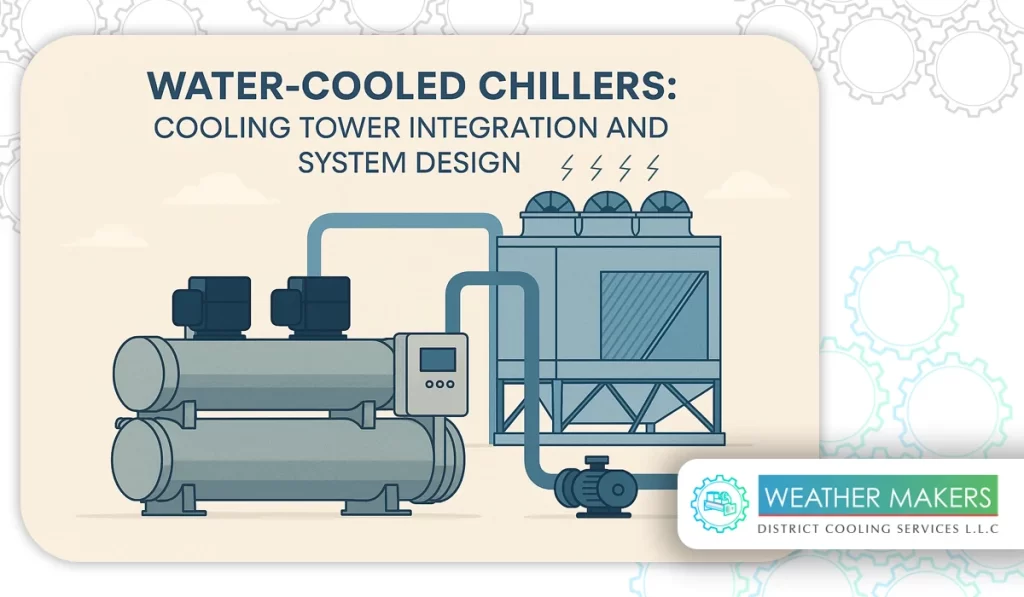
Water-cooled chillers stand at the front line of modern cooling infrastructures. They provide stable temperature control in large facilities, given their design for continuous operation and high thermal loads. They are commonly used in applications that demand high efficiency and reliability.
They function effectively with cooling towers in rejecting heat. This integration has improved the performance of the overall system and also assists in reducing the operating cost in the long run. Due to proper design, continuous cooling and controlled use of energy are assured.
Understanding Water Cooled Chillers and Their Core Function
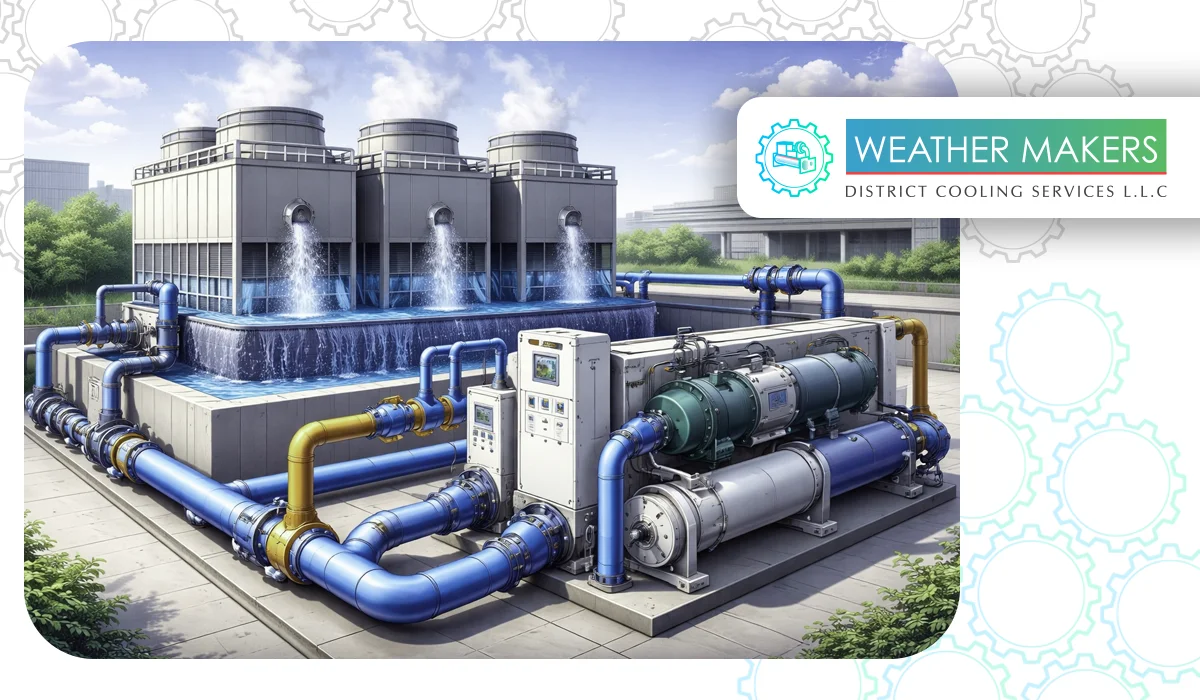
The water-based cooling systems remove heat by circulating water. The heat transfers from the process to the condenser water. The heat is then transferred to the atmosphere by the cooling tower.
This design supports continuous operation. It handles heavy loads well. It also delivers higher efficiency compared to many alternatives.
An industrial chiller often uses this setup due to its stable performance. An industrial water chiller is also selected where process consistency is required. These systems are common in manufacturing and production facilities.
Why Cooling Tower Integration Matters
Cooling towers are not optional add-ons. They are essential components. They ensure effective heat rejection by improving system balance, reducing energy waste, and supporting longer equipment life.
Key integration goals include:
- Proper condenser water flow
- Correct approach temperature
- Balanced heat rejection
- Stable operating pressure
Poor integration leads to higher costs. It also increases system stress.
Water-Cooled Chillers in Integrated System Design
System design starts with load analysis. Cooling demand must be accurate. Oversizing wastes energy. Undersizing causes failures. A complete water-cooled chiller system includes several coordinated elements. Each part must work in harmony.
Design planning usually covers:
- Chiller capacity selection
- Cooling tower sizing
- Pump and piping layout
- Control logic and automation
A commercial water chiller often follows similar design principles. The scale differs, but the logic stays the same.
Key Components and Their Roles
Each part has a defined purpose. System balance depends on proper selection. Main components include:
- Chiller unit
- Cooling tower
- Condenser water pumps
- Control valves
- Sensors and automation
A reliable chiller company usually supports design validation. This ensures compatibility and compliance.
Design Considerations for Commercial and Industrial Use
Different applications require different priorities. Load patterns vary. Operating hours differ. Chillers for commercial buildings focus on comfort and efficiency. Industrial systems focus on process stability.
Important considerations include:
- Peak load duration
- Redundancy requirements
- Water quality management
- Noise control
Energy Efficiency and Operational Stability
Efficiency depends on proper heat transfer. It also depends on clean water circuits. Fouling reduces performance fast.
Stable operation reduces energy spikes. It also lowers wear.
Energy optimization methods include:
- Variable speed drives
- Proper control sequencing
- Optimized condenser water temperature
A well-designed system supports predictable performance.
Maintenance Planning from the Start
Maintenance should not be reactive. It must be planned early. Chiller system maintenance protects investment value. It prevents unexpected shutdowns.
Core maintenance areas include:
- Heat exchanger cleaning
- Water treatment checks
- Sensor calibration
- Control system inspection
Failing to maintain equipment leads to higher repair costs.
Preventive Maintenance and Service Strategy
Preventive care extends equipment life. It also supports efficiency targets.
A structured plan usually includes:
- Scheduled inspections
- Performance trend tracking
- Early fault detection
Chiller preventive maintenance reduces emergency calls. It improves uptime. Professional chiller maintenance services provide structured support. They follow documented procedures. When issues arise, chiller repairing and maintenance must be fast and precise. Delays impact operations.
Risk Management in System Design
Risk planning protects operations. It supports continuity.
Key risk factors include:
- Power failure
- Pump breakdown
- Control system errors
Redundancy reduces risk. Monitoring systems improve response time.
Common Design Mistakes to Avoid
Many failures start at the design stage. They are avoidable.
Common mistakes include:
- Incorrect load estimation
- Poor cooling tower placement
- Inadequate water treatment planning
- Ignoring future expansion
Clear documentation helps avoid these issues.
System Controls and Automation
Modern systems rely on smart controls. Automation improves response. It also reduces manual errors.
Control systems manage:
- Temperature setpoints
- Pump sequencing
- Alarm handling
Integration improves visibility. It also supports predictive maintenance.
Water Quality and Its Impact
Water quality affects every component. Scale reduces heat transfer. Corrosion damages parts.
Water treatment must match system design. It must be monitored.
Poor water quality increases maintenance needs. It also shortens system life.
Long-Term Performance and Lifecycle Value
System value depends on lifecycle cost. Purchase price is only one factor.
Key lifecycle elements include:
- Energy consumption
- Maintenance frequency
- Downtime impact
A well-designed system delivers consistent value over time.
Sustainability and Responsible Operations
An efficient cooling process cuts energy consumption. Additionally, an efficient cooling process cuts operating expenses as well as mitigates adverse environmental effects. Water management optimizes sustainability objectives by promoting water conservation throughout the entire system operation process. An efficient cooling tower minimizes water waste during heat rejection as well as blowdown. System monitoring helps identify inefficiencies that could lead to unnecessary water waste. Proper management ensures the system operates efficiently and meets modern organizational standards.
Conclusion
Water cooled chillers can provide reliable cooling functions if properly supported by system design concepts and cooling tower integration. System balance for heat removal, accurate load calculations, and well-coordinated components will provide consistent system performance. If all these are properly addressed, the system can provide consistent cooling performance, lower operating expenses, as well as an extended equipment lifespan.
Frequently Asked Questions
Why are Water-Cooled Chillers preferred for high-load applications?
Water cooled chillers are preferred for high-load applications because they provide stable cooling, support continuous operation, and use energy more efficiently than other chiller types.
In what way will the cooling tower integration impact system performance?
The integration increases heat dissipation and enhances energy efficiency.
How often should chiller maintenance be performed?
Regular inspections and preventive maintenance should be carried out all year long to prevent failures.