
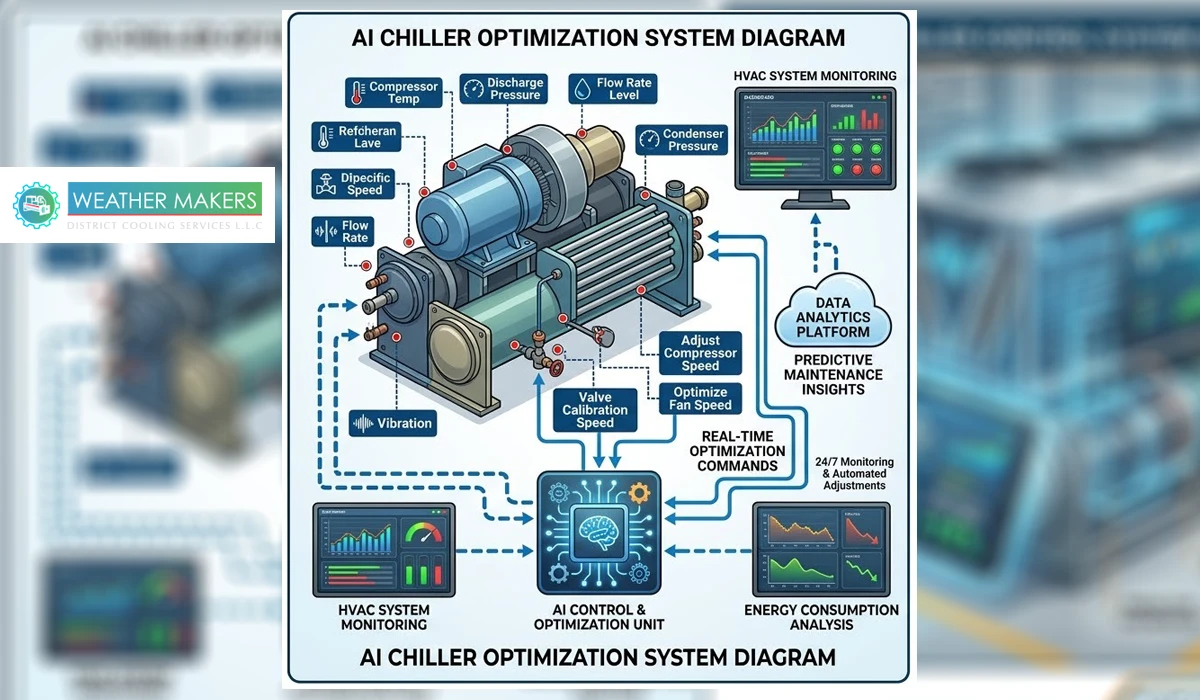
AI chiller optimization is changing how modern cooling systems operate in commercial and industrial facilities. Chillers are among the most energy-intensive systems in a building. Their performance affects operating costs, equipment reliability, and indoor comfort. When systems run inefficiently, energy consumption increases, and unexpected shutdowns become more common.
Today, advanced digital technologies are transforming cooling operations. Artificial intelligence can monitor equipment performance, analyze system behavior, and automatically adjust operating parameters. These improvements support higher efficiency and stable cooling performance.
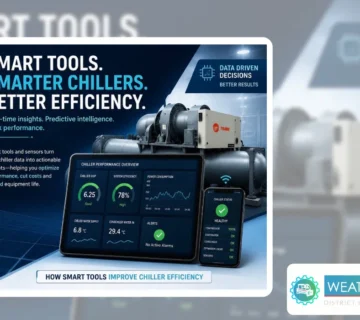
Many modern facilities now use AI powered HVAC systems to manage complex cooling loads. These systems collect data from sensors, evaluate operational patterns, and make real-time adjustments that maintain stable temperatures and efficient performance.
This shift toward intelligent automation is improving how cooling infrastructure is managed, maintained, and optimized.
The Evolution of Modern Cooling Control Systems
Traditional chiller systems relied on manual adjustments and scheduled inspections. Operators monitored system parameters and made decisions based on experience and routine maintenance schedules.
However, modern facilities demand faster response, higher efficiency, and improved reliability. This has led to the adoption of smart chiller control systems that integrate advanced sensors, automation platforms, and digital monitoring tools.
These intelligent systems can:
- Track temperature, pressure, and flow conditions in real time
- Adjust compressor and pump performance automatically
- Detect abnormal system behavior early
- Optimize cooling output based on load requirements
With AI-based HVAC monitoring, operators can clearly understand how the system is performing. This means they do not have to wait for a failure to occur or perhaps wait for any sensitivity reports, and instead, they can manage the system most efficiently and bring stability to the system.
How AI Improves Cooling Efficiency
The AI system improves the performance of the cooling system by processing large volumes of operational data. Modern cooling systems are generating data from the field, which is processed, such as continual sensor monitoring. AI tools evaluate this information to identify patterns that affect system efficiency. When inefficiencies appear, the system can automatically adjust operational parameters.
Key areas where AI supports performance include:
- Load prediction and demand response
- Automated system calibration
- Compressor performance optimization
- Flow and temperature balancing
- Energy consumption analysis
These capabilities strengthen HVAC energy management, allowing operators to reduce energy waste while maintaining consistent cooling.
When systems operate with optimized parameters, organizations achieve measurable improvements in operational performance and cost control.
Predictive Maintenance and Equipment Reliability
One of the most valuable benefits of AI integration is improved maintenance planning. Traditional maintenance schedules are often based on fixed timelines rather than actual system conditions.
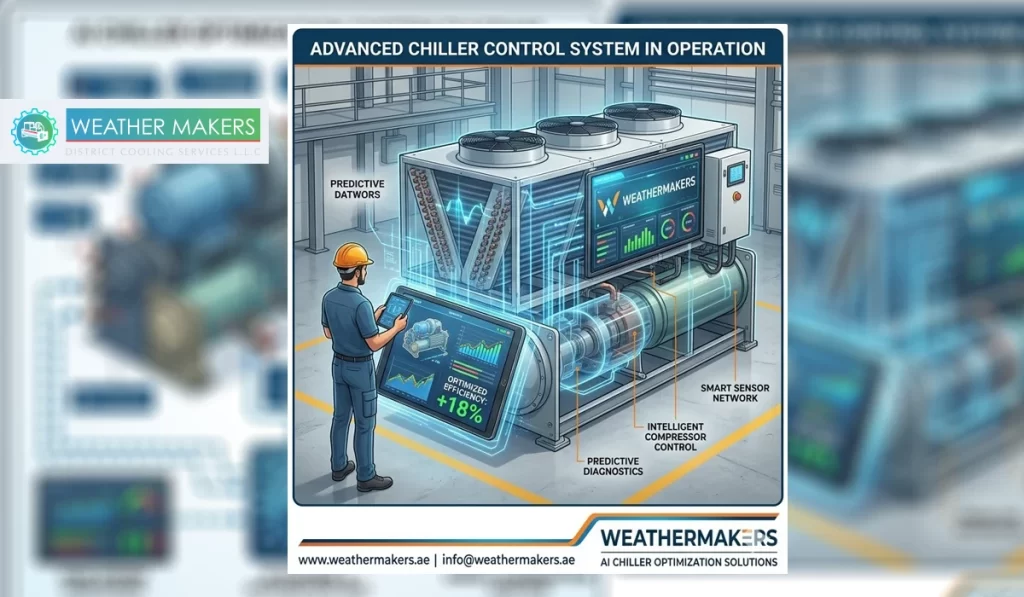
AI technology allows operators to implement predictive maintenance for chillers. This approach uses system data to identify potential problems before they lead to equipment failure.
Predictive maintenance supports:
- Early detection of compressor wear
- Identification of refrigerant flow irregularities
- Monitoring of vibration and mechanical stress
- Detection of abnormal energy consumption
- Analysis of long-term equipment trends
With predictive insights, facility teams can schedule chiller maintenance before performance declines or failures occur.
This approach significantly improves system reliability and helps avoid unexpected downtime.
Key Benefits of AI Chiller Optimization
AI chiller optimization in Modern Cooling Infrastructure
The integration of AI into cooling infrastructure offers several operational advantages. Organizations benefit from improved efficiency, better system visibility, and stronger performance stability.
Major benefits include:
- Improved chiller energy optimization and reduced operational costs
- Stable performance of energy efficient cooling systems
- Better system diagnostics and fault detection
- Reduced emergency breakdowns and service interruptions
- Extended equipment life and improved asset management
When cooling systems operate intelligently, facilities can maintain stable environmental conditions while lowering operational expenses.
The Role of Preventive Maintenance in Smart Cooling Systems
Despite sophisticated AI options, proper system care is crucial for its longevity. Such tools make it easier to keep track of this, but mechanized parts still have to be physically checked and preserved.
This way, chiller preventive maintenance can be performed regularly so that critical parts are always kept clean, proper, and operational.
Preventive maintenance programs typically include:
- Inspection of compressors and motors
- Cleaning of heat exchangers and condenser tubes
- Verification of refrigerant levels
- Electrical component testing
- Sensor calibration and control system checks
Essentially, highly trained engineers are also able to maintain the system in a proper way, and that includes the provision of specialized assistance in case of equipment, i.e., chiller repair, where necessary.
Intelligent monitoring combined with preventive maintenance helps protect the system from possible failures.
Choosing the Right Technical Expertise for Advanced Chiller Systems
As cooling systems become more integrated with technology, a greater dependence on professional skills arises. Buildings require trained personnel who are proficient in the use of mechanical equipment and control technologies that are predominantly computerized.
It is only when an experienced chiller maintenance company is involved that the customers can be assured of the fact that the high-tech cooling systems will be properly checked, diagnosed, and maintained.
The range of chiller maintenance services performed by experts includes, but is not limited to, assessing the efficiency of the system and its components, checking for faults in components, troubleshooting control systems, etc.
These services ensure that cooling equipment continues to operate efficiently as system complexity increases.
The Future of Intelligent Cooling Technology
The quick advancement of cooling systems is a clear sign of the digital transformation in today’s buildings and infrastructure. The implementation of artificial intelligence modules, sensors with IoT connectivity, and control systems in their advanced designs is revolutionary in terms of the operation of various cooling equipment. Future cooling systems will continue to improve through:
- Real-time performance analytics
- Automated system calibration
- Self-learning operational algorithms
- Integrated building management platforms
These technologies will support stronger energy performance and more reliable cooling operations across large facilities.
Organizations that adopt intelligent cooling strategies will gain long-term operational advantages while maintaining consistent environmental control.
Conclusion
Advanced infrastructure cooling requires much more than simply setting routine calendar appointments for monitoring and inspection. Modern facilities require intelligent systems that can respond to changing operational demands and maintain stable cooling performance.
By combining sophisticated analytics with sophisticated control mechanisms and predictive maintenance capacities, AI chiller optimization offers a significant solution. These are tools to cater to real-life working conditions and allow operators to do their job with high accuracy and economy when using complex cooling systems.
The adoption of artificial intelligence and advanced parameter programming will be easier to adapt to and more cost-effective, with the concomitant increase in performance and reliability, energy yield, and operational stability. Get in touch with Weather Makers for expert AI-based chiller optimization and reliable chiller maintenance solutions.
Frequently Asked Questions
What is artificial intelligence chiller optimization?
An AI chiller optimization system involves analyzing system data so that it can autonomously and therefore consistently make meaningful improvements regarding efficiency and reliability of the system.
How can AI help in chiller maintenance?
AI should be able to take continuous equipment performance monitoring and give early warning of possible problems, helping technicians in planning sequential maintenance in order to avert failures.
Why is a smart chiller control system essential in the present-day environment?
They boost energy efficiency, automate system tweaks, and provide real-time intelligence for better cooling management.

No comment