
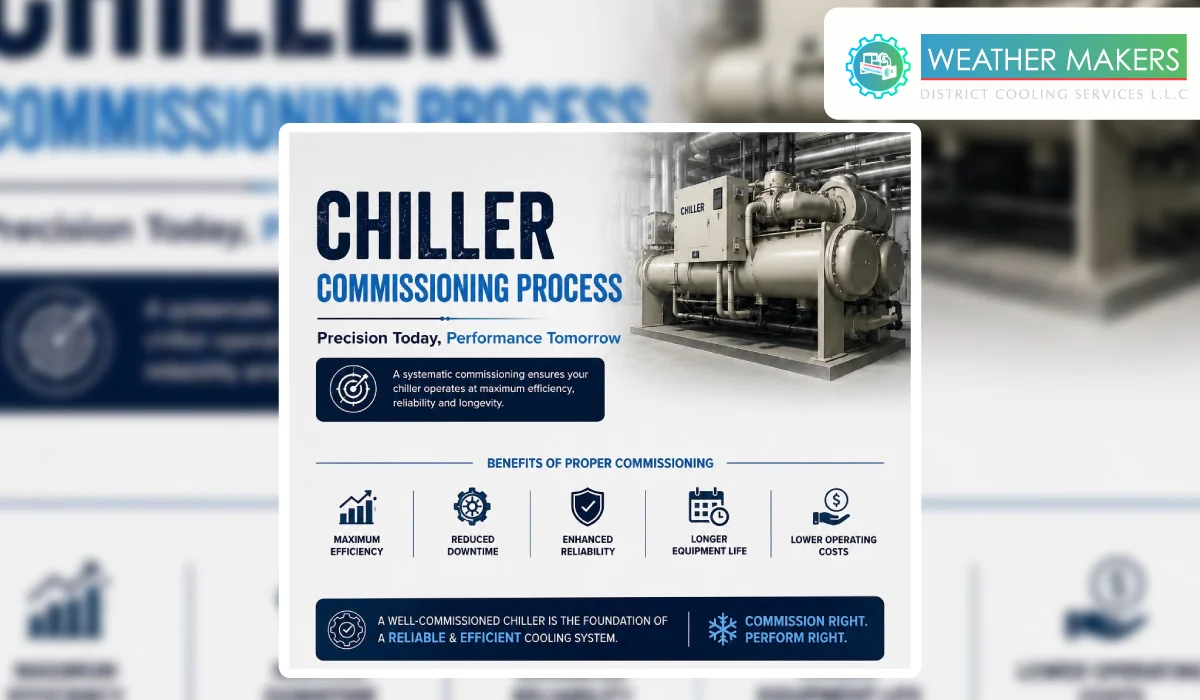
Chiller commissioning is an important step before a cooling system enters regular operation. It confirms that the equipment, controls, water circuits, electrical systems, and safety functions work together correctly. A proper startup reduces the risk of early faults and helps the system deliver stable cooling from the beginning.
A chiller may be correctly installed but still perform poorly if commissioning is rushed. Small issues with water flow, electrical connections, sensors, controls, or operating settings can affect efficiency and reliability. A structured approach helps identify these issues before they become costly problems.
Why Proper Commissioning Matters
Commissioning gives facility teams a clear picture of how the system performs under actual operating conditions. It also confirms that the installation matches the approved design and manufacturer requirements.
The process helps to:
- Confirm that equipment is installed correctly.
- Check electrical and mechanical connections.
- Verify chilled-water and condenser-water flow.
- Test safety and control functions.
- Confirm temperature and pressure readings.
- Identify installation problems before normal operation.
- Establish useful performance records for future service.
Good commissioning also creates a useful starting point for future maintenance. The recorded operating data can help technicians compare future readings and identify changes in system performance.
Main Stages of the Chiller Commissioning Process
The chiller commissioning process should follow a planned sequence. Each stage has a specific purpose. Skipping one stage can create problems during startup or later operation.
1. Review the Installation
The first step is a detailed inspection of the completed installation. Technicians check the chiller, pumps, valves, pipework, electrical panels, sensors, controls, and associated equipment.
The inspection should confirm that the installation follows the approved drawings and equipment requirements. Technicians should also check that access areas are clear and that service points are easy to reach.
Important checks include:
- Correct equipment installation and alignment.
- Proper pipe connections.
- Correct valve positions.
- Secure electrical connections.
- Suitable insulation on chilled-water lines.
- Correct installation of sensors.
- Safe access around the equipment.
- Clean and suitable plant room conditions.
Any visible defect should be corrected before the system moves to the next stage.
2. Check Water Circuits
Water flow directly affects chiller performance. The chilled-water circuit and condenser-water circuit must operate within the required flow conditions.
Technicians should inspect strainers, pumps, valves, expansion systems, and other connected components. The system should also be free from air pockets, unwanted debris, and flow restrictions.
Water quality deserves attention as well. Dirty water can affect heat transfer surfaces and reduce system efficiency. Proper flushing and cleaning before startup can help prevent avoidable operating problems.
3. Complete Electrical and Safety Checks
Electrical checks should take place before energising the chiller. Technicians inspect the power supply, connections, protection devices, control wiring, and communication links.
Safety devices must also be tested. These may include pressure protection, flow protection, temperature sensors, emergency stops, and other equipment-specific safeguards.
The control panel should display accurate information. Incorrect sensor readings can lead to poor control decisions and unnecessary alarms.
4. Verify Controls and Operating Settings
Modern chillers depend heavily on controls. The controller must receive accurate information from sensors and communicate correctly with pumps, valves, cooling towers, and building controls.
A chiller monitoring system can provide useful information during this stage. It can help technicians observe temperatures, pressures, flow conditions, alarms, and other operating data.
The control sequence should be tested before full operation. This includes start and stop commands, staging, temperature control, alarm functions, and communication with the building management system.
Correct settings also matter. Incorrect setpoints can increase energy use or cause unstable operation.
5. Start the Chiller
The first startup should follow the manufacturer’s recommended procedure. Technicians should confirm that all required systems are ready before starting the compressor.
During startup, they should closely monitor key readings. These include chilled-water temperature, condenser-water temperature, refrigerant conditions, pressures, current, and flow.
The first few minutes can reveal problems that were not visible during static inspections. Unusual noise, vibration, pressure changes, or alarms should be investigated immediately.
The chiller should not be placed under full load until the initial operating condition is stable.
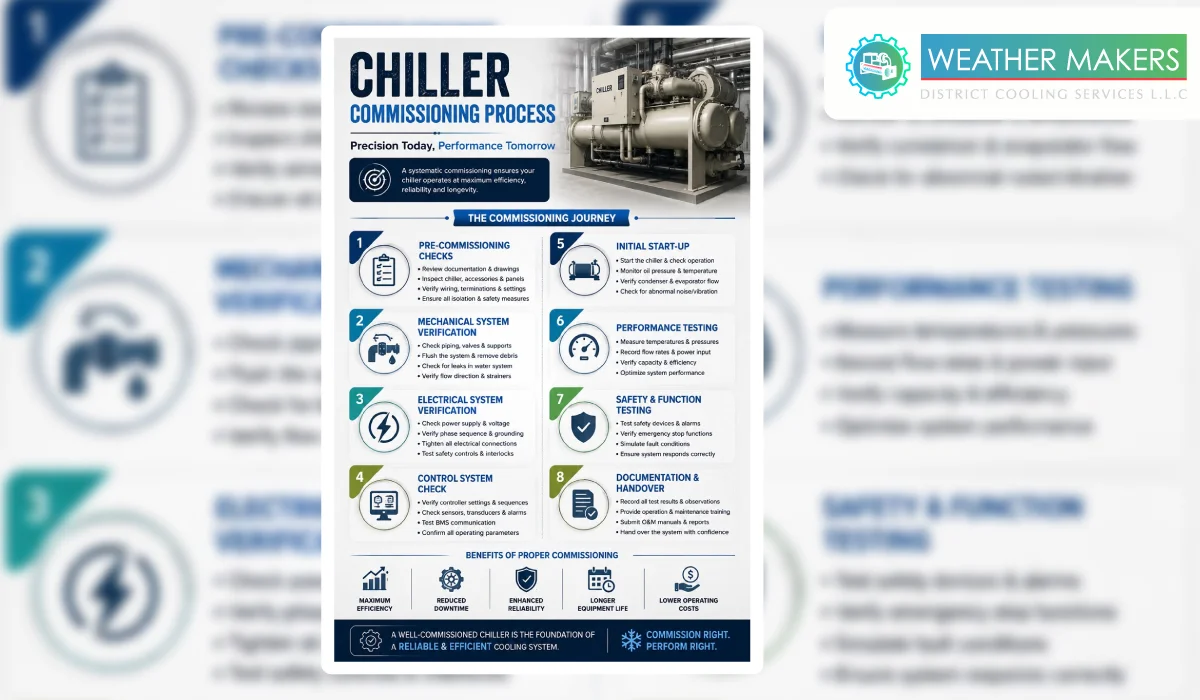
6. Test Under Different Loads
A chiller must perform reliably as cooling demand changes. Testing at different load levels provides a better understanding of actual operation.
Technicians can monitor performance during low, medium, and higher load conditions where practical. They should record important operating values at each stage.
The results can help identify:
- Unstable temperature control.
- Poor water flow.
- Abnormal pressure readings.
- Excessive electrical demand.
- Unexpected vibration.
- Control sequence problems.
- Performance changes between load conditions.
Load testing also provides useful baseline information. Facility teams can use this information when checking system performance in the future.
Choosing the Right Equipment Before Startup
Good commissioning starts with good planning. Chiller selection should consider the required cooling capacity, operating conditions, water temperatures, efficiency requirements, available space, and expected load profile.
Choosing equipment based only on maximum capacity can create problems. An oversized chiller may operate inefficiently at lower loads. An undersized system may struggle during periods of high demand.
The selected equipment should also work well with the wider cooling plant. Pumps, cooling towers, controls, pipework, and electrical systems must support the intended operating range.
A suitable design makes commissioning easier and improves the chances of achieving reliable long-term operation.
Commissioning After a Chiller Retrofit
A chiller retrofit can change how an existing cooling system operates. New controls, components, heat exchangers, drives, or other upgrades may affect the original operating sequence.
The modified system should therefore undergo proper testing after the work is complete. Technicians should confirm that the new components communicate correctly with existing equipment.
They should also compare operating conditions before and after the retrofit where suitable data is available. This helps confirm whether the upgrade delivers the expected improvement.
Connecting Commissioning With Future Maintenance
Commissioning should not be treated as the final task before handing over the plant. It creates a baseline for future service work.
Regular chiller maintenance Dubai programs can use commissioning records to identify changes in operating performance. Technicians can compare current temperatures, pressures, flow rates, electrical readings, and alarm history with the original baseline.
This approach makes maintenance more practical. It helps teams identify unusual changes before they develop into major faults.
Preventive service should also include cleaning, inspection, water treatment checks, electrical testing, control verification, and performance reviews. The exact maintenance schedule should follow equipment requirements and operating conditions.
Using Predictive Maintenance After Commissioning
Traditional maintenance often follows a fixed schedule. Predictive chiller maintenance adds another layer by using operating data to identify possible problems before failure occurs.
Technicians can monitor changes in vibration, temperature, pressure, energy consumption, and other useful parameters. A gradual change may indicate developing mechanical or operational issues.
This approach can support better maintenance planning. It can also reduce unexpected shutdowns and help facility teams plan repairs during suitable maintenance periods.
When Professional Support Is Needed
Commissioning requires technical knowledge and careful testing. Qualified specialists can identify problems that may not be obvious during a basic visual inspection.
Professional AC chiller maintenance companies in Dubai may provide inspection, testing, startup support, performance verification, and maintenance planning as part of a wider cooling service.
Professional support becomes especially useful for large systems, complex plants, new installations, major equipment changes, and systems with advanced controls.
The goal is not simply to start the chiller successfully. The goal is to establish safe and stable operation that can continue over the long term.
Common Problems Found During Startup
Commissioning can uncover several issues before the system reaches normal operation. Finding them early can prevent downtime and unnecessary repair costs.
Common problems include:
- Incorrect water flow.
- Closed or incorrectly positioned valves.
- Sensor calibration errors.
- Electrical connection problems.
- Incorrect control settings.
- Air trapped in the water circuit.
- Unusual vibration or noise.
- Communication problems between controls.
- Incorrect temperature readings.
- Unexpected alarms during startup.
Each issue should be investigated before the system is accepted for routine operation.
What Happens After Commissioning?
After testing is complete, technicians should record the final operating conditions. The records should include important readings, test results, alarm checks, control settings, and any corrective work completed during commissioning.
A proper handover should give the facility team enough information to understand the system. It should also provide a useful reference for future inspections and service work.
Ongoing air conditioning services can then support the wider cooling environment. Regular inspections help keep connected equipment operating correctly and reduce the chance of problems affecting the chiller.
For facilities that prefer planned service arrangements, a chiller AMC company in Dubai can provide scheduled inspections and maintenance based on the equipment and operating requirements.
The right service plan depends on the chiller type, operating hours, load pattern, environment, and manufacturer’s recommendations.
Supporting Long-Term Chiller Performance
A successful startup is only the beginning. Chillers need regular attention throughout their operating life.
Routine service can include cleaning heat transfer surfaces, checking refrigerant conditions, inspecting electrical components, testing controls, reviewing water quality, and checking operating performance.
Facilities may also use an industrial chiller maintenance programme when cooling equipment operates under demanding conditions. A planned service approach helps protect equipment and maintain dependable cooling.
When a fault does occur, timely chiller repair in Dubai can help prevent a minor issue from becoming a major failure. Technicians should investigate the underlying cause instead of only correcting the visible symptom.
Why a Structured Startup Delivers Better Results
A structured commissioning procedure gives the facility team greater confidence in the cooling system. It confirms that individual components work correctly and that the complete plant operates as one system.
It also reduces uncertainty. Instead of waiting for problems to appear during daily operation, technicians can identify many issues during controlled testing.
This can improve reliability, support efficient operation, and make future maintenance easier. It also gives facility managers useful performance data for making informed service decisions.
Reliable chiller services Dubai programmes should build on this baseline. Regular performance checks can show whether the system continues to operate close to its original condition.
Conclusion
A well-planned chiller commissioning procedure helps establish safe, stable, and efficient operation from the start. It covers installation checks, water flow, electrical systems, controls, startup, load testing, performance verification, and documentation.
Commissioning should be treated as an important part of the complete equipment lifecycle. Good records and regular service can help protect performance long after the initial startup.
When commissioning is done correctly, facility teams gain a reliable operating baseline. That baseline supports better maintenance decisions, faster fault identification, and more dependable cooling.
Weather Makers District Cooling Services LLC provides professional support for reliable chiller operation.
Frequently Asked Questions
What is the purpose of chiller commissioning?
It confirms that the chiller and connected systems operate safely and correctly before normal use. It also establishes baseline performance data.
When should a chiller be commissioned?
Commissioning should take place after installation or major modification and before regular operation. Testing should also follow significant system changes.
How does commissioning improve chiller performance?
It identifies installation, flow, control, electrical, and operating issues early. This helps the system achieve stable performance and supports future maintenance.



[…] equipment needs proper testing before regular operation. Chiller commissioning services can verify flow, temperatures, controls, safety functions, and equipment […]
[…] chiller commissioning services can help verify equipment operation, control sequences, water flow, and other important […]