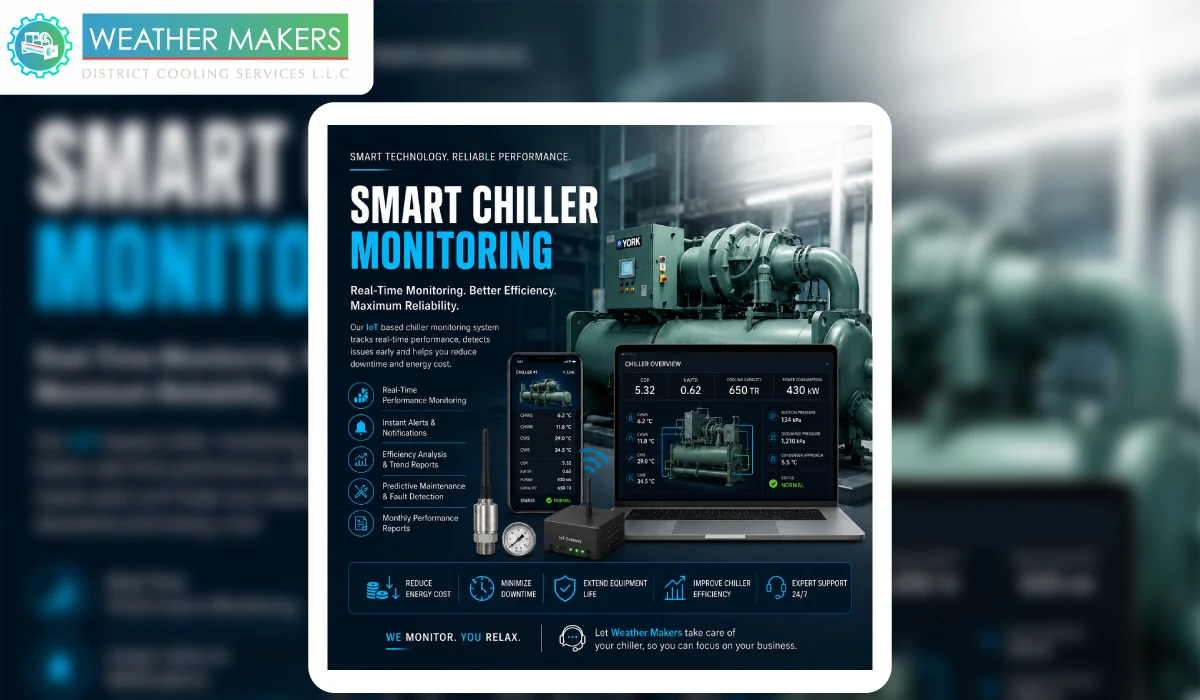
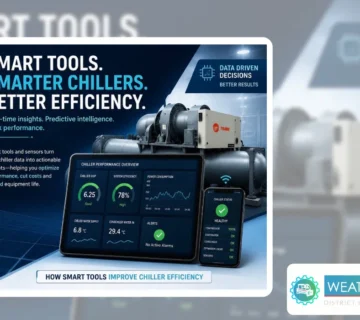
Chiller monitoring system technology helps facility teams understand how their cooling equipment is performing throughout daily operations. Instead of finding problems after a breakdown occurs, engineers can track system behaviour, notice unusual changes, and take action at an early stage. Smart sensors collect important operating information and help maintenance teams keep equipment reliable while reducing avoidable repair costs.
Chillers often operate under changing conditions due to weather, building usage, and cooling demand. These changes can affect energy use and overall performance if they are not monitored properly. With continuous monitoring, engineers can review equipment behaviour, identify performance concerns, and make maintenance decisions based on actual system conditions.
Why Smart Sensors Are Essential for Modern Chillers
A chiller depends on several components working together to maintain stable cooling performance. The compressor, pumps, heat exchangers, valves, and control systems all have an impact on how efficiently the system operates. If one part starts working differently than expected, it can affect the performance of the complete cooling system.
This is where smart chiller monitoring becomes useful. Sensors installed across the system collect operating information and send it to a monitoring platform, allowing engineers to review important performance details without depending only on manual checks.
These sensors commonly track:
- Water supply and return temperatures
- Refrigerant pressure
- Water flow rate
- Compressor operating hours
- Electrical power consumption
- Equipment vibration
- Ambient operating conditions
Having this information available helps maintenance teams understand equipment conditions more clearly. It also allows them to investigate unusual readings before they develop into larger operational problems.
How a Chiller Monitoring System Improves Daily Performance
Regular inspections are important, but they only give small details of the equipment’s status at that particular moment in time. However, monitoring gives information on a continuous basis while the chiller is in operation.
This helps detect performance changes early and allows engineers to take corrective action before cooling efficiency declines or energy consumption increases. Key advantages include:
- Faster identification of operating issues
- Improved equipment reliability
- Better control of energy consumption
- Reduced chances of sudden breakdowns
- Longer equipment service life
- More organised maintenance planning
Continuous monitoring also supports real-time chiller monitoring, allowing engineers to compare current readings with previous performance data and identify changes that may require attention.
Using Connected Technology to Make Better Decisions
Cooling equipment produces a large amount of operating data during normal operation. Without a proper monitoring system, important changes in performance may go unnoticed until they start affecting efficiency or reliability.
Many facilities now use IoT in HVAC solutions to collect and review equipment data automatically. Instead of depending only on manual readings, maintenance teams can monitor important operating conditions through a central dashboard and understand how the system is performing.
With IoT chiller monitoring, engineers can receive alerts when equipment readings move away from normal operating levels. This helps them check the issue at an early stage and take corrective action before it leads to unnecessary downtime or major repairs.
Detecting Problems Before They Become Expensive
Most chiller problems develop gradually rather than happening suddenly. Changes in pressure, temperature, vibration, or energy consumption often appear before a major equipment issue occurs. Smart sensors help maintenance teams notice these early warning signs and respond at the right time.
They can identify:
- Increasing compressor load
- Reduced cooling performance
- Water flow problems
- Pressure changes
- Higher energy consumption
- Unusual operating conditions
Early detection supports effective HVAC predictive maintenance by helping engineers address developing issues before they affect system operation.
Facilities that follow planned Industrial Chiller Maintenance programmes can use monitoring data to understand equipment condition between regular inspections and make maintenance decisions with greater accuracy.
Using Data to Plan Maintenance More Effectively
Accurate operating data allows the maintenance team to have a clear understanding of what is going on inside the chiller system. Engineers can assess equipment performance and plan maintenance based on actual operating conditions rather than fixed schedules. Performance trend analysis helps identify recurring issues before they become major problems.
This approach improves equipment reliability and helps maintain consistent cooling performance. Performance data also supports predictive chiller maintenance, allowing maintenance activities to focus on areas that require attention. A well-planned chiller preventive maintenance programme becomes more effective when supported by continuous equipment information.
Improving the Efficiency of Chilled Water Systems
A monitoring platform provides information about more than the chiller itself. It also helps engineers understand the performance of connected chilled water systems, including temperature balance and water flow conditions.
Maintaining stable operating conditions helps the system deliver consistent cooling while avoiding unnecessary energy use. Regular performance reviews also improve chiller plant efficiency by helping teams identify areas where adjustments can reduce energy consumption.
Many facilities combine monitoring with professional air conditioning services to maintain dependable cooling performance and support long-term system reliability.
Planning Future Upgrades with Confidence
Operating records help engineers understand how a chiller performs over time. This information is useful when planning upgrades because decisions can be made based on actual system performance rather than only the age of the equipment.
Performance data supports better chiller selection for new projects by showing the cooling requirements and operating conditions of a facility. It also helps determine whether a chiller retrofit is a suitable option compared with replacing the complete system.
Experienced chiller companies in Dubai can review this information and recommend improvements that match the facility’s cooling needs while improving overall system performance.
Benefits for Facility Managers
Facility managers need clear information to keep cooling systems operating efficiently. Real-time monitoring gives them a better understanding of equipment performance and helps them respond quickly when operating conditions change.
Some key benefits include:
- Better visibility of equipment performance
- Faster identification of potential issues
- Improved maintenance planning
- Reduced unexpected downtime
- Better control over operating costs
- Increased confidence in system reliability
Many organisations work with a trusted chiller maintenance company in Dubai to review performance reports and plan maintenance activities based on actual equipment conditions.
Turning Monitoring Data into Action
Collecting equipment data is only useful when it leads to practical decisions. Engineers need to understand the information, identify areas that need attention, and take the right action at the right time.
For businesses managing multiple facilities, experienced chiller maintenance companies in UAE help maintain consistent maintenance standards while using performance information to improve equipment reliability.
Keeping Cooling Systems Reliable
Smart monitoring helps identify many performance issues early, but professional support is still important when equipment needs attention. If a fault is detected, timely chiller repair Dubai helps restore normal cooling operation and minimise disruption.
Regular inspections and planned maintenance also help ensure that monitoring results are followed by the right corrective actions. This keeps cooling systems dependable and helps prevent repeated performance problems.
Many businesses include scheduled chiller services Dubai as part of their maintenance plans to support long-term equipment performance.
Conclusion
Smart sensors have made chiller maintenance more practical by giving engineers better visibility into equipment performance. Instead of waiting for major failures, businesses can identify early signs of problems and take corrective action before they affect daily operations. This helps improve reliability, reduce downtime, and support more effective maintenance planning.
A dependable chiller monitoring system provides accurate performance information that helps engineers make better decisions throughout the equipment lifecycle. Businesses that need ongoing maintenance support often choose a reliable chiller AMC company in Dubai to manage inspections, maintenance schedules, and system performance throughout the year.
WeatherMakers provides reliable chiller monitoring and maintenance solutions to help businesses improve cooling system performance and efficiency.
Frequently Asked Questions
What is a chiller monitoring system?
A chiller monitoring system tracks chiller performance and connected components in real time. It collects operating data that helps engineers identify issues early and plan maintenance before problems become serious.
Why are smart sensors important for chiller monitoring?
Smart sensors monitor important chiller conditions such as temperature, pressure, water flow, and energy consumption. They help maintenance teams find unusual changes early and prevent major equipment problems.
Can real-time monitoring improve chiller efficiency?
Yes, real-time monitoring helps improve chiller efficiency by identifying energy waste and performance issues. It supports better maintenance decisions and helps maintain reliable cooling operations.



[…] chiller plant management system can bring these readings into one place. This allows operators to identify changes more quickly and […]