
Hybrid chiller system technology is changing how large buildings manage cooling demand. Facility owners want lower energy costs, stable performance, and better environmental outcomes. Traditional cooling methods can consume significant power during peak operating hours. A hybrid approach offers a practical way to reduce energy use while maintaining reliable cooling throughout the year.
Many facilities now look beyond conventional equipment upgrades. They want cooling strategies that adapt to changing weather conditions, occupancy levels, and operating requirements. This is where hybrid cooling solutions stand out. They combine multiple cooling methods into one integrated system, helping facilities achieve better efficiency and long-term value.
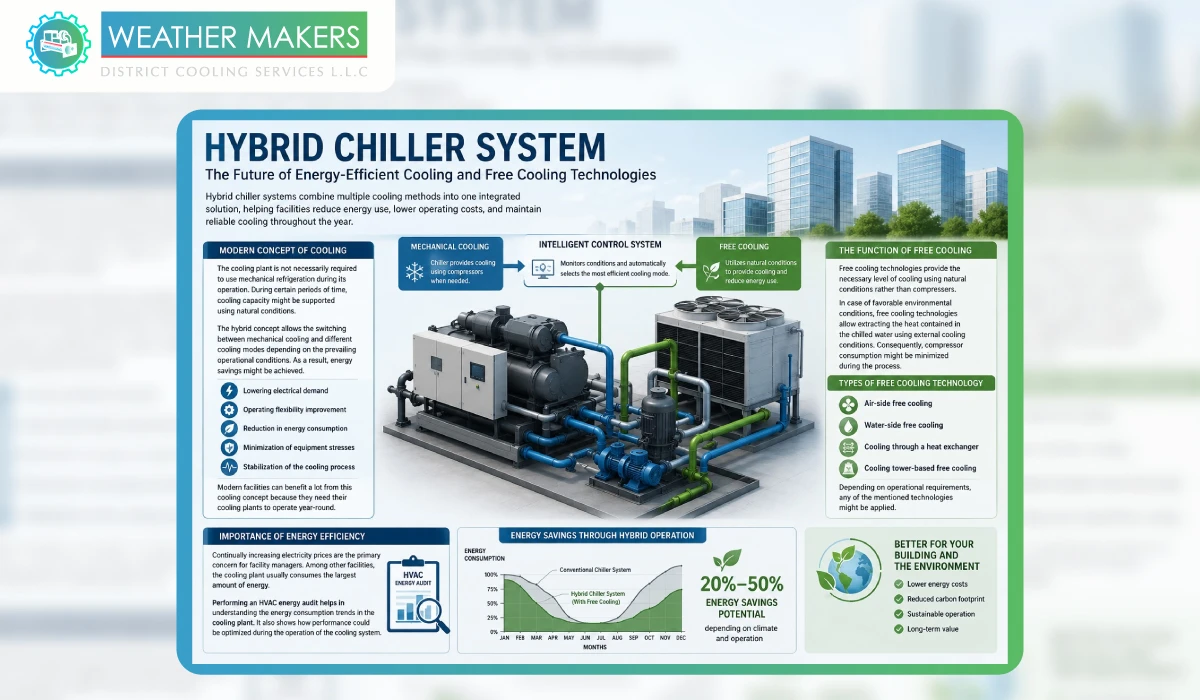
Modern Concept of Cooling
The cooling plant is not necessarily required to use mechanical refrigeration during its operation. During certain periods of time, cooling capacity might be supported using natural conditions.
The hybrid concept allows the switching between mechanical cooling and different cooling modes depending on the prevailing operational conditions. As a result, energy savings might be achieved.
The concept of hybrid cooling includes:
- Lowering electrical demand
- Operating flexibility improvement
- Reduction in energy consumption
- Minimization of equipment stresses
- Stabilization of the cooling process
Modern facilities can benefit a lot from this cooling concept because they need their cooling plants to operate year-round.
The Function of Free Cooling
One of the key advantages of free cooling technologies is the capability to provide the necessary level of cooling using natural conditions rather than compressors.
In case of favorable environmental conditions, free cooling technologies allow extracting the heat contained in the chilled water using external cooling conditions. Consequently, compressor consumption might be minimized during the process.
The main types of free cooling technology include:
- Air-side free cooling
- Water-side free cooling
- Cooling through a heat exchanger
- Cooling tower-based free cooling
Depending on operational requirements, any of the mentioned technologies might be applied.
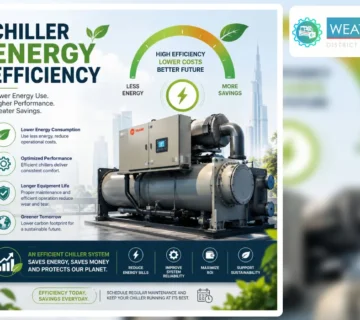
Importance of Energy Efficiency
Continually increasing electricity prices are the primary concern for facility managers. Among other facilities, the cooling plant usually consumes the largest amount of energy.
Performing an HVAC energy audit helps in understanding the energy consumption trends in the cooling plant. It also shows how performance could be optimized during the operation of the cooling system.
Organizations focused on energy efficiency in their cooling systems tend to have higher efficiency indicators, including:
- Lower energy costs
- Higher equipment performance
- Reduced emissions of CO2
- Improved occupants’ thermal comfort
- Reliable system operation
Therefore, energy efficiency has become an integral part of any facility manager’s job.
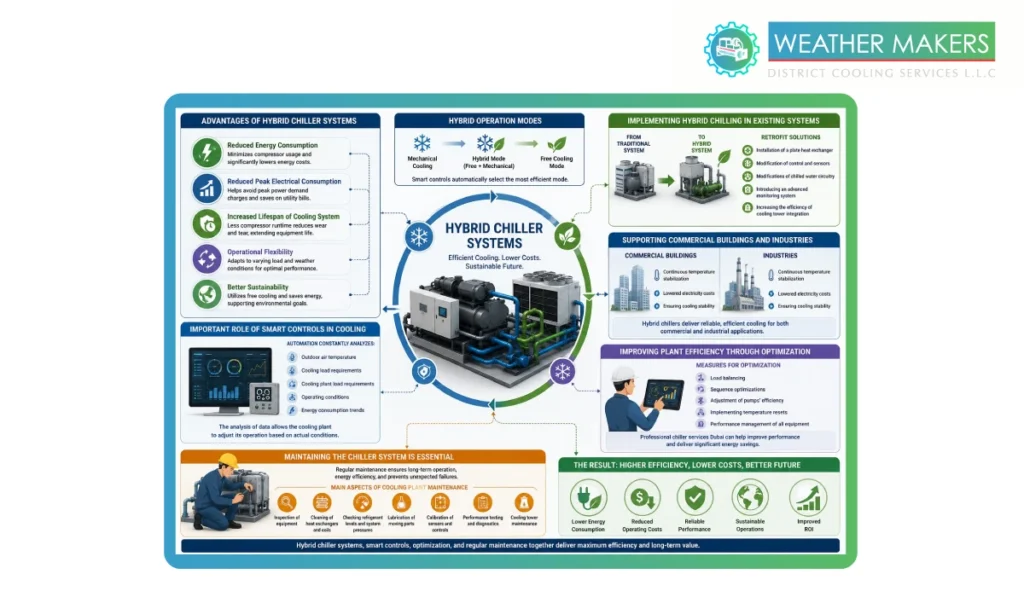
Advantages of Hybrid Chiller Systems
Hybrid Chiller System Benefits for Businesses
There are several benefits related to the operation of Hybrid Cooling Systems.
Reduced Energy Consumption
Since the use of the hybrid concept allows for minimizing energy spent on compressors, energy savings might be significant.
Reduced Peak Electrical Consumption
Using hybrid cooling technologies is one of the ways to save money on peak power consumption since high energy usage leads to additional peak charges.
Increased Lifespan of Cooling System
Reducing the compressor running period results in minimizing their workload and consequently prolonging their operational period.
Operational Flexibility
Having the ability to adapt to different operational conditions, the hybrid chillers is capable of meeting varying requirements.
Better Sustainability
Using free cooling methods enables energy savings. Therefore, hybrid cooling promotes more sustainable operation.
Implementing Hybrid Chilling in Existing Systems
Many facility managers believe that the installation of a hybrid chilling system means replacing the cooling plant with a brand new one. However, nowadays, many hybrid cooling systems can be added to existing installations.
Through chiller retrofit solutions, you can introduce new features into your current cooling plant. This will allow optimizing the existing system and making it more effective.
Retrofitting measures might include:
- Installation of a plate heat exchanger
- Modification of control and sensors
- Modifications of chilled water circuitry
- Introducing an advanced monitoring system
- Increasing the efficiency of cooling tower integration
Supporting Commercial Buildings and Industries
Modern commercial cooling systems are becoming more energy efficient, operate non-stop during weekdays, and serve increasingly occupied buildings.
Additionally, industrial plants also require proper cooling in order to provide reliable protection for production equipment. Effective industrial chiller maintenance plays a major role in maintaining stable operations. Many facilities partner with chiller maintenance companies in UAE to support reliable cooling performance and reduce the risk of unexpected system failures.
Using a hybrid chiller helps achieve:
- Continuous temperature stabilization
- Lowered electricity costs
- Ensuring cooling stability
Therefore, a hybrid chiller is beneficial for both industries.
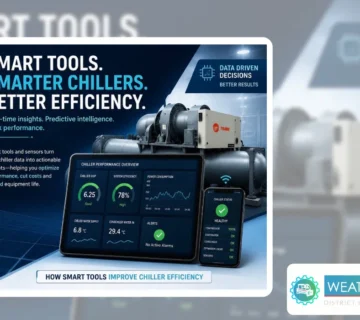
Important Role of Smart Controls in Cooling
Modern cooling systems are usually equipped with smart automation control. It allows managing the cooling process effectively and efficiently.
The automation constantly analyzes:
- Outdoor air temperature
- Cooling load requirements
- Cooling plant load requirements
- Operating conditions
- Energy consumption trends
The analysis of the obtained data allows the cooling plant to adjust its operation based on the actual situation.
Efficient HVAC energy efficiency becomes possible due to intelligent automation and data collection.
Improving Plant Efficiency Through Optimization
Most organizations have high-quality equipment installed. Still, they face problems related to inefficient plant operation.
Proper chiller plant optimization involves improving the performance of the whole facility rather than each component individually.
Measures to be taken for optimization might include:
- Load balancing
- Sequence optimizations
- Adjustment of pumps’ efficiency
- Implementing temperature resets
- Performance management of all equipment
Many facilities also rely on professional chiller services Dubai to support performance improvements and maintain operational efficiency. Even minor steps might lead to a significant saving in energy usage.
Maintaining the Chiller System is Essential
Any facility, regardless of how advanced the installed equipment is, needs regular maintenance.
By performing regular maintenance of your cooling plant, you can ensure long-term operation and energy efficiency. Regular checkups and diagnostics help prevent future problems.
The main aspects of cooling plant maintenance might include:
- Cleaning heat exchanger surfaces
- Checking the condition of the refrigerant
- Verification of the effectiveness of the water treatment system
- Calibration of sensors and controllers
- Testing the control system
For many organizations, hiring a reputable chiller maintenance company in Dubai might prove to be useful.
Performing preventive maintenance of the system proves to be the most efficient strategy for ensuring its performance.
In emergencies, facility managers often search for chiller repair near me services to obtain immediate technical support and reduce operational disruptions.
Preparing for Future Requirements
The cooling plant must have the capacity for future expansion. With business development, the cooling load requirement also increases.
Some organizations eventually require chiller replacement when older equipment can no longer meet efficiency expectations. Such a decision is made when old equipment cannot provide the necessary energy efficiency level.
Other organizations tend to extend system lifetime via modernization and optimization. Moreover, preventive maintenance helps to anticipate future requirements.
Performing timely chiller preventive maintenance allows for avoiding unnecessary downtime.
Should an unexpected problem occur, access to chiller repair Dubai services can help restore cooling operations quickly and minimize downtime.
Conclusion
Cooling technologies are evolving. Facility owners are facing growing pressure to reduce costs and improve the efficiency of cooling operations. Hybrid cooling offers a good solution.
A hybrid chiller system, combined with free cooling methods and regular maintenance, allows for achieving high efficiency and energy savings during the cooling process.
WeatherMakers delivers advanced cooling solutions that help improve efficiency and reduce operating costs.
Frequently Asked Questions
What is a hybrid chiller system?
A hybrid chiller combines traditional mechanical cooling with alternative cooling methods to reduce energy consumption and improve overall efficiency.
How do free cooling methods reduce energy costs?
They use naturally available cooling conditions to reduce compressor operation, which lowers electricity consumption and operating expenses.
Why is chiller plant optimization important?
It improves overall cooling plant performance, reduces wasted energy, and helps equipment operate more efficiently over the long term.

No comment