
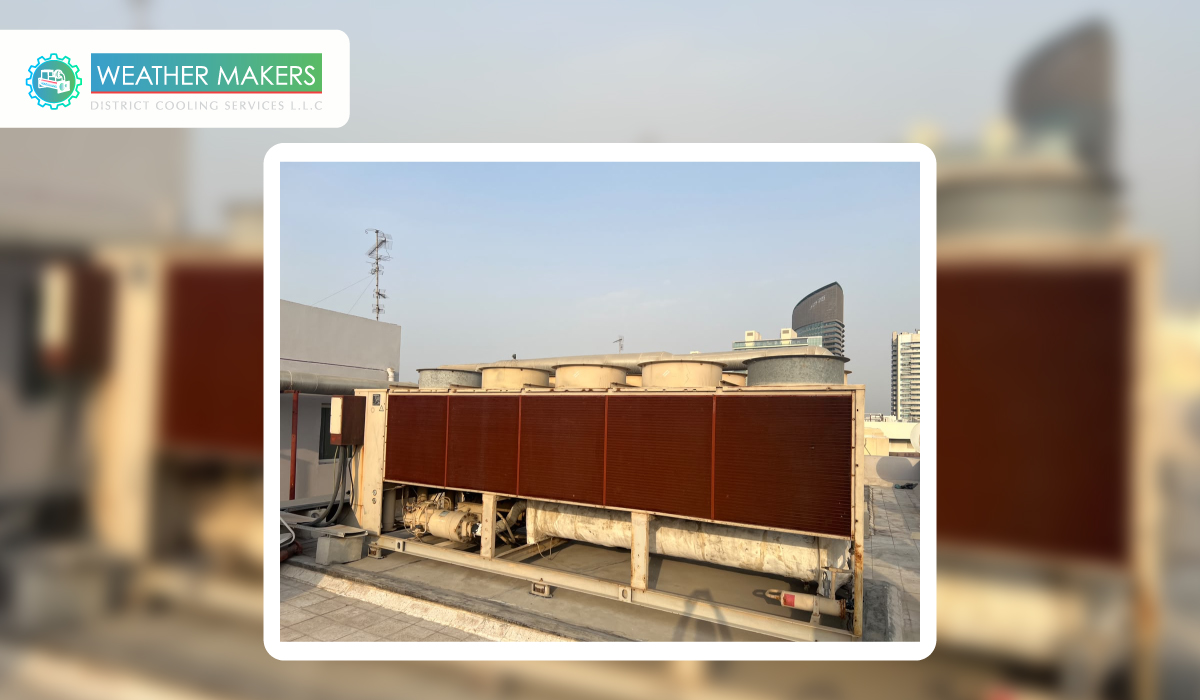
Heat exchanger performance is a key factor in chiller plant efficiency. A heat exchanger transfers heat between fluids during cooling. When it works properly, the chiller can remove heat without using more energy than necessary. When its condition declines, the compressor, pumps, and other components may need to work harder. This can increase energy use and affect cooling reliability. For this reason, heat exchanger conditions deserve regular attention in every large cooling system.
Why Heat Transfer Matters
A chiller depends on effective heat transfer. The evaporator removes heat from chilled water. The condenser rejects heat from the refrigerant. Both processes depend on clean surfaces, correct flow, and suitable temperature differences.
Poor heat transfer can affect the complete cooling cycle. The chiller may struggle to maintain the required leaving-water temperature. Compressor work can increase. Energy consumption can also rise.
This is why heat transfer should be considered during equipment selection and daily operation. It is not only a maintenance concern. It is also an important part of long-term chiller plant efficiency.
How Heat Exchangers Influence Energy Use
Heat Exchangers work continuously while the plant is operating. Their condition can influence how efficiently the refrigeration cycle performs.
Several factors should be controlled:
- Water flow should remain within the required operating range.
- Tube surfaces should remain reasonably clean.
- Water quality should be monitored.
- Temperature differences should be checked regularly.
- Pressure changes should be investigated.
- Sensors should provide accurate readings.
Deposits on heat transfer surfaces create resistance. Scale, dirt, corrosion products, and biological growth can reduce the ability of the exchanger to transfer heat. The system may then require more energy to achieve the same cooling output.
A clean exchanger supports more stable operation. It also gives the plant a better chance of maintaining performance when cooling demand changes.
Heat Exchanger Performance and System Design
Heat exchanger performance should be considered when selecting equipment for a new cooling plant. The exchanger must suit the expected cooling load, water temperatures, flow rates, and operating conditions.
A proper chiller system design considers the entire cooling circuit. Chillers, pumps, piping, valves, controls, and terminal units must work together. An exchanger that does not match the system requirements can create restrictions and reduce overall performance.
Part-load operation also matters. Cooling demand changes throughout the day. Equipment should be selected and controlled to operate efficiently at different loads rather than only at maximum capacity.
This approach supports stable cooling while helping control unnecessary energy consumption.
The Effect of Water Flow
Water flow has a direct effect on heat transfer. Insufficient flow can reduce the exchanger’s ability to absorb or reject heat. Excessive flow can increase pump energy and create unnecessary pressure losses.
Flow should be measured instead of assumed. Operators can compare actual readings with design values. These changes might indicate clogged strainers, valve issues, pumping problems, or restrictions in the system. Hydraulic balance will also contribute to proper sharing of the load by the various chillers.
For water-cooled equipment, water cooled chiller maintenance should include checks of condenser water conditions, flow, and tube cleanliness to help prevent scaling and corrosion. These problems can gradually reduce heat transfer.
Cleaning Supports Better Heat Transfer
Tube fouling is one of the common reasons for declining exchanger performance. Deposits create an unwanted layer between the water and the tube surface. Heat then moves less effectively through the exchanger.
Regular inspection helps determine when cleaning is needed. Cleaning should be based on the actual condition of the equipment rather than a fixed assumption.
A useful inspection can include:
- Checking inlet and outlet temperatures.
- Reviewing pressure differences.
- Inspecting tubes and water boxes.
- Checking water quality.
- Reviewing changes in energy consumption.
- Comparing current readings with previous results.
After cleaning, operating conditions can be checked again. This gives the facility team a clearer view of whether the work produced a measurable improvement.
Choosing Equipment for Better Efficiency
Modern high efficiency chillers can reduce energy use when they are correctly selected and operated. However, high equipment ratings alone do not guarantee efficient plant operation.
The complete system needs to match the building’s cooling requirements. A correctly sized chiller design can avoid excessive capacity and unnecessary energy use. It should also consider expected operating hours, load changes, redundancy, and future requirements.
An air cooled chiller design may be suitable for some applications, while other facilities may benefit from water-cooled equipment. The decision should be based on site conditions and the required operating profile.
For larger facilities, central chiller plant design should consider staging, pump operation, controls, and part-load performance. These details can have a major effect on total energy consumption.
Monitoring Performance Over Time
A chiller plant should not be judged only by whether it is producing cooling. Operating data can provide a much clearer picture of efficiency.
Teams can monitor:
- Chilled water temperatures.
- Condenser conditions.
- Water flow.
- Pressure differences.
- Cooling load.
- Electrical consumption.
- Equipment run time.
A chiller plant management system can bring these readings into one place. This allows operators to identify changes more quickly and compare current conditions with previous performance.
For example, a gradual increase in temperature difference or pressure loss may indicate a developing problem. Early attention can prevent the issue from becoming a major repair.
Good monitoring also supports chiller energy efficiency because operators can make decisions based on actual system conditions.
Maintenance Protects Long-Term Results
Chiller plant maintenance should cover the complete plant rather than focusing on one machine. Pumps, valves, sensors, controls, cooling equipment, and heat transfer surfaces all affect efficiency.
A simple chiller maintenance checklist can help technicians organise recurring inspections. The checklist should reflect manufacturer recommendations and actual operating conditions.
Useful tasks include:
- Checking operating temperatures.
- Inspecting heat transfer surfaces.
- Reviewing water quality.
- Checking pumps and valves.
- Inspecting controls and sensors.
- Reviewing electrical readings.
- Recording unusual noise or vibration.
- Comparing current performance with previous records.
Regular chiller maintenance can also help identify small problems before they affect plant operation. This supports equipment reliability and helps control unexpected repair costs.
When an Upgrade May Be Useful
Older cooling plants may still have useful service life. However, outdated controls or inefficient components can prevent them from meeting current performance expectations.
A chiller retrofit in Dubai may involve selected upgrades instead of complete replacement. Depending on the plant, improvements can include controls, sensors, variable-speed equipment, or other supporting components.
The decision should follow a technical review. It is important to consider energy usage, condition of the equipment, maintenance records, hours of operation, and future cooling needs.
It may be possible to do a selective upgrade where the equipment is still good, but some parts restrict performance.
Commissioning Creates a Useful Baseline
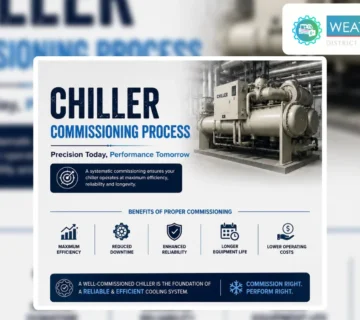
New equipment needs proper testing before regular operation. Chiller commissioning services can verify flow, temperatures, controls, safety functions, and equipment response.
Commissioning also creates baseline information. These initial readings can be used for future comparison. If performance changes later, the original data provides a useful reference.
The same principle applies after major repairs or upgrades. Testing after the work confirms whether the system is operating as expected.
Specialist support may include inspection, tube cleaning, testing, repair, optimisation, and scheduled servicing. Facilities may also require chiller services when equipment shows unusual temperatures, pressure changes, alarms, or energy consumption.
When Professional Support Is Needed
Complex cooling plants require practical knowledge of refrigeration, water flow, controls, and heat transfer. A qualified HVAC maintenance company in Dubai can inspect equipment and identify possible causes of performance loss.
When comparing HVAC maintenance companies in Dubai, facility teams should consider technical experience, response time, reporting standards, equipment knowledge, and maintenance methods. Price is important, but service quality also affects long-term operating results.
A Practical Way to Improve Plant Efficiency
Improving cooling efficiency does not always require a major capital project. The first step is to understand current operating conditions.
A practical process can include:
- Record normal operating readings.
- Identify unusual changes.
- Inspect the most likely source.
- Clean, repair, adjust, or upgrade as needed.
- Test the system after work.
- Compare the new results with the original baseline.
This approach helps connect maintenance activities with measurable performance. It also gives facility managers better information when planning future investments.
A reliable chiller maintenance company in Dubai should be able to identify the cause of a problem rather than only treat its visible symptoms.
Conclusion
The effectiveness of the heat exchanger directly influences the efficiency of the chiller plant. Clean heat transfer surfaces, proper water flow, suitable temperature ranges, good water quality, and proper controls all support effective cooling.
Efficiency needs to be viewed as a continuous process. Periodic inspections can help detect problems early. Effective maintenance also helps protect heat transfer surfaces.
Accurate monitoring can reveal gradual changes. Timely upgrades can improve older equipment when replacement is not yet necessary.
The goal is not simply to improve one component. The goal is to make the entire cooling plant operate with less wasted energy and greater reliability.
For broader cooling requirements, air conditioning services Dubai can support other parts of the building’s cooling infrastructure.
Weather Makers District Cooling Services LLC provides professional support for cooling plant performance, maintenance, cleaning, and efficiency improvement.
Frequently Asked Questions
What does heat exchanger performance mean?
Heat exchanger performance refers to how effectively an exchanger transfers heat between fluids. Good performance helps the chiller maintain the required cooling conditions.
Can cleaning improve chiller efficiency?
Yes. Removing scale and other deposits can improve heat transfer and help the system operate under more suitable conditions.
When should a heat exchanger be inspected?
It should be inspected according to equipment requirements and operating conditions. Unusual temperatures, pressure changes, or higher energy use can also indicate a need for inspection.


[…] Heat exchanger performance should therefore be checked during a technical assessment. Cleaning or corrective work may improve performance in some cases. […]
[…] useful chiller maintenance checklist can […]