
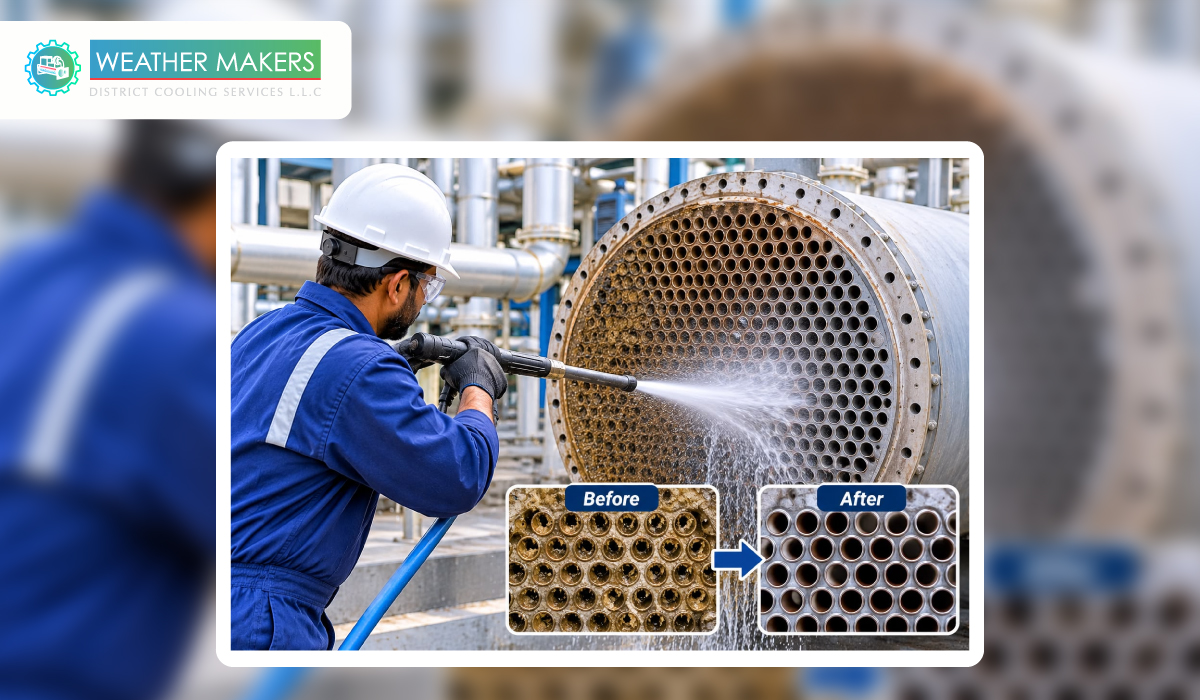
Chiller condenser tube cleaning is an important part of maintaining the cooling performance of water-cooled chillers. The condenser removes heat from the refrigerant and transfers it to the circulating water. When dirt, mineral deposits, and other materials collect inside the tubes, this process becomes less effective. The chiller may then consume more electricity to maintain the required cooling output. Regular inspection and proper cleaning help maintain heat transfer and support reliable equipment operation.
Commercial buildings, industrial facilities, and large cooling plants depend on chillers for continuous cooling. Any reduction in condenser performance can affect the entire system. Higher operating pressure, increased energy consumption, and additional compressor stress are some possible results of poor heat rejection. Understanding how condenser tubes work and why they need attention helps facility managers plan maintenance and avoid unnecessary operating costs.
How Condenser Tubes Influence Cooling Performance
The condenser is one of the main components of a water-cooled chiller. It receives hot refrigerant vapour from the compressor and transfers its heat to the condenser water. As the refrigerant loses heat, it changes from vapour into liquid before continuing through the refrigeration cycle.
Clean tube surfaces allow heat to transfer effectively between the refrigerant and water. However, mineral deposits, sediment, and other contaminants can gradually collect inside the tubes. These materials create an additional layer that restricts heat transfer.
When the condenser cannot remove heat effectively, the compressor may need to work harder to maintain the required operating conditions. This can increase power consumption and affect overall cooling capacity.
Regular inspection helps identify these changes before they develop into serious operating concerns. It also allows technicians to understand the condition of the condenser and recommend suitable maintenance.
Why Chiller Condenser Tube Cleaning Is Essential
Condenser tubes operate continuously during normal chiller operation. Their internal surfaces can gradually collect unwanted materials because of water quality, operating hours, and system conditions. Removing these deposits helps maintain effective heat rejection.
The main benefits include:
- Improved heat transfer: Removing deposits allows heat to move more effectively between the refrigerant and condenser water.
- Stable operating pressure: Clean tube surfaces support suitable condenser operating conditions.
- Better energy performance: Effective heat rejection can reduce unnecessary compressor workload.
- Reduced equipment stress: Proper condenser maintenance helps prevent additional strain on important mechanical components.
- Consistent cooling output: A clean condenser supports stable operation under different cooling demands.
The above advantages show that cleaning is a crucial aspect of maintenance. Nevertheless, the frequency of cleaning should be determined based on the state of the machinery.
Common Signs of Dirty Condenser Tubes
Tube deposits do not always cause immediate equipment failure. In many cases, cooling performance declines gradually. Facility operators may notice changes in temperature, pressure, and electricity consumption before experiencing a major problem.
Some common warning signs include:
- Higher condenser water outlet temperatures.
- Increased condenser pressure during normal operation.
- Rising electricity consumption without a major change in cooling demand.
- Longer compressor running hours.
- Reduced cooling capacity during periods of high demand.
- Frequent alarms related to condenser operating conditions.
Such symptoms may also arise due to other common chiller problems, such as reduced water flow, cooling tower problems, sensor faults, or improper control settings. A comprehensive examination of the entire system is necessary before finding out the real cause.
How Scale and Deposits Affect Heat Transfer
Water contains minerals and other substances that can settle on internal metal surfaces. Over time, these materials form deposits that increase thermal resistance and reduce the effectiveness of heat transfer.
HVAC limescale is a common example. It develops when dissolved minerals form solid deposits on surfaces exposed to water. Sediment, rust particles, and biological material can also contribute to tube fouling.
These deposits can create several operating difficulties:
- Reduced heat transfer across the condenser surface.
- Higher temperature differences during operation.
- Increased compressor discharge pressure.
- Greater electricity requirements for the same cooling output.
- Additional maintenance requirements.
This depends on factors such as deposit thickness, tube material, water conditions, and operating load. Even minor deposits can affect efficiency when they accumulate across multiple tubes. This is the reason why technicians should keep track of the operating conditions and inspect the interior surface often.
Professional Methods for Cleaning Condenser Tubes
The correct cleaning method depends on the type of deposit, tube material, and condition of the equipment. A technique suitable for one condenser may not be appropriate for another.
Professional chiller tube cleaning generally involves mechanical cleaning, chemical descaling, or a combination of suitable methods.
Mechanical Cleaning
Mechanical cleaning involves using appropriate brushes and rotating devices to remove deposits from the inner surfaces of the tubes. The technicians will choose the right brush based on the tube diameter and the type of deposit.
This technique can be used to clean dust, sediment, and some hard deposits. The proper cleaning tools can prevent damage to the tube surfaces.
Chemical Descaling
The use of chemical descaling is recommended where there is mineral or difficult-to-remove scale that requires a cleaning solution that suits its purpose. The chemical used should be compatible with the material of the tube and with the machine itself.
The concentration of the chemicals and the time for circulation will be determined by the technicians. Inaccurate use of chemicals may cause harm to metal surfaces.
Inspection After Cleaning
Cleaning should not be the final step. Technicians should inspect the tubes and check whether the work has improved operating conditions.
Where required, eddy current testing can identify tube-wall thinning, corrosion, and other defects that may not be visible during a standard inspection.
For facilities requiring Chiller condenser tube cleaning in Dubai, professional assessment helps determine the appropriate cleaning method and inspection requirements for each system.
The Connection Between Condenser Cleaning and Plant Efficiency
A condenser does not operate independently. Its performance affects the compressor, cooling tower, condenser water pumps, and other components of the cooling system.
Proper water cooled chiller maintenance should include regular checks of condenser water flow, temperature, pressure, and tube condition. These checks help technicians understand whether the condenser is operating within suitable conditions.
When there are deposits hindering heat transfer, the compressor could use more electricity in order to provide the desired amount of refrigeration. This would reduce the entire chiller plant efficiency, especially if the facility runs its cooling equipment for long hours.
Inspections will allow the professionals to assess the heat exchanger performance and spot any factors affecting the entire refrigeration cycle.
Cleaning of condenser surfaces can aid in chiller energy efficiency through effective heat rejection by the equipment. It is important to note that just by cleaning the surface, one cannot achieve reduced electricity consumption.
What Technicians Should Check During Condenser Maintenance
A proper inspection should cover more than the visible condition of the condenser. Technicians need to review operating data and examine the components that influence heat rejection.
Important inspection points include:
- Condenser water flow: Check whether water circulation meets the equipment’s operating requirements.
- Temperature readings: Compare inlet and outlet temperatures with previous operating records.
- Pressure conditions: Review condenser pressure and identify unusual changes.
- Tube condition: Inspect for scale, corrosion, sediment, and other deposits.
- Water quality: Review treatment conditions to identify possible causes of recurring deposits.
- Tube integrity: Check for deterioration and consider additional testing where necessary.
The condition of the HVAC heat exchanger should also be considered during an overall system inspection. This will allow technicians to determine whether the problem is just with the condenser or if there is an issue elsewhere in the heat exchange system.
Another equally important aspect to keep in mind is keeping accurate service records.
How Often Should Condenser Tubes Be Cleaned?
There is no set time period for cleaning all types of chillers. It is dependent on factors such as the quality of water used and the working environment.
If facilities have constant cooling demands, they will require more frequent maintenance checks. In cases where there is good water treatment and stability in the operating environment, the need for cleaning may not be frequent.
Service information and changes in condenser pressure, temperature, and energy usage should be recorded by facility management. This will aid in the creation of an appropriate maintenance schedule.
Cleaning should be determined by the condition of the equipment rather than any predetermined period of time. Unnecessary cleaning may increase maintenance expenses and cause avoidable wear to tube surfaces.
Choosing the Right Chiller Maintenance Support
Condenser maintenance requires technical knowledge, suitable cleaning equipment, and an understanding of different tube materials. Experienced technicians can identify the type of deposits and select appropriate cleaning methods.
When searching for chiller repair near me, facility managers should also consider whether the service provider can identify the cause of reduced performance instead of focusing only on immediate repairs.
When chiller maintenance services are needed, selecting an experienced technical team helps ensure that inspection, cleaning, and testing are carried out properly. The company’s technicians can also perform eddy current testing when required. This will help in determining any signs of degradation.
Professional maintenance becomes especially important when the equipment has accumulated heavy deposits, or there is concern about possible corrosion.
Chiller maintenance service Dubai provides specialised heat exchanger descaling and tube-cleaning services. The company uses Goodway tube-cleaning equipment, specialised brushes, and suitable descaling chemicals to address different types of deposits.
Conclusion
Proper condenser maintenance plays an important role in achieving effective heat dissipation and efficient cooling operation. Deposits within the tubes affect the efficiency of the process, causing increased operational pressure and power use. Chiller condenser tube cleaning helps address this issue and supports efficient equipment performance.
The facility’s operating parameters need to be monitored, appropriate water treatment maintained, and inspections scheduled based on the equipment’s needs.
Weathermakers District Cooling Services LLC provides professional heat exchanger descaling and tube-cleaning solutions for commercial and industrial cooling systems.
Frequently Asked Questions
Why is chiller condenser tube cleaning necessary?
Chiller condenser tube cleaning removes scale, dirt, and other deposits that restrict heat transfer. It helps the condenser reject heat effectively and supports better cooling performance.
How often should condenser tubes be cleaned?
Cleaning frequency depends on water quality, operating conditions, and manufacturer recommendations. Regular inspections help determine when cleaning is necessary.
Can dirty condenser tubes increase electricity consumption?
Yes. Deposits can reduce heat transfer and make the compressor work harder. This can increase the system’s electricity consumption.

[…] Chiller condenser tube cleaning is particularly important for water-cooled equipment. Removing deposits helps maintain heat transfer and supports reliable operation. […]