
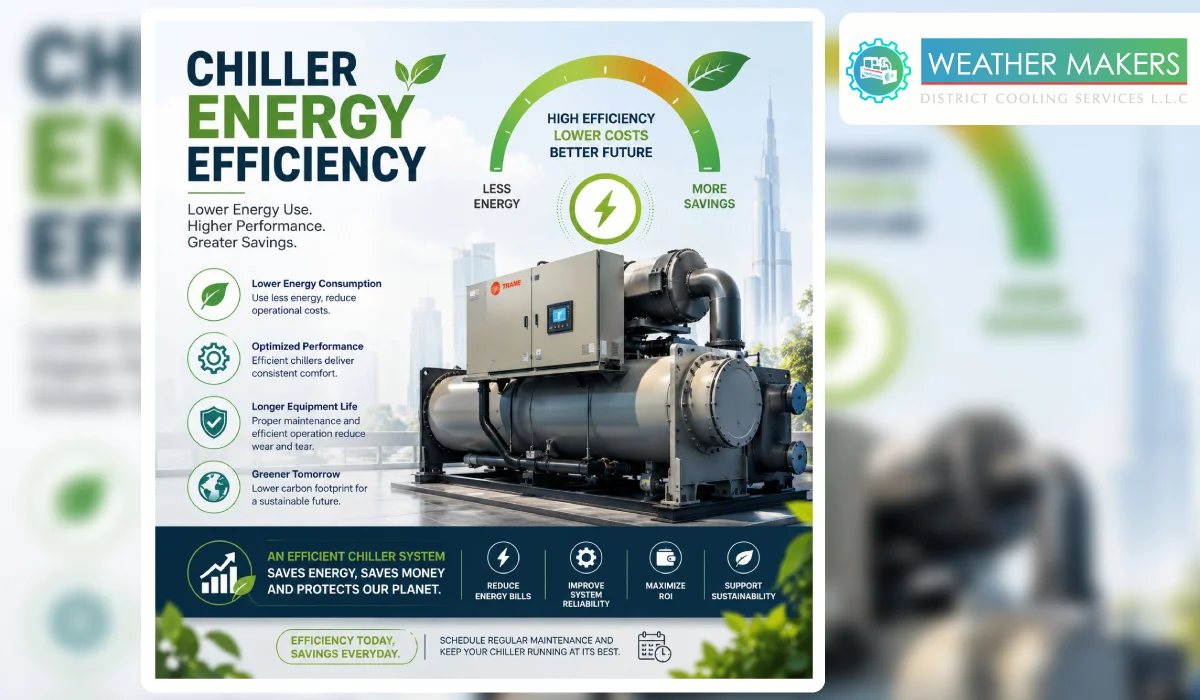
Chiller energy efficiency is becoming an important part of modern cooling management. Chillers often account for a large share of energy use in buildings and industrial facilities. Improving their performance can lower electricity consumption, reduce operating costs, and support environmental goals. High-efficiency equipment can make a significant difference when it is correctly selected, installed, operated, and maintained.
HVAC systems also face growing pressure to reduce their environmental impact. Facility owners are looking for practical ways to lower emissions without affecting cooling performance. Better chiller selection, accurate system control, regular inspections, and equipment upgrades can support this goal. A well-managed cooling system can deliver stable performance while using energy more effectively.
Why Chiller Energy Efficiency Matters
Chillers operate for long hours and often handle changing cooling loads. Poorly maintained equipment may consume more power than necessary. Dirty heat transfer surfaces, incorrect water flow, refrigerant problems, worn components, and poor control settings can all affect performance.
Energy performance should therefore be considered throughout the life of the equipment. A new chiller may provide excellent efficiency at installation, but its performance can decline when operating conditions change, or maintenance is neglected. Regular monitoring helps identify these changes before they become major problems.
Improving efficiency can provide several practical benefits:
- Lower electricity consumption during cooling operation.
- Reduced stress on compressors and other major components.
- Better temperature control across the facility.
- Lower operating and maintenance costs.
- Improved equipment reliability.
- Reduced environmental impact from unnecessary energy use.
Efficiency should not be viewed as a single equipment feature. It is the result of how the entire cooling system operates.
How High Efficiency Chillers Support HVAC Decarbonization
High efficiency chillers are designed to provide the required cooling output while using less electrical energy under suitable operating conditions. Modern compressors, improved heat exchangers, variable-speed technology, and advanced controls can help achieve better performance.
A complete approach can include:
- Selecting equipment according to actual load requirements.
- Avoiding excessive capacity that causes inefficient operation.
- Using variable-speed drives where appropriate.
- Improving chilled water temperature control.
- Monitoring condenser and evaporator performance.
- Optimising operating schedules.
- Reviewing plant performance as building demand changes.
This approach makes efficiency a continuous operational objective rather than a one-time installation decision.
HVAC Decarbonization Strategies for Existing Cooling Systems
HVAC decarbonization strategies do not always require complete replacement of existing equipment. Many facilities can improve performance through targeted changes. The right option depends on equipment age, operating condition, cooling demand, available space, and expected return on investment.
For older systems, a targeted upgrade may provide a practical alternative to full replacement. Modern controls, variable-speed components, improved heat transfer, and suitable refrigerant solutions can improve performance when technically appropriate.
The most effective strategy is usually based on the actual condition of the plant. A standard solution may not deliver the same results for every facility.
The Role of Chiller System Maintenance
Chiller system maintenance has a direct connection with long-term cooling performance. A system that is clean, correctly adjusted, and regularly inspected can operate closer to its intended design condition.
Maintenance teams should look beyond visible faults. Small changes in operating readings can indicate developing problems. A gradual increase in pressure difference, unusual vibration, temperature variation, or rising power consumption may indicate a condition that needs attention.
Important maintenance activities can include:
- Checking operating pressures and temperatures.
- Inspecting compressors and motors.
- Cleaning heat transfer surfaces.
- Checking refrigerant conditions.
- Inspecting electrical connections.
- Reviewing water quality.
- Checking pumps and valves.
- Verifying control settings.
- Recording performance readings.
Good maintenance records are also useful. They allow technicians to compare current readings with previous results and identify changes over time.
Using Chiller Maintenance to Protect Performance
Chiller maintenance should be planned according to the equipment type, operating hours, cooling load, and manufacturer requirements. A structured maintenance programme reduces the chance of unexpected faults and helps maintain consistent operation.
Preventive work can identify worn components before they cause major damage. It can also prevent minor efficiency losses from becoming expensive operating problems. Regular cleaning and inspection are particularly important because poor heat transfer can increase the work required from the refrigeration system.
Facilities with demanding cooling requirements may also benefit from condition-based monitoring. Instead of relying only on fixed service intervals, technicians can use performance data to identify equipment that needs closer inspection.
This approach can help facility teams make better maintenance decisions and avoid unnecessary component replacement.
Predictive Maintenance for Better Energy Performance
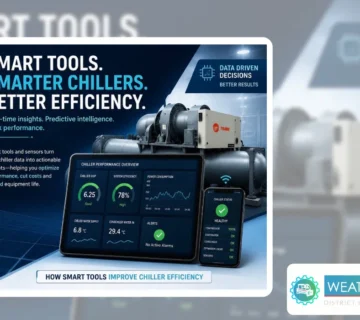
Predictive chiller maintenance relies on machine data to detect potential problems before they lead to equipment failure. Temperature fluctuations, vibrations, electricity levels, lubricant condition, and many other factors can be helpful in assessing the condition of the equipment.
The application of predictive techniques can be more beneficial for machinery that operates for long periods or is used in critical processes.
A predictive programme can help identify:
- Changes in compressor performance.
- Abnormal vibration patterns.
- Increasing electrical consumption.
- Heat exchanger performance issues.
- Bearing or motor problems.
- Developing mechanical faults.
- Changes in operating temperatures.
The main value is better decision-making. Maintenance becomes more focused on actual equipment condition rather than relying only on fixed schedules.
Industrial Chiller Maintenance and Energy Control
Industrial Chiller Maintenance requires careful planning because cooling equipment may support production processes, machinery, storage areas, or other critical operations. An unexpected chiller failure can affect productivity and increase operational losses.
Industrial systems may also operate under variable loads. Production schedules, process temperatures, and seasonal conditions can change the cooling requirement. Chillers must therefore be monitored under different operating conditions.
A strong maintenance programme should combine routine inspections with performance analysis. Technicians can compare energy use with cooling output and identify changes that may indicate declining efficiency.
Process cooling systems can benefit from:
- Regular condenser and evaporator inspections.
- Water treatment and flow checks.
- Compressor condition monitoring.
- Electrical testing.
- Control system verification.
- Performance trend analysis.
- Planned component replacement.
These measures can help protect both equipment reliability and energy performance.
When Chiller Retrofit Can Improve Existing Systems
Chiller retrofit in Dubai can be considered when an existing system remains mechanically suitable, but its components or controls have become outdated. A retrofit may focus on selected components rather than replacing the entire plant.
Depending on the system, upgrades may include controls, compressors, variable-speed drives, sensors, or other supporting equipment. The objective is to improve performance while extending useful equipment life.
A retrofit decision should be based on technical and financial factors. The current energy consumption, maintenance history, equipment condition, expected savings, and future cooling requirements should all be reviewed.
Retrofit work can be useful when:
- Existing equipment has sufficient remaining service life.
- Energy performance has declined.
- Controls are outdated.
- Replacement costs are high.
- Downtime must be limited.
- A phased improvement plan is preferred.
A professional assessment can determine whether an upgrade or replacement offers better long-term value.
Why Proper Chiller Commissioning Matters
Chiller commissioning services help confirm that newly installed or upgraded equipment operates according to the intended design. Commissioning should cover the chiller as well as related pumps, cooling towers, controls, and water systems.
The aim is to verify that equipment performs correctly under suitable operating conditions. Incorrect settings during the early stages can lead to poor performance and unnecessary energy consumption.
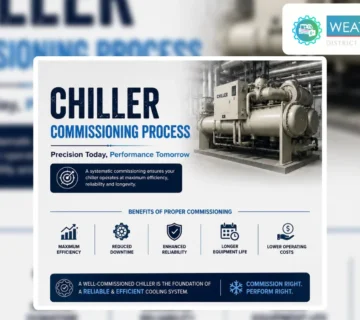
The chiller commissioning process may include reviewing installation details, checking controls, verifying sensors, confirming water flow, testing operating sequences, and recording performance data.
Good commissioning provides a useful performance baseline. Future maintenance teams can use this information when evaluating changes in equipment performance.
The Importance of Professional Chiller Services
Chiller services can cover a wide range of technical requirements, from routine inspection to troubleshooting, upgrades, and major repairs. The right service approach depends on the condition and role of the cooling system.
A professional team can review operating data and identify potential causes of poor performance. This is more effective than replacing parts without first understanding the underlying issue.
Regular technical support can also help facility teams plan maintenance and upgrades. This allows problems to be addressed before they create extended downtime or higher energy consumption.
Repairing Problems Before They Increase Energy Use
Chiller repair is sometimes necessary when a fault has already affected equipment performance. A faulty sensor, compressor issue, refrigerant problem, or restricted heat exchanger can influence both cooling capacity and energy use.
Repairs should begin with accurate fault identification. Technicians should check system readings and inspect the relevant components before carrying out corrective work.
A timely repair can restore normal operation and prevent secondary damage. It can also help the equipment return to its expected operating range.
Choosing the Right HVAC Service Partner
An experienced HVAC maintenance company in Dubai can help facility owners manage cooling systems through planned inspections, technical assessments, repairs, and efficiency improvements.
The right service partner should understand both equipment condition and system operation. Experience with different chiller technologies is valuable because each system has different maintenance requirements.
Technical expertise, time frame, maintenance protocol, reporting format, and experience with complicated cooling systems are some of the factors that should be considered when choosing a service provider.
Collaborating with reputable HVAC maintenance companies in Dubai can also help with future maintenance planning. Having a regular maintenance program allows you to monitor the condition of the equipment and the need for improvement.
Integrating Efficiency Into Long-Term HVAC Planning
Air conditioning services Dubai can play a wider role in building energy management when cooling equipment is assessed as part of the complete HVAC system. Chillers do not work independently. Pumps, cooling towers, air handling equipment, controls, and distribution networks all influence energy performance.
Long-term planning should therefore consider the complete cooling cycle. Equipment replacement, maintenance, controls, and operational schedules should be reviewed together.
This approach can help avoid isolated improvements that provide limited results.
Conclusion
Improving chiller energy efficiency is a practical way to support lower energy consumption and stronger HVAC performance. High-efficiency equipment can provide a solid foundation, but maintenance, controls, commissioning, monitoring, and timely upgrades are equally important.
Effective decarbonization is a long-term process. It requires consistent attention to equipment condition and operating performance. With the right technical approach, facilities can reduce energy waste while maintaining dependable cooling.
When there is a need for specialized assistance, a chiller service company in Dubai can offer technical assistance in maintenance and performance evaluation.
Weather Makers District Cooling Services LLC provides professional solutions for chiller performance, maintenance, repair, and efficiency improvement.
Frequently Asked Questions
What is chiller energy efficiency?
This is how effectively the chiller uses electrical energy to provide the necessary cooling. The higher the efficiency, the less energy is used to produce the cooling.
How do highly efficient chillers help in HVAC decarbonization?
They help in minimizing energy usage when used appropriately. Lower energy consumption can lead to lower greenhouse gas emissions of greenhouse gases during electricity production.
How frequently should a chiller be maintained?
The frequency of maintenance will depend on the type of chiller, operating hours, loading conditions, and the manufacturer’s requirements.

[…] efficiency will remain a major part of future cooling strategies. Modern high efficiency chillers can deliver the required cooling capacity while using less energy under suitable operating […]
[…] Chiller plant efficiency can suffer when supporting equipment is not working properly. Poor water flow, dirty heat transfer surfaces, incorrect settings, and control problems can raise the use of energy. […]
[…] monitoring also supports chiller energy efficiency because operators can make decisions based on actual system […]
[…] chiller energy efficiency depends on the complete plant. Pumps, controls, operating schedules, and heat rejection equipment […]