
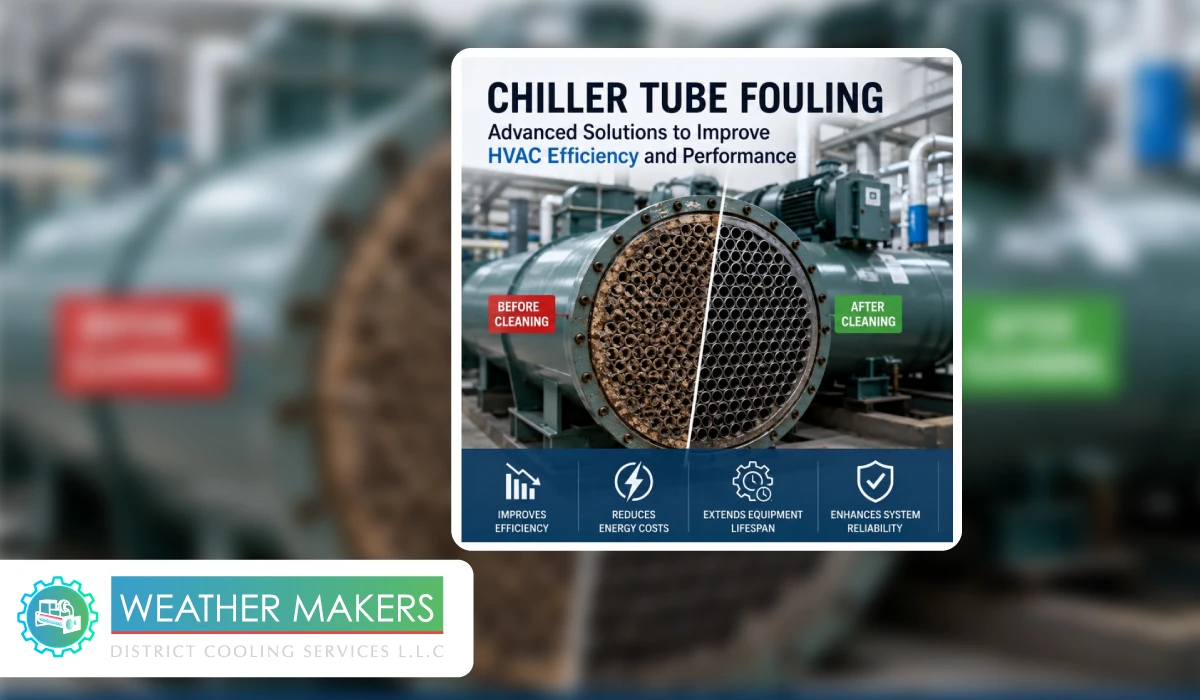
Chiller tube fouling is one of the most common reasons for inefficient performance and increased energy expenses of HVAC systems. When deposits build inside the condenser or evaporator tubes, heat transfer becomes weak. The system works harder to maintain cooling performance. This increases operating costs and creates unnecessary stress on equipment.
Modern cooling systems require stable performance throughout the year. Even a thin layer of scale, sludge, or biological growth can reduce efficiency. Many facilities face problems such as unstable temperatures, increased downtime, and rising utility costs because of tube contamination.
Regular inspection and advanced cleaning methods help prevent these issues. Proper maintenance also extends equipment life and improves overall system reliability.
Causes and Nature of Tube Fouling
Chiller tube fouling appears when unwanted material accumulates on tube walls. Common fouling deposits are minerals, dirt, and biofilms.
In addition to that, chiller tubes might become clogged with sediments and rust. These materials prevent heat transfer and water flow, thus causing cooling inefficiency.
In many cases, tube fouling in chillers develops gradually without any visible symptoms. Most people realize that their systems have this problem only when they face increased electricity bills and cooling inefficiency.
Typical causes of fouling include poor water quality, untreated water, improper maintenance, and old system age.
Effect of Chiller Fouling
Deposits cause multiple issues in cooling systems. The system must work harder to maintain stable performance, which results in increased wear of compressors and other units.
Some of the consequences include:
- Decreased efficiency
- Higher power consumption
- Pressure increase
- Longer operating time
- Unstable performance
- Frequent breakdowns
Such an effect negatively impacts cooling efficiency. Low efficiency means uncomfortable conditions in commercial buildings and disruption of production processes in industrial facilities.
This is why proper HVAC chiller maintenance is vital for efficient cooling performance.
Symptoms of Chiller Tube Fouling
Early detection and timely maintenance allow for avoiding major issues.
Here are typical signs of tube fouling in HVAC systems :
- Increased condenser pressure
- Power consumption rises
- Reduced water flow
- Unstable performance
- Frequent alarms
- Compressor overheating
- Extended operating time
Inspections help detect tube fouling before it starts to impact cooling system performance. During maintenance, professionals perform chiller tests and use special inspection tools to determine whether tubes need cleaning.
Methods to Clean Chiller Tubes
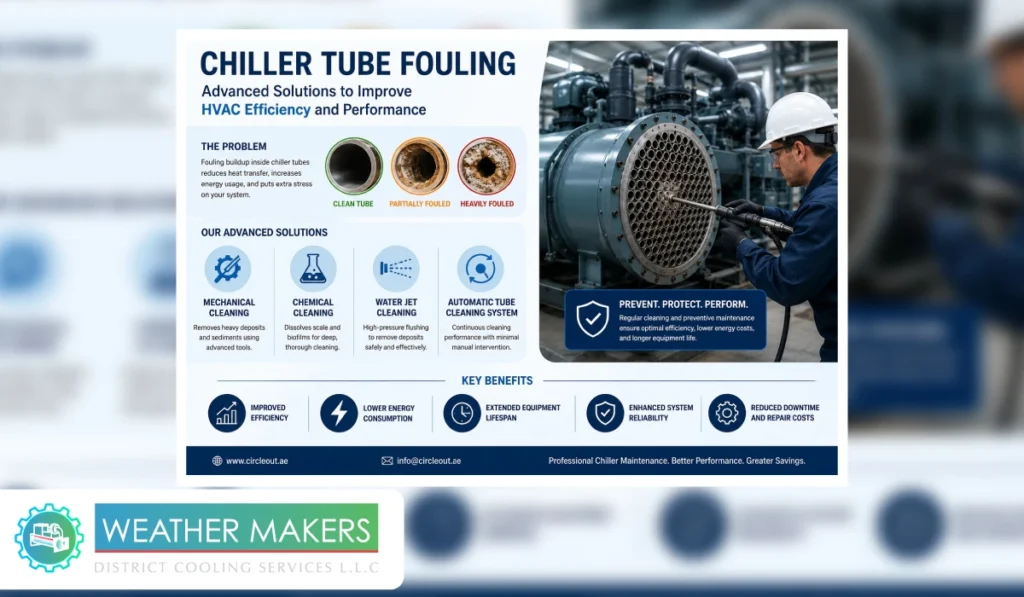
Different techniques help remove deposits and improve chiller performance. All of these methods are suitable for various types of fouling deposits.
Mechanical Cleaning
In this case, deposits are removed by brushes and rotating tools. This technique is perfect for the removal of mineral deposits and heavy sediments. Professional technicians apply mechanical cleaning during condenser tube cleaning to restore normal heat transfer. This process provides the following benefits:
- Quick deposits elimination
- Increased water flow
- Improved cooling performance
- Reduced pressure
Descaling and Chemical Cleaning
Another approach involves dissolving deposits with special cleaning chemicals. Such an approach is very effective when dealing with scale and biofilms. Specialists use chemicals approved by the manufacturer to ensure that tubes remain undamaged. This technique delivers multiple benefits:
- Thorough cleaning of the tube interior
- Effective heat exchange
- Reduced energy consumption
- Stable system performance
When applying this technique, it is crucial to balance water carefully to minimize potential risks.
Water Jet Cleaning
This technique applies pressure to flush out fouling deposits from the tube surface. Professionals often use this method when working with commercial and industrial HVAC systems. This method allows performing heat exchanger tube cleaning without damaging tubes and ensuring quick restoration of cooling efficiency.
Automatic Tube Cleaning System
Automated cleaning is another effective technique. In this case, a cleaning ball passes through tubes while the equipment operates. Thus, chiller performance remains stable.
This technique ensures:
- Continuous cleaning performance
- Reduction of manual maintenance
- Efficient energy saving
- Reduced downtimes
Such an option is convenient for facilities that operate HVAC systems all day long.
Why Is Preventive Maintenance Important?
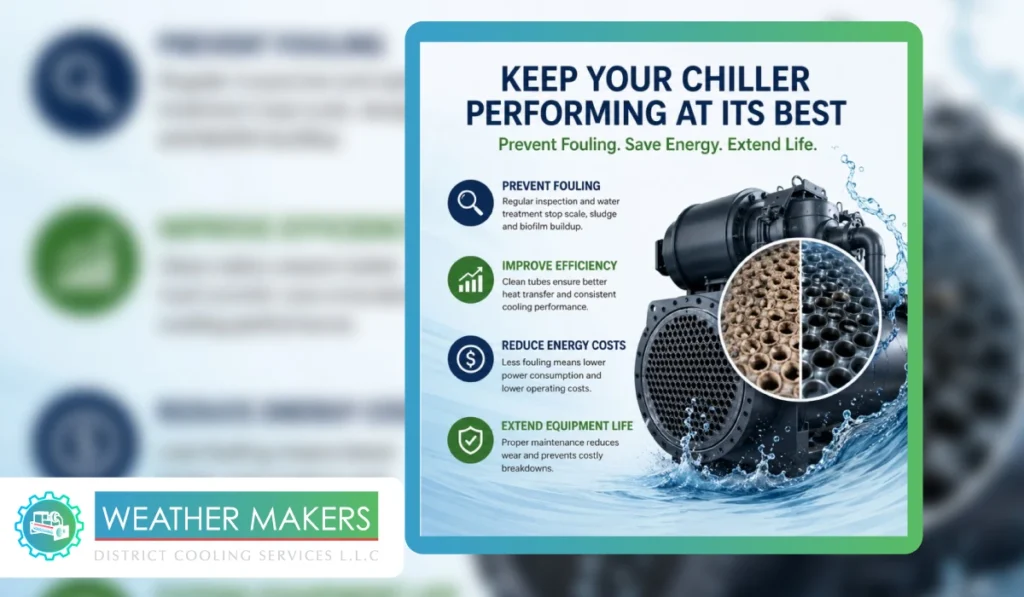
Preventive maintenance is an effective way to deal with chiller fouling issues. Routine inspections and cleanings improve efficiency and decrease the number of urgent repair jobs.
Here are common steps in a good chiller preventive maintenance plan:
- Inspection and cleaning of tubes
- Testing of water quality
- Checking water pressure
- Monitoring of chiller performance
- Evaluation of energy efficiency
Regular maintenance allows for minimizing operational costs and prolonging equipment lifespan. Many facilities cooperate with experienced chiller maintenance companies in UAE.
Why Does Water Balance Matter?
Untreated water causes many fouling issues. To avoid mineral scale and corrosion, water should be balanced properly.
Proper balancing improves performance and prevents:
- Scale development
- Biofilm growth
- Corrosion damage
- Heat transfer inefficiency
- Premature equipment replacement
Water balancing is a crucial step in any professional industrial chiller maintenance plan. Without proper balancing, cleaning procedures cannot guarantee long-term results.
Types of Chiller Tubes
Every component needs a specific maintenance approach to prevent efficiency issues. Here are different types of chiller tubes.
Evaporator Tubes
The evaporator performs low-temperature heat transfer and plays a major role in cooling. That is why deposit build-up decreases cooling capacity. Proper maintenance ensures steady performance.
Condenser Tubes
The condenser might suffer from mineral scale due to poor water quality. Cleaning of tubes improves heat rejection performance and minimizes the risk of compressor failure. Regular maintenance helps maintain stable performance.
Heat Exchanger Tubes
These elements perform heat transfer. Thus, their condition significantly impacts performance and heat exchange. To achieve stable cooling efficiency, you need to clean your heat exchanger regularly.
Importance of Working With Reliable Service Providers
To maximize your benefits, choose an experienced chiller maintenance company in Dubai.
Such companies ensure:
- Inspections of all system components
- Detailed assessment of energy efficiency
- Monitoring of water balance
- Immediate breakdown repair
- Prevention of future issues
Professional chiller service programs help maintain stable HVAC performance.
Chiller Replacement: Is It Required?
Sometimes, cleaning and maintenance do not solve the issue. The chiller continues losing efficiency and consuming excessive energy. If the problem persists even after the chiller is cleaned and maintained, chiller replacement becomes the only option. The following signs indicate that the machine requires replacement:
- Frequent breakdowns
- High power consumption
- Severe damage
- Outdated components
- Expensive repairs
In this situation, it is necessary to perform a thorough technical evaluation.
Advantages of Regular Cleaning and Inspection
Failure often starts with minor fouling of tubes. Over time, chiller tubes get clogged. As a result, the system overheats, the compressor gets overloaded, and the chiller fails. Such a situation requires immediate chiller repair in Dubai.
Professional maintenance helps avoid this problem. Timely cleaning minimizes the probability of failures and breakdowns. In addition to that, you will need fewer emergency services to keep your HVAC system running.
Selecting Experienced Professionals for Cleaning and Maintenance
Experienced professionals make cleaning procedures easier. You might want to choose specialists who have the following skills and experience:
- Advanced cleaning techniques
- Skilled staff
- Water quality management
- Chiller maintenance
- Emergency support
- Performance assessment
When cooperating with reliable chiller tube cleaning companies, you will receive the greatest advantage. In many cases, it makes sense to work with providers offering specialized chiller cleaning services to ensure high efficiency.
Conclusion
Chiller tube fouling reduces heat transfer performance and increases operational costs. Accumulation of sediments, minerals, and biofilms leads to poor cooling efficiency and energy waste. Advanced cleaning and maintenance are key factors that ensure optimal chiller performance and stable energy savings.
A strong maintenance strategy improves system reliability and supports long-term energy savings. Facilities that invest in proper cleaning and maintenance achieve better cooling performance and lower operational risks.
Weather Makers provides professional chiller cleaning and maintenance solutions to enhance HVAC performance and improve energy efficiency.
Frequently Asked Questions
What causes deposits to accumulate inside chiller tubes?
Most commonly, such deposits are caused by minerals, sedimentation, biofilm development, and untreated water.
How frequently should I clean my chiller tubes?
The frequency depends on equipment type, system size, and water quality. Some facilities benefit from frequent inspections and cleaning; others need maintenance once every six months.
Why is chiller tube fouling harmful to HVAC systems?
Deposits lead to decreased efficiency, reduced heat transfer, higher energy consumption, and additional stresses applied to compressors.

No comment