HVAC Automation System Security isn’t something facility managers can ignore anymore. Most modern cooling systems are connected to networks. They use smart controllers, remote monitoring tools, and automation platforms to keep buildings running efficiently. That’s useful, but it also creates new risks.
A few years ago, cyberattacks mainly targeted business computers and servers. Today, building systems are on the radar, too. If someone gains access to an automation network, they may be able to change settings, interrupt operations, or cause equipment to run inefficiently. In some cases, the problem isn’t noticed until energy bills increase or equipment starts showing faults. That’s why cybersecurity has become part of the conversation whenever people discuss building automation and cooling systems.
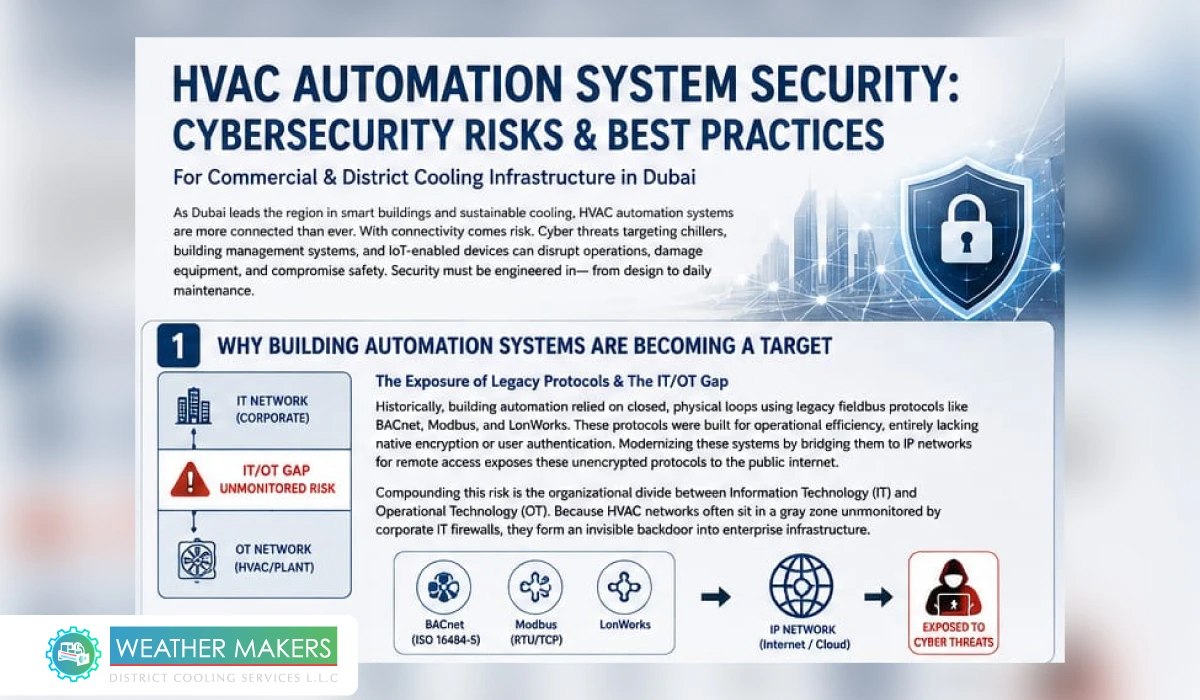
Why Building Automation Systems Are Becoming a Target
Building automation systems control a lot more than many people realize. Temperature control, operation scheduling, alarm control, ventilation, and cooling systems all fall under their responsibility. As the degree of interconnection grows, the number of vulnerabilities increases.
Remote connectivity is a perfect illustration of that. Remote monitoring enables engineers to perform system diagnostics while off-site. However, if such remote access is poorly secured, it becomes a potential risk point.
The cybersecurity of chiller automation systems has been made imperative due to reliance on connected devices. Some common areas that need protection include:
- Building management software
- Remote access platforms
- Controllers and sensors
- Communication networks
- User accounts and passwords
- Cloud-based monitoring systems
A problem in any one of these areas can affect the entire system.
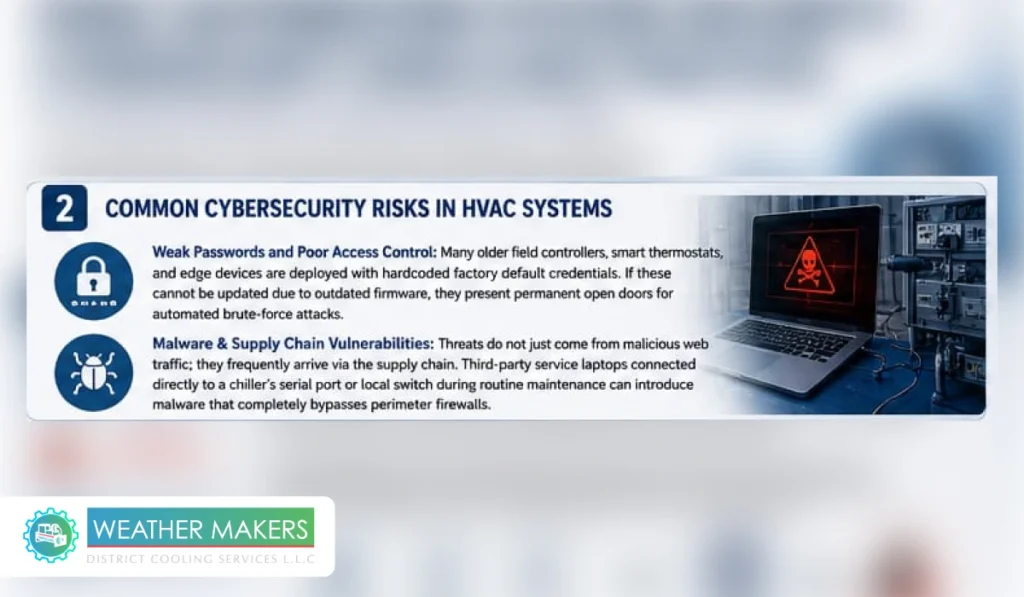
Common Cybersecurity Risks in HVAC Systems
Not every cyberattack looks the same. Some aim to steal information. Others are designed to interrupt operations.
Weak Passwords and Poor Access Control
This is still one of the biggest problems. If users rely on simple passwords or share login details, attackers have a much easier path into the system. Once they’re inside, they can change settings or move through connected networks. Strong passwords and multi-factor authentication make a big difference.
Malware Attacks
Malware can enter a system through infected devices, unsafe downloads, or unsecured network connections. When that happens, operators may experience:
- Communication failures
- Unexpected alarms
- Slow system performance
- Equipment shutdowns
- Changes to operating settings
These issues can quickly affect day-to-day operations.
Ransomware
Ransomware continues to pose a significant threat to organizations. In a ransomware attack, the attacker blocks access to a system and requests money to restore access. For places that require consistent cooling, even the slightest disruption can result in operational difficulties and increased costs. This is among the many reasons why security in HVAC control systems needs to be given similar importance as any other business system.
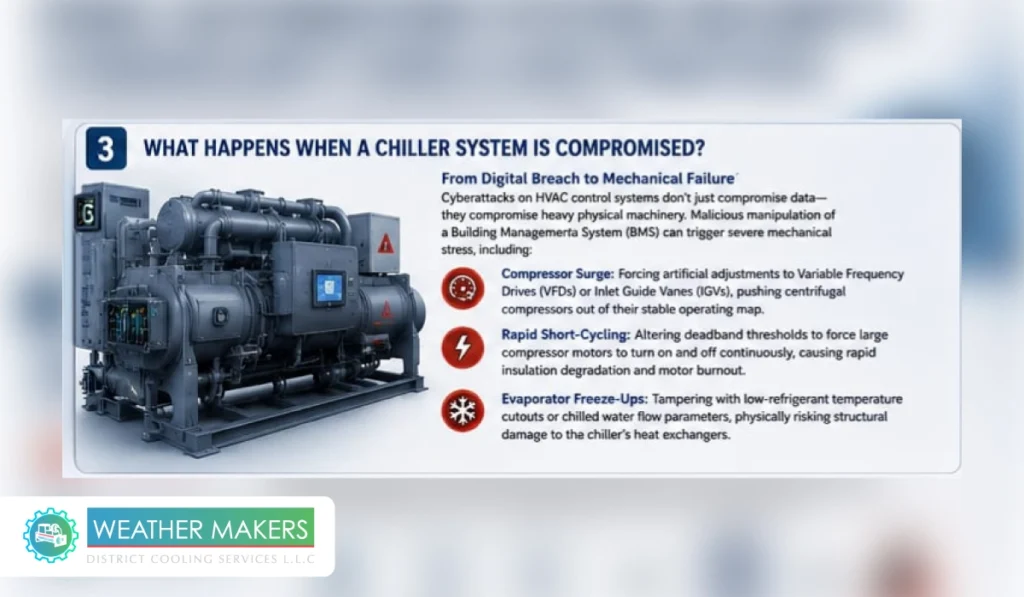
What Happens When a Chiller System Is Compromised?
People often think cybersecurity is only about computers. In reality, it can affect physical equipment too. A cyberattack on an automation platform may lead to incorrect operating commands. Equipment could run longer than necessary. Temperature settings may change without authorization. Alarms might be disabled.
Over time, these issues can lead to:
- Higher energy costs
- Increased equipment wear
- Reduced efficiency
- Unexpected downtime
- Shorter equipment life
Facilities that focus on Industrial HVAC cybersecurity understand that protecting software also helps protect valuable equipment.
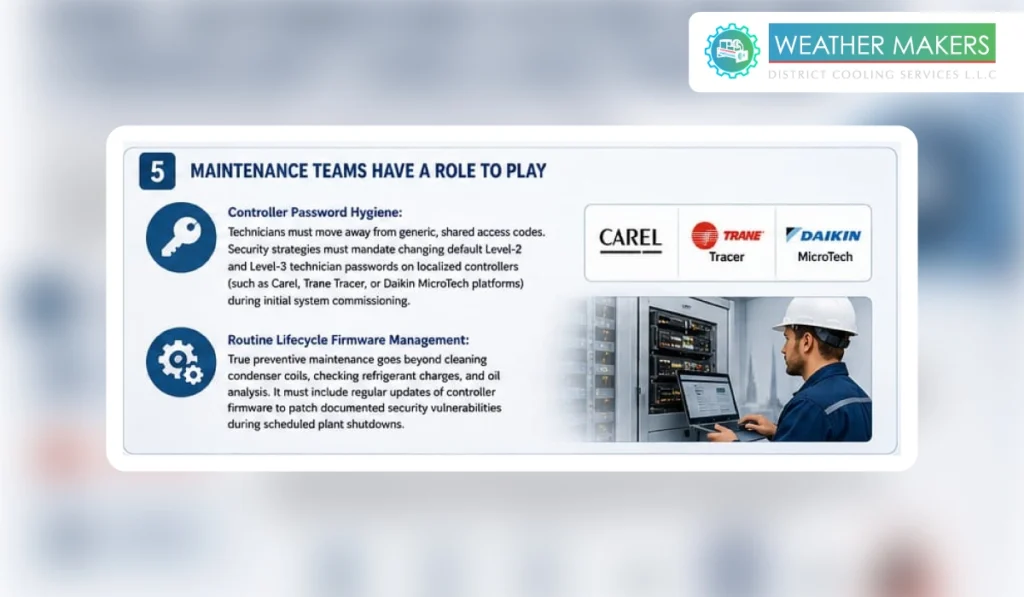
HVAC Automation System Security Starts with the Basics
Many cybersecurity problems happen because simple security practices are overlooked. The good news is that basic measures can reduce a lot of risk.
Limit Access
Not everyone needs access to every part of the system.
Good access management includes:
- Strong passwords
- Multi-factor authentication
- User permission controls
- Regular account reviews
- Removal of inactive users
The fewer unnecessary accounts there are, the lower the risk.
Keep Software Updated
Old software often contains known security weaknesses. Manufacturers release updates for a reason. Delaying updates can leave systems exposed to problems that already have known fixes. A regular update schedule helps keep systems more secure.
Separate Networks
Building automation systems shouldn’t have unrestricted connections to business networks. Network separation helps contain problems if a security incident occurs. It also makes monitoring easier. That’s a key part of Cybersecurity for HVAC systems.
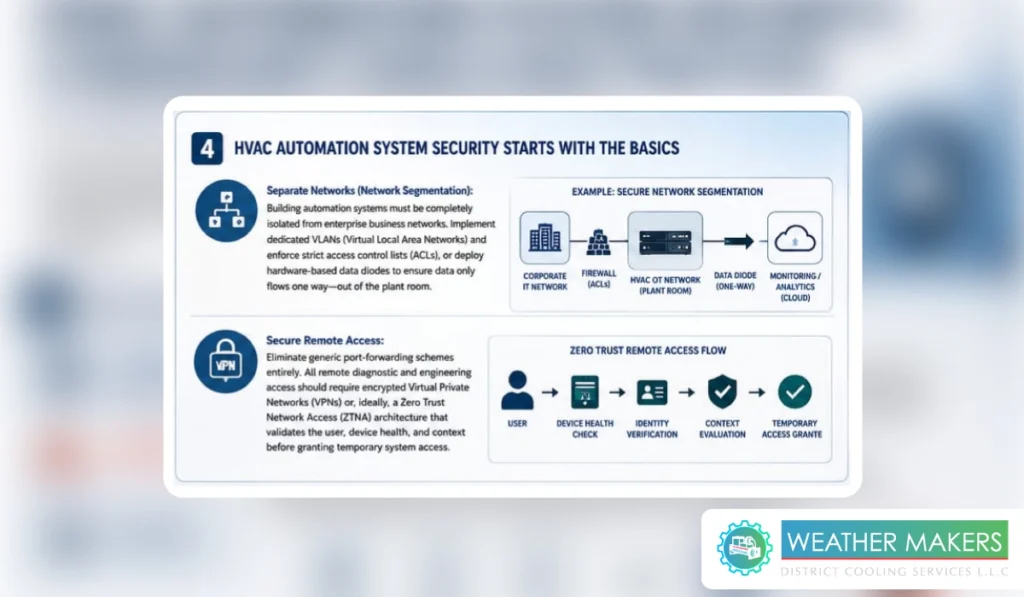
Maintenance Teams Have a Role to Play
Cybersecurity isn’t only the responsibility of IT departments. Service providers, facility teams, and maintenance contractors all play a part. A professional Chiller maintenance company in Dubai works with connected equipment on a regular basis. Technicians often access controllers, monitoring systems, and communication networks during service visits. Following secure procedures helps reduce unnecessary risks.
The same applies to Chiller maintenance companies in UAE. As cooling systems become more connected, cybersecurity awareness becomes part of good maintenance practice.
Security Should Be Included in Maintenance Planning
Most facilities already have maintenance schedules. Cybersecurity checks should be part of them. Things worth reviewing include:
- User access permissions
- Controller settings
- Software versions
- Remote access tools
- Network connections
These reviews don’t usually take long, but they can help identify problems before they become serious. Whether a facility needs Chiller repair Dubai or routine inspections, security checks should be included whenever connected systems are involved.
During Industrial chiller maintenance, it’s also worth reviewing whether older equipment still meets current security expectations. If a facility is planning a Chiller replacement, cybersecurity features should be considered alongside efficiency and performance.
The same thinking applies to Chiller preventive maintenance. Preventing problems is always easier than dealing with them after they happen.
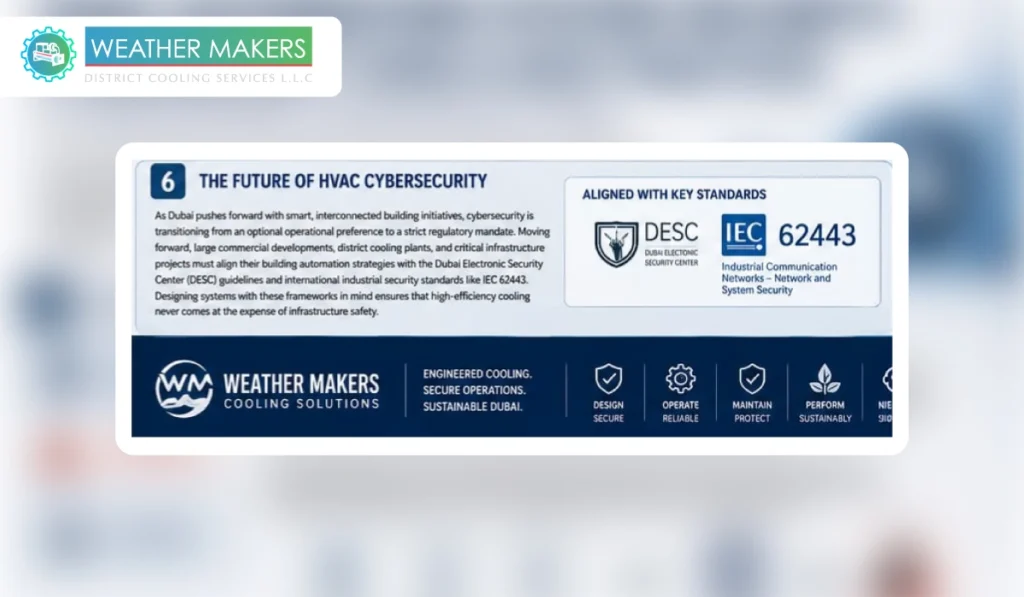
The Future of HVAC CyberSecurity
Building automation systems aren’t going away. They’re becoming more common every year. These include remote building management through smart controls and connected equipment that enable efficient building operations. However, they also introduce new challenges that did not exist before. The growing focus on HVAC cybersecurity in Dubai shows how the industry is shifting its approach. People want cooling technologies that are both efficient and secure.
Conclusion
Connected building systems bring clear benefits, but they also introduce risks. HVAC Automation System Security should be part of every facility’s operating strategy. Strong access controls, regular updates, secure maintenance practices, and routine system reviews help reduce those risks. When combined with reliable Chiller services Dubai, these steps help keep cooling systems running safely and efficiently.
Weather Makers services help businesses protect and maintain connected HVAC and chiller systems with reliable technical expertise.
Frequently Asked Questions
Why is cybersecurity important for HVAC systems?
Modern HVAC systems often connect to networks and remote monitoring platforms. If those systems aren’t protected, attackers may gain access and interfere with operations.
How can companies improve HVAC Automation System Security?
They can use strong passwords, enable multi-factor authentication, update software regularly, and review user access permissions.
Does cybersecurity affect chiller maintenance?
Yes. Connected chillers rely on software and communication networks. Security checks can help identify risks before they affect system performance.