
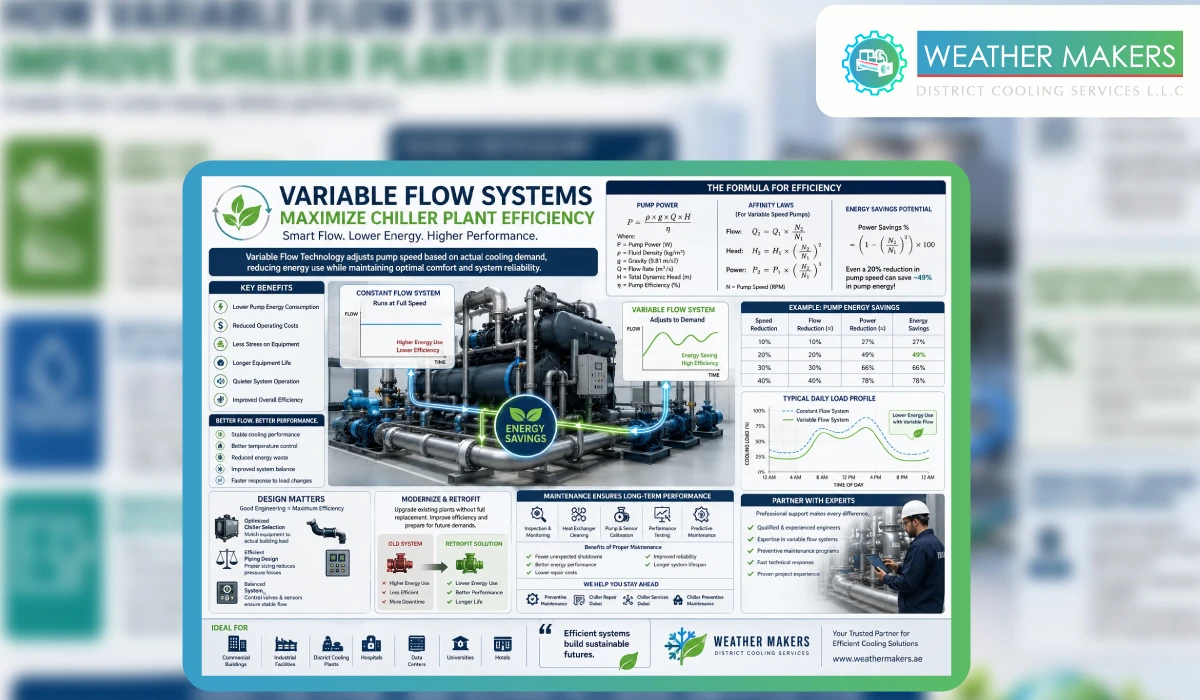
Chiller plant efficiency plays a major role in reducing energy use and improving cooling performance. Many facilities now prefer variable flow technology because it adjusts water flow based on the actual cooling demand. This approach helps lower operating costs and extends equipment life. Unlike constant flow systems, variable flow systems deliver only the amount of water needed at any time. This creates a more flexible and energy-efficient cooling process while maintaining stable indoor comfort.
Why Variable Flow Technology Is Becoming More Popular
A variable flow chiller system changes the speed of pumps based on the building load instead of running at full speed all the time. This simple change makes the cooling system more responsive and reduces unnecessary energy consumption.
Many commercial and industrial buildings experience changing cooling loads throughout the day. A variable flow system automatically adjusts to these changes. This prevents wasted energy and supports consistent cooling performance.
Compared to traditional systems, this design also reduces wear on equipment because pumps and other components operate only as much as required.
How Variable Flow Systems Improve Chiller Plant Efficiency
Modern cooling plants perform better when every component works together efficiently. Variable flow systems help improve performance in several practical ways.
Lower Pump Energy Consumption
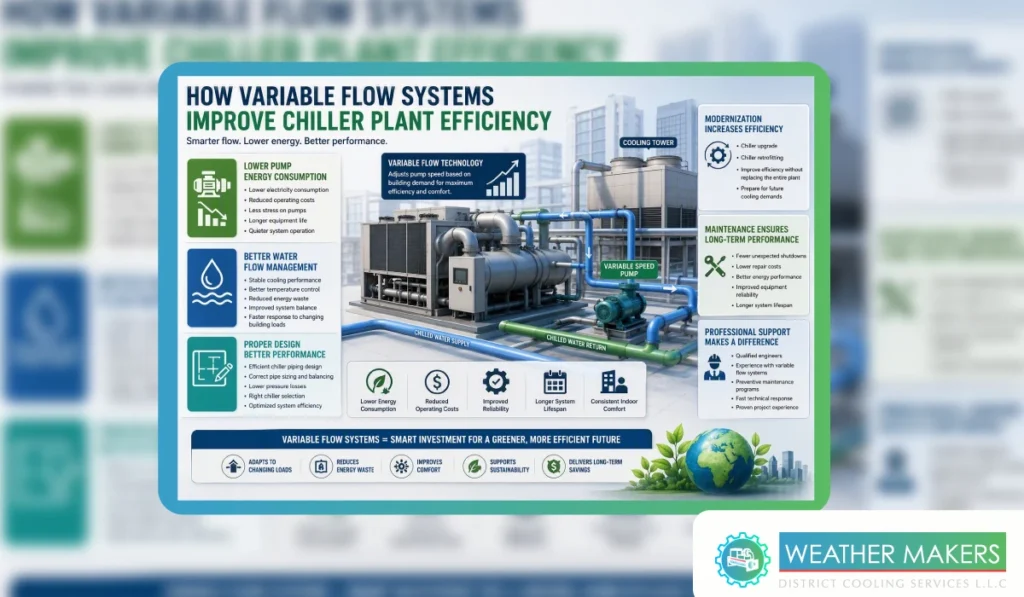
One of the biggest advantages is improved chiller pump efficiency. Pumps do not have to operate at maximum speed throughout the day. Instead, variable speed drives reduce pump speed whenever cooling demand decreases.
Benefits include:
- Lower electricity consumption
- Reduced operating costs
- Less stress on pumps
- Longer equipment life
- Quieter system operation
Even a small reduction in pump speed can create significant energy savings over time.
Better Water Flow Management
Well-designed chilled water systems maintain the correct water flow through every part of the cooling network. Variable flow technology keeps the water moving only where it is needed.
This approach provides several benefits:
- Stable cooling performance
- Better temperature control
- Reduced energy waste
- Improved system balance
- Faster response to changing building loads
The result is a cooling plant that performs efficiently during both peak and partial load conditions.
The Importance of Proper System Design
Technology alone cannot deliver the best results. Good engineering is equally important.
A well-planned chiller piping design allows water to move smoothly throughout the plant. Proper pipe sizing, balancing valves, and control strategies reduce pressure losses and improve overall system performance.
During new installations or system improvements, careful chiller selection is also essential. Choosing equipment that matches the building load prevents oversizing and helps maintain efficient operation throughout the equipment’s life.
When both design and equipment are planned correctly, the cooling plant operates more reliably with lower energy consumption.
When Existing Plants Need Modernization
Typically, old systems tend to be less efficient in terms of energy consumption as they were not intended to work in varying flow conditions.
When planning a chiller upgrade, building owners have the opportunity to improve system efficiency without replacing the entire cooling plant. Sometimes, it makes sense to perform a total retrofit of the chiller system. Chiller retrofitting introduces modern technologies while keeping suitable existing equipment in service. This reduces capital costs and improves operational efficiency.
Modernization also prepares facilities for future cooling demands without major system disruption. Some organizations also rely on trusted chiller companies in Dubai for system assessments before planning future improvements.
Maintenance Supports Long-Term Performance
No matter how good a system design may be, it requires regular maintenance to remain efficient. Professional industrial Chiller Maintenance can help to identify small problems that can be costly to repair later on. Heat exchanger cleaning, correct pump operation, and accurate sensor information are all part of system performance.
Chiller services Dubai can also help to increase the reliability of the system through maintenance, inspection, performance testing, and adjustment. Predictive chiller maintenance is something else that the facility owner might want to consider.
This approach uses operating data to identify developing problems before equipment fails.
If unexpected problems occur, timely chiller repair Dubai services help restore cooling performance while minimizing downtime.
The advantages include:
- Fewer unexpected shutdowns
- Lower repair costs
- Better energy performance
- Improved equipment reliability
- Longer system lifespan
Routine inspections also support effective chiller preventive maintenance, helping every component continue operating within its designed performance range.
Many facility owners also work with established chiller maintenance companies in UAE because they offer experienced technical teams and structured maintenance programs.
Professional Support Makes a Difference
A variable flow system will achieve better results if specialists perform the installation process and the equipment undergoes testing and maintenance at the right time.
Hiring a chiller maintenance company in Dubai can contribute to timely inspection of the equipment and its tuning to work according to the manufacturer’s instructions. Proper maintenance can help identify potential problems.
When selecting a maintenance partner, consider the following:
- Qualified engineers
- Experience with variable flow systems
- Preventive maintenance programmes
- Fast technical response
- Proven project experience
For organisations looking for long-term maintenance support, working with an experienced chiller AMC company in Dubai provides scheduled inspections and planned servicing throughout the year. This helps improve equipment reliability and reduces the risk of unexpected breakdowns.
Integrated cooling systems may also require professional air conditioning services to keep the complete HVAC system operating efficiently and delivering consistent indoor comfort.
Conclusion
Improving chiller plant efficiency is not only about putting in new hardware. It really involves intelligent water flow control, good system design, regular maintenance, and ongoing professional monitoring. In practice, variable flow systems offer a practical approach for cutting energy use while also improving cooling performance; you can actually feel the difference during operation. When they are paired with solid engineering and proactive service, many facilities end up running more efficiently, lowering operating costs, and extending equipment life for many years.
WeatherMakers helps businesses improve chiller plant performance with reliable maintenance and system optimisation.
Frequently Asked Questions
How does a variable flow chiller system improve chiller plant efficiency?
A variable flow system adjusts water flow based on the cooling demand. This reduces energy consumption while maintaining stable cooling performance.
Why is chiller preventive maintenance important?
Regular maintenance helps identify problems early, improves reliability, and reduces the risk of unexpected equipment failures.
When should a facility consider a chiller retrofit?
A retrofit is a good option when an older cooling system consumes excessive energy or no longer meets the building’s performance requirements.

No comment