
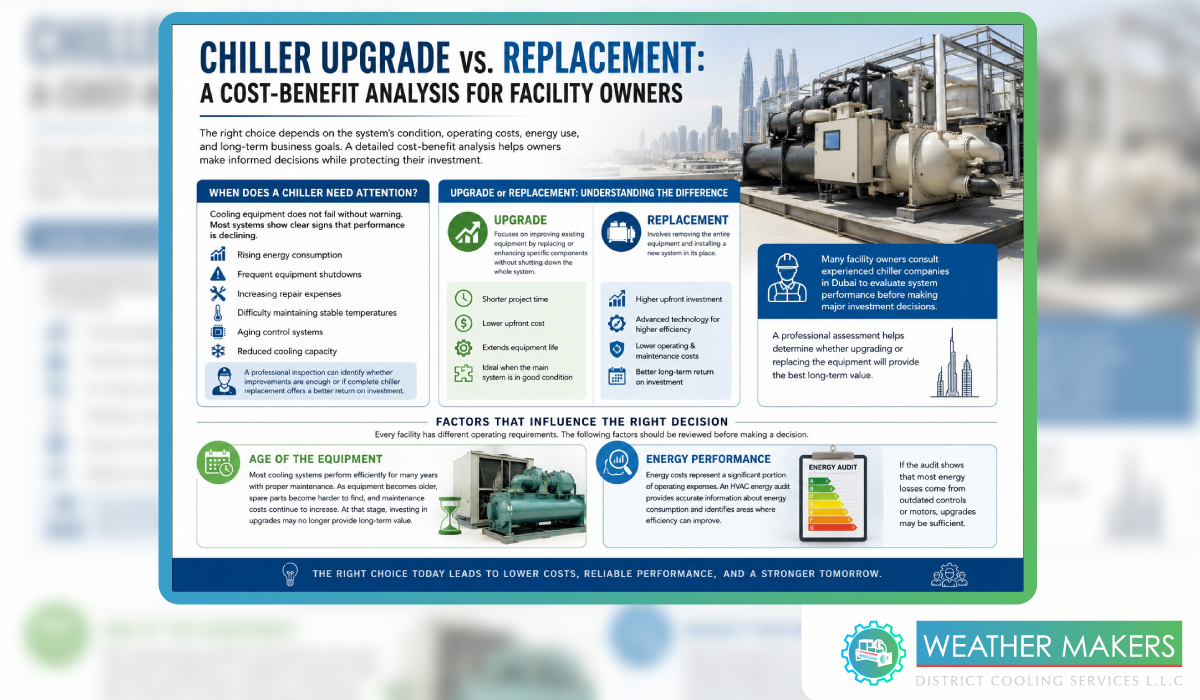
Chiller upgrade is often the first option facility owners consider when cooling equipment starts showing signs of reduced performance. However, deciding between an upgrade and a full replacement requires careful planning. The right choice depends on the system’s condition, operating costs, energy use, and long-term business goals. A detailed cost-benefit analysis helps owners make informed decisions while protecting their investment.
Many cooling systems continue to perform well after targeted improvements. Others reach a point where replacing the equipment delivers better value. Understanding the differences between these options helps avoid unnecessary spending and improves overall system reliability.
When Does a Chiller Need Attention?
Cooling equipment does not fail without warning. Most systems show clear signs that performance is declining. Ignoring these signs often leads to higher operating costs and unexpected breakdowns.
Some common indicators include:
- Rising energy consumption
- Frequent equipment shutdowns
- Increasing repair expenses
- Difficulty maintaining stable temperatures
- Aging control systems
- Reduced cooling capacity
A professional inspection can identify whether improvements are enough or if complete chiller replacement offers a better return on investment.
Many facility owners consult experienced chiller companies in Dubai to evaluate system performance before making major investment decisions. A professional assessment helps determine whether upgrading or replacing the equipment will provide the best long-term value.
Chiller Upgrade or Replacement: Understanding the Difference
Both choices increase cooling performance but entail different amounts of investment.
A system upgrade focuses on improving existing equipment by replacing old components without shutting down the whole system. Such an option decreases project time and cost.
Replacement requires the entire equipment to be removed from the structure and a new system installed in its place. Even though the upfront cost is high, advanced technology will result in increased efficiency in many years to come.
Many facility managers also consider a chiller plant retrofit when several system components require improvement, while the main infrastructure remains in good condition.
Factors That Influence the Right Decision
Every facility has different operating requirements. The following factors should be reviewed before making a decision.
Age of the Equipment
Most cooling systems perform efficiently for many years with proper maintenance. As equipment becomes older, spare parts become harder to find, and maintenance costs continue to increase. At that stage, investing in upgrades may no longer provide long-term value.
Energy Performance
Energy costs represent a significant portion of operating expenses. An HVAC energy audit provides accurate information about energy consumption and identifies areas where efficiency can improve.
If the audit shows that most energy losses come from outdated controls or motors, upgrades may be sufficient.
Maintenance History
Maintenance records reveal how well the equipment has been performing.
Frequent failures, repeated compressor issues, and increasing emergency repairs often indicate that larger investments should be considered.
Regular industrial chiller maintenance performed by a trusted chiller maintenance company in Dubai helps engineers determine whether the equipment still has a reliable service life.
Cost Comparison: Upgrade vs. Replacement
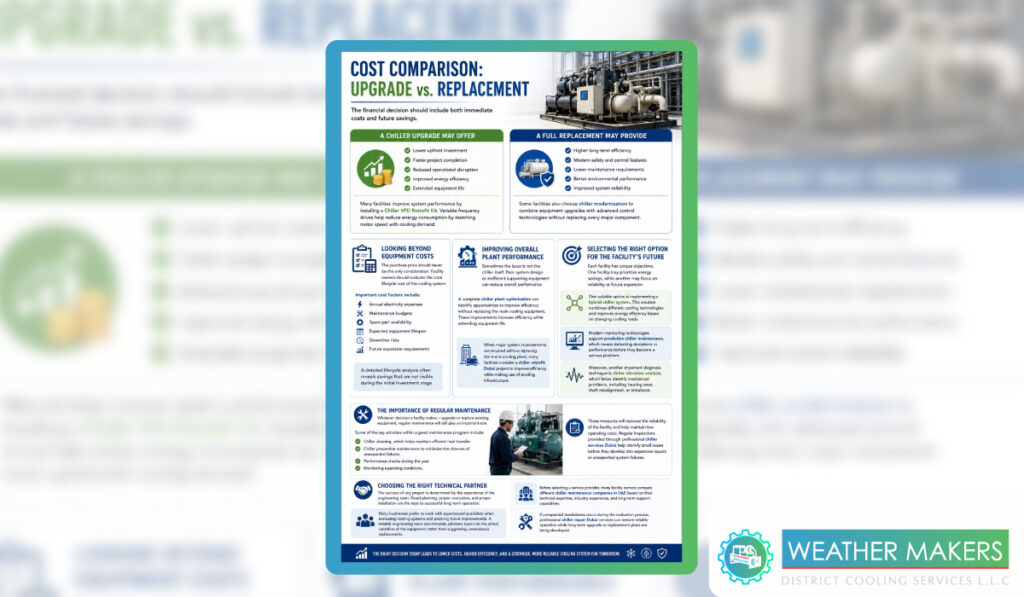
The financial decision should include both immediate costs and future savings.
A Chiller Upgrade May Offer
- Lower upfront investment
- Faster project completion
- Reduced operational disruption
- Improved energy efficiency
- Extended equipment life
Many facilities improve system performance by installing a Chiller VFD Retrofit Kit. Variable frequency drives help reduce energy consumption by matching motor speed with cooling demand.
A Full Replacement May Provide
- Higher long-term efficiency
- Modern safety and control features
- Lower maintenance requirements
- Better environmental performance
- Improved system reliability
Some facilities also choose chiller modernization to combine equipment upgrades with advanced control technologies without replacing every major component.
Looking Beyond Equipment Costs
The purchase price should never be the only consideration. Facility owners should evaluate the total lifecycle cost of the cooling system.
Important cost factors include:
- Annual electricity expenses
- Maintenance budgets
- Spare part availability
- Expected equipment lifespan
- Downtime risks
- Future expansion requirements
A detailed lifecycle analysis often reveals savings that are not visible during the initial investment stage.
Improving Overall Plant Performance
Sometimes the issue is not the chiller itself. Poor system design or inefficient supporting equipment can reduce overall performance. A complete chiller plant optimization can identify opportunities to improve efficiency without replacing the main cooling equipment. These improvements increase efficiency while extending equipment life. When major system improvements are required without replacing the entire cooling plant, many facilities consider a chiller retrofit Dubai project to improve efficiency while making use of existing infrastructure.
Selecting the Right Option for the Facility’s Future
Each facility has unique objectives. One facility may prioritize energy savings, while another may focus on reliability or future expansion. One suitable option is implementing a hybrid chiller system. This solution combines different cooling technologies and improves energy efficiency based on changing cooling loads. It also provides greater flexibility for facilities with changing cooling demands throughout the year.
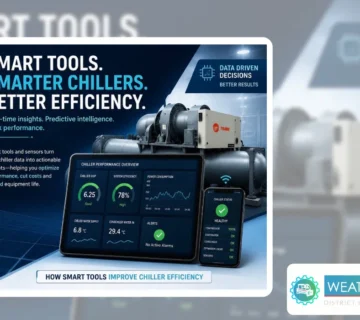
Modern monitoring technologies support predictive chiller maintenance, which means detecting deviations in performance before they become a serious problem. It helps reduce downtime and avoid critical damage to the equipment.
Moreover, another important diagnosis technique is chiller vibration analysis, which helps identify mechanical problems, including bearing wear, shaft misalignment, or imbalance.
The Importance of Regular Maintenance
Whatever decision a facility makes – upgrade or replace existing equipment, regular maintenance will still play an important role.
Some of the key activities within a good maintenance program include:
- Chiller cleaning, which helps maintain efficient heat transfer.
- Chiller preventive maintenance to minimize the chances of unexpected failures.
- Performance checks during the year.
- Monitoring operating conditions.
These measures will increase the reliability of the facility and help maintain low operating costs. Regular inspections provided through professional chiller services Dubai help identify small issues before they develop into expensive repairs or unexpected system failures.
Choosing the Right Technical Partner
The success of any project is determined by the experience of the engineering team. Good planning, proper evaluation, and proper installation are the keys to successful long-term operation.
Many businesses prefer to work with experienced specialists when evaluating cooling systems and planning future improvements. A reliable engineering team recommends solutions based on the actual condition of the equipment rather than suggesting unnecessary replacements.
Before selecting a service provider, many facility owners compare different chiller maintenance companies in UAE based on their technical expertise, industry experience, and long-term support capabilities.
If unexpected breakdowns occur during the evaluation process, professional chiller repair Dubai services can restore reliable operation while long-term upgrade or replacement plans are being developed.
Making the Right Financial Decision
The right decision will depend on the condition of the equipment, operating costs, and business objectives. The comprehensive technical assessment will allow for a fair comparison of two options.
Facilities with well-maintained systems can benefit from targeted improvements. In contrast, older equipment with frequent failures will deliver better results when replaced. The objective here is not only to reduce current costs but also to get dependable operation for many years.
Conclusion
There are multiple factors to consider when choosing between a chiller upgrade and replacement besides installation cost. Facility owners should take into account the age of the equipment, operating efficiency, maintenance history, and plans for future development.
The structured assessment will allow for identifying the best option with the most effective performance and the highest return on investment.
WeatherMakers delivers reliable chiller upgrade, retrofit, and modernization solutions that improve efficiency and extend equipment life.
Frequently Asked Questions
When is a chiller upgrade a better choice than replacement?
Chiller upgrade is the better choice when the equipment is structurally reliable and operating efficiently, while only certain components require improvement to enhance efficiency.
How can facility owners reduce cooling system operating costs?
Regular maintenance, energy monitoring, system optimization, and equipment upgrades are key to reducing operating costs.
What is the benefit of using predictive maintenance for chillers?
Predictive maintenance helps identify developing issues early, reduces unexpected downtime, lowers repair costs, and increases equipment lifespan.

No comment