
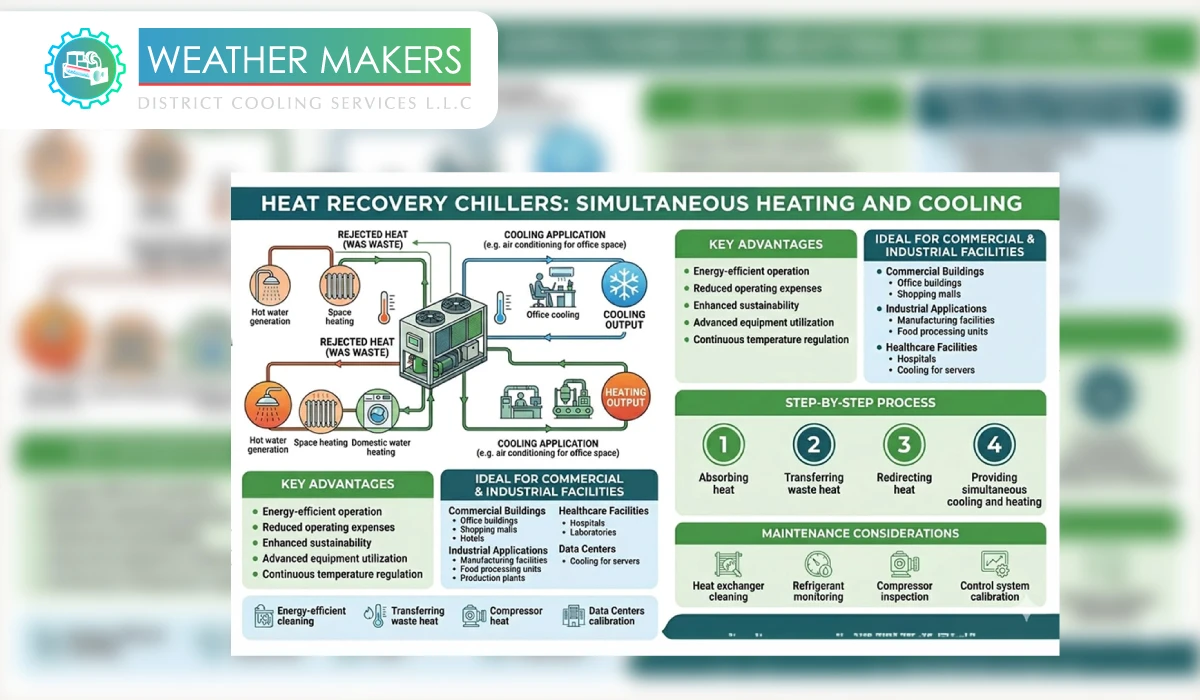
Heat recovery chillers are transforming how modern buildings manage energy, enabling simultaneous cooling and heating. Conventional systems view cooling and heating as two independent activities. Consequently, there is a lot of wasted energy and increased operating costs. However, heat recovery turns the situation around by using the rejected heat to provide energy for heating purposes.
Most modern facilities have combined cooling and heating applications that require simultaneous operation. Cooling office spaces, providing hot water, and industrial manufacturing processes generate waste heat that can be reused for heating applications.
Heat recovery chiller systems are increasingly important because companies are striving to achieve maximum energy efficiency, sustainability, and cost savings. Today, most facilities require advanced HVAC systems that provide both heating and cooling without increasing energy consumption.
Understanding Heat Recovery Chiller Systems for Simultaneous Heating and Cooling
The cooling system extracts heat from the building and rejects it to the atmosphere. Traditional cooling technologies reject the heat extracted to the atmosphere. In contrast, heat recovery systems collect this rejected heat and put it back to use.
In heat recovery systems, the collected heat is transferred to:
- Hot water generation systems
- Space heating applications
- Domestic water heating applications
- Preheating systems
This simultaneous operation ensures enhanced system efficiency since facilities no longer require additional heating systems. Modern energy-efficient heat recovery chillers are equipped with sophisticated controls that allow balancing heating and cooling demand.
This technology provides:
- Energy-efficient operation
- Reduced operating expenses
- Enhanced sustainability
- Advanced equipment utilization
- Continuous temperature regulation
This makes heat recovery technology ideal for commercial and industrial facilities.
How Heat Recovery Technology Works
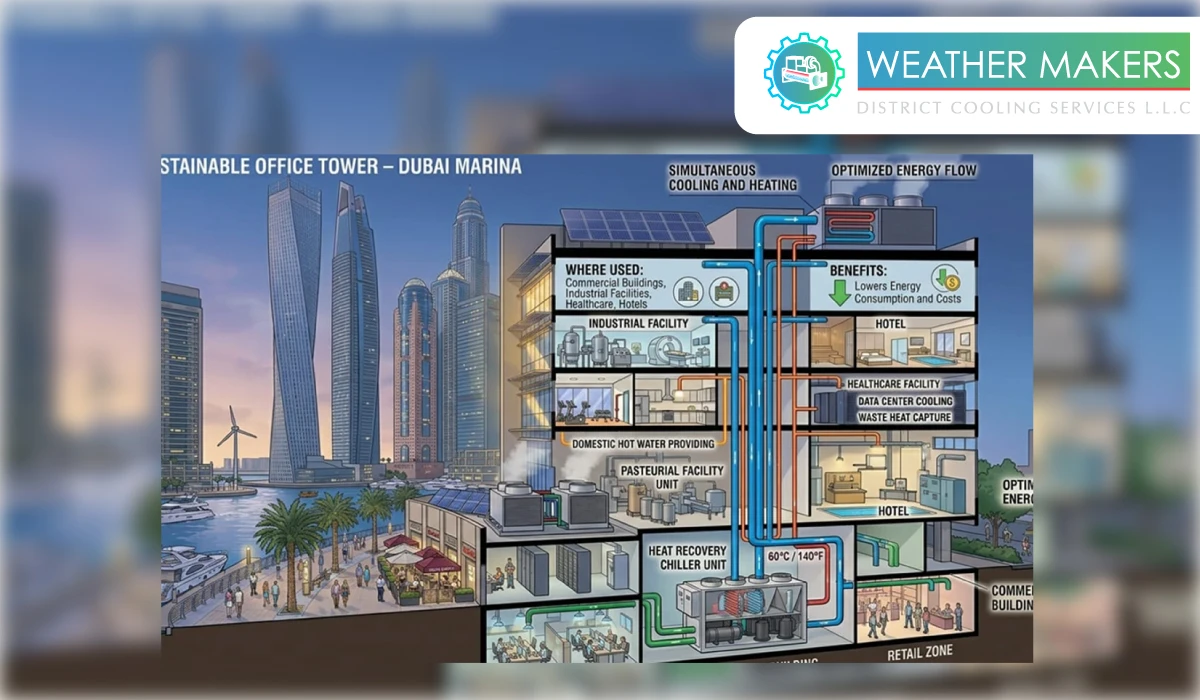
Heat recovery chiller systems operate based on the principle of capturing rejected heat from cooling systems and transferring it to heating applications. Heat recovery systems ensure continuous operation by absorbing and rejecting heat.
This process consists of several steps, including:
- Absorbing heat from cooling systems.
- Transferring waste heat to a refrigerant.
- Redirecting heat to a heating circuit.
- Providing simultaneous cooling and heating.
Heat recovery chiller systems continuously transfer waste heat, making this technology very effective. Modern heat recovery chiller systems are popular in facilities that perform simultaneous heating and cooling.
Applications of Heat Recovery Chillers
Heat recovery systems support various applications that require simultaneous heating and cooling. Various industries benefit from this technology.
Examples of applications include:
Commercial Buildings
- Office buildings
- Shopping malls
- Hotels
- Mixed-use properties
Commercial buildings frequently have zones that require simultaneous cooling and heating.
Industrial Applications
- Manufacturing facilities
- Food processing units
- Chemical processing
- Production plants
Industrial heat recovery chillers help capture process heat and reuse it.
Healthcare Facilities
- Hospitals
- Laboratories
- Research centers
Healthcare facilities require constant temperature control and hot water supply.
Data Centers
- Cooling for servers
- Heat recovery for building heating applications
- Improved efficiency
Data centers benefit from constant cooling demand.
Advantages of Heat Recovery Chiller Systems
Heat recovery systems provide numerous benefits that significantly improve their efficiency and reduce operating costs.
Energy Efficiency
Heat recovery chiller systems help reduce energy consumption by reusing waste heat. This results in improved system efficiency.
Cost Reduction
Facilities reduce energy consumption by eliminating auxiliary heating systems. This lowers electricity and fuel expenses.
Reduced Carbon Emissions
Reusing waste heat minimizes a facility’s environmental impact.
Extended Equipment Life Span
Simultaneous operation allows for even distribution of heat, which helps extend equipment life span.
Simplified Plant Room Design
Facilities no longer require additional boilers and heating systems.
When to Install Heat Recovery Chiller Systems
Heat recovery systems are perfect for facilities that have simultaneous heating and cooling applications.
Install heat recovery chiller systems when:
- Hot water demand is constant.
- Cooling demand occurs year-round.
- Electricity and fuel costs are high.
- Sustainability requirements are high.
- Process heating is necessary.
Heat Recovery Chiller Maintenance Considerations
Maintenance is crucial to preserving the optimal performance of heat recovery systems. Regular service helps prevent efficiency loss and avoid unexpected breakdowns.
Heat reclaim chillers require regular maintenance in the following areas:
- Heat exchanger cleaning.
- Refrigerant monitoring.
- Compressor inspection.
- Control system calibration.
- Flow rate monitoring.
Chiller preventive maintenance helps identify potential issues before they lead to system failure.
Chiller maintenance ensures optimal performance and simultaneous heating and cooling. Working with a professional chiller maintenance company guarantees efficient servicing and performance optimization.
System Optimization and Performance
Optimization is critical to achieve superior system performance. Facilities should optimize heat reclaim chillers to maximize their simultaneous heating and cooling performance.
System optimization can be performed using the following methods:
- Load balancing.
- Control system integration.
- Flow rate optimization.
- Temperature management.
Facilities may need to replace older chiller equipment to upgrade their heat recovery systems. Modern systems deliver advanced heat recovery performance.
Professional chiller service helps facilities maintain optimal performance and system longevity. This involves system inspection, performance testing, and adjustment.
Facilities should seek timely chiller repair services to ensure consistent heating and cooling. Heat recovery systems require prompt repairs to minimize system downtime.
Heat Recovery Chiller Systems Are a Wise Investment
Heat reclaim chillers help facilities save money and resources. This advanced technology offers significant benefits and improvements.
Key advantages of investing in heat recovery chiller systems include:
- Lower energy bills.
- Enhanced sustainability.
- Reduced equipment load.
- Improved temperature control.
- Increased system longevity.
Modern facilities require advanced HVAC systems that provide flexibility. These systems meet this requirement perfectly.
They also support future-proof infrastructure. As governments increase energy efficiency requirements, efficient systems are necessary for compliance.
Conclusion
Heat recovery chiller systems offer a highly effective method for both heating and cooling simultaneously. They make use of recovered heat in a very efficient manner. This results in improved operational efficiency.
Organizations can benefit from cost savings, better sustainability, and efficient operation. The proper installation and maintenance of the system will increase its efficiency greatly.
With organizations looking for smart ways of managing their energy, heat recovery systems are becoming a crucial solution.
Weathermakers delivers advanced heat recovery solutions designed for efficient simultaneous heating and cooling.
Frequently Asked Questions
What are heat recovery chiller systems?
Heat recovery chillers capture waste heat from cooling and reuse it for heating applications. This allows simultaneous cooling and heating while improving overall energy efficiency.
Where are heat recovery chiller systems commonly used?
These systems are frequently installed in commercial buildings, industrial facilities, healthcare facilities, and hotels where heating and cooling are necessary.
Do heat recovery chiller systems lower energy costs?
Yes. They reuse wasted heat and reduce the need for separate heating systems. This helps lower overall energy consumption.




No comment