
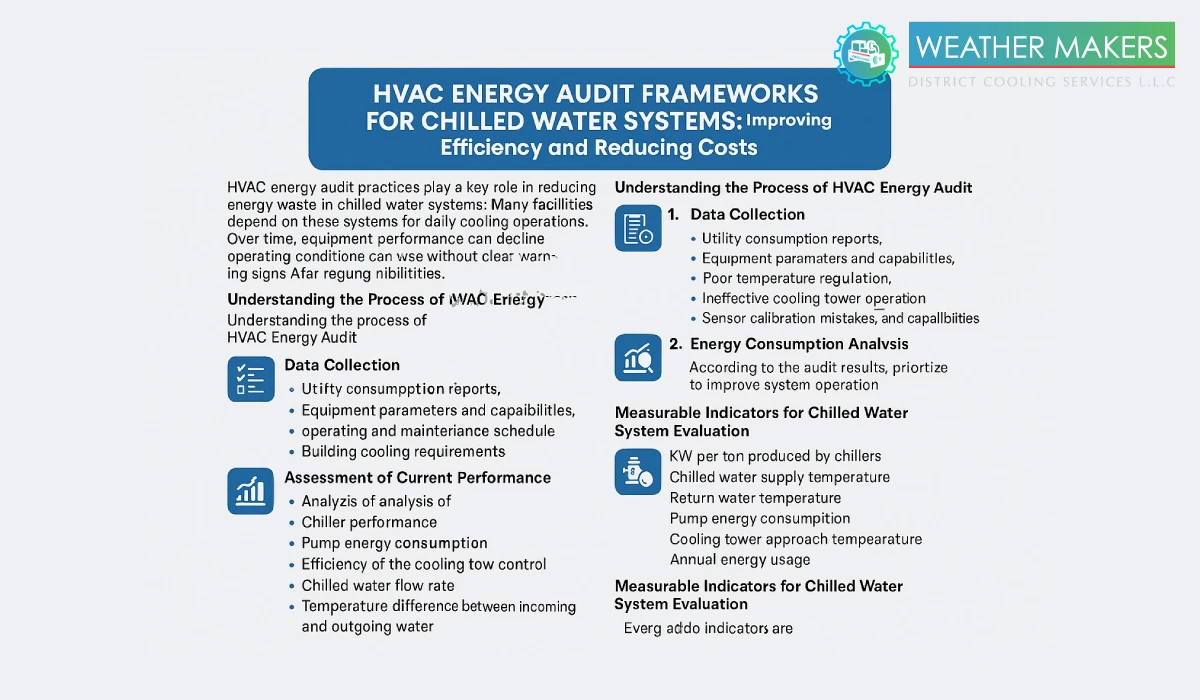
HVAC energy audit practices play a key role in reducing energy waste in chilled water systems. Many facilities depend on these systems for daily cooling operations. Over time, equipment performance can decline, operating conditions can change, and energy use can rise without clear warning signs.
A structured audit framework helps identify inefficiencies, measure system performance, and create practical improvement plans. It provides a clear picture of how energy is being used and where savings can be achieved. When done correctly, an audit supports lower operating costs, improved reliability, and better system control.
Why Regular Energy Reviews Matter
Chilled water systems are among the largest consumers of electricity in commercial and industrial facilities. Even small inefficiencies can lead to significant energy losses over a year.
Despite changes in operating requirements, many companies do not update equipment settings to match current energy demands. As a result, there is a difference between the actual cooling demand and the current operation parameters.
It is essential to conduct a chilled water system energy audit to recognize those differences and avoid extra expenses. An audit makes the system work according to the facility’s needs, ensuring optimal performance with minimal losses.
Some common issues identified during the audit process include:
- improper chiller sequencing
- excessive energy consumption by pumps
- poor temperature regulation
- Ineffective cooling tower operation
- sensor calibration mistakes
- operating beyond the equipment capabilities
Early identification of these inefficiencies helps save money.
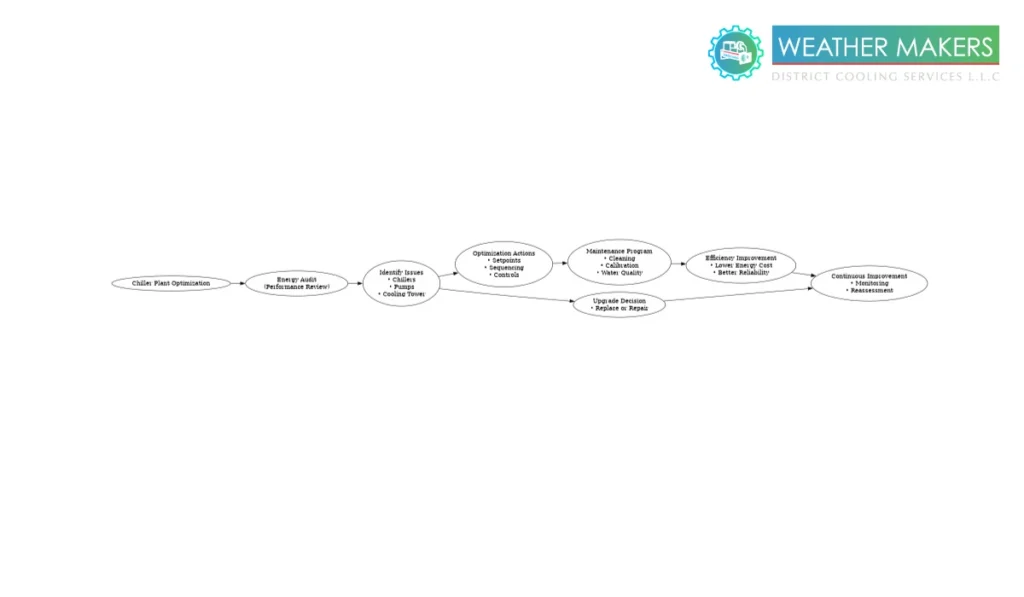
Understanding the Process of HVAC Energy Audit
An effective HVAC energy audit requires a structured approach. Besides recognizing existing problems, the audit should show the priority areas for improvement according to the cost-efficiency ratio.
There are four main steps involved in a systematic audit process:
1. Data Collection
During the first stage, the auditor gathers all necessary data, including:
- utility consumption reports,
- equipment parameters and capabilities,
- operating and maintenance schedule,
- building cooling requirements.
2. Assessment of Current Performance
During this step, the auditor analyzes the performance of each component in the system. They pay particular attention to the following aspects:
- Chiller performance,
- Pump energy consumption,
- Efficiency of the cooling tower,
- The efficiency of the current cooling control,
- Chilled water flow rate,
- The temperature difference between incoming and outgoing water.
3. Energy Consumption Analysis
All obtained data are analyzed in comparison to the design requirements, industry average values, and current building cooling needs.
4. Improving Recommendations
According to the audit results, recommendations are made to improve system operation in terms of efficiency and energy consumption. Those recommendations are prioritized according to the cost-efficiency ratio.
Measurable Indicators for Chilled Water System Evaluation
Every audit involves an analysis of system performance using specific indicators. They reflect the efficiency of the system and help recognize potential issues in the system performance.
Among such indicators are:
- KW per ton produced by chillers
- Chilled water supply temperature
- Return water temperature
- Pump energy consumption
- Cooling tower approach temperature
- Annual energy usage
All of these indicators are evaluated to ensure the highest level of efficiency.
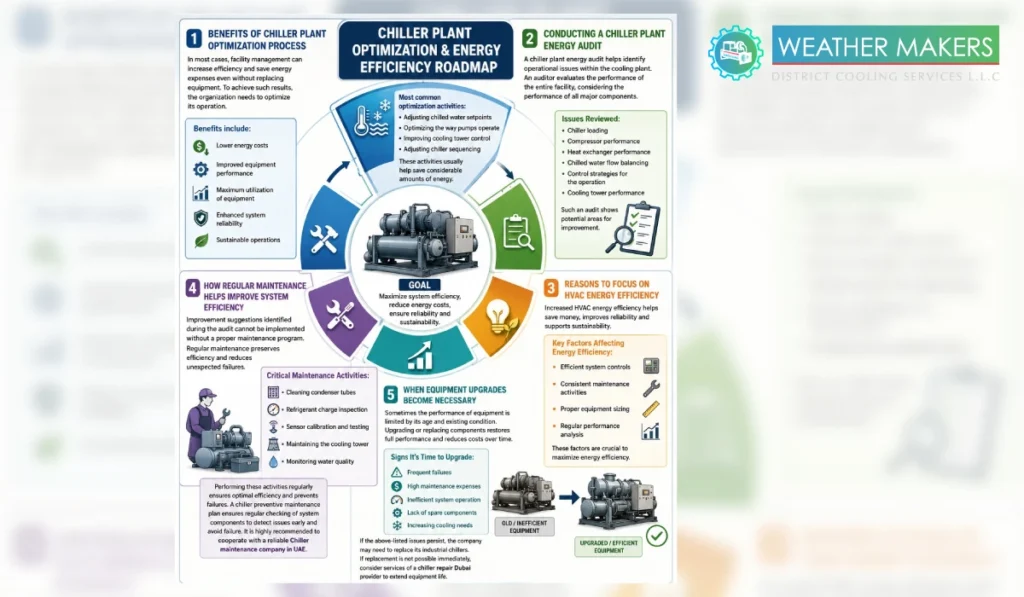
Benefits of Chiller Plant Optimization Process
In most cases, facility management can increase efficiency and save energy expenses even without replacing equipment. To achieve such results, the organization needs to optimize its operation.
Chiller plant optimization helps improve efficiency and reduce energy expenses. By improving the way the system operates, a facility manager ensures maximum utilization of equipment performance.
Most common optimization activities include:
- Adjusting chilled water setpoints
- Optimizing the way pumps operate,
- Improving cooling tower control,
- Adjusting chiller sequencing.
These activities usually help save considerable amounts of energy.
Conducting a Chiller Plant Energy Audit
A chiller plant energy audit helps identify operational issues within the cooling plant. An auditor evaluates the performance of the entire facility, considering the performance of all major components. Most frequently, the following issues are reviewed:
- chiller loading
- compressor performance
- heat exchanger performance
- chilled water flow balancing
- control strategies for the operation
- cooling tower performance
Such an audit shows potential areas for improvement.
Reasons to Focus on HVAC Energy Efficiency
Increased HVAC energy efficiency helps save a considerable amount of money each year. Besides, it contributes to improved system reliability and sustainability of operations. There are numerous ways to improve the overall energy efficiency of an HVAC system.
Some of the key factors that affect energy efficiency include:
- efficient system controls
- consistent maintenance activities
- proper equipment sizing
- regular performance analysis
These factors are crucial to maximize energy efficiency.
How Regular Maintenance Helps Improve System Efficiency
Improvement suggestions identified during the audit cannot be implemented without a proper maintenance program. Several maintenance procedures have a direct impact on energy efficiency. Regular Industrial chiller maintenance helps preserve efficiency and reduces unexpected failures.
Critical Maintenance Activities
- cleaning condenser tubes,
- refrigerant charge inspection,
- sensor calibration and testing,
- pump alignment and adjustment,
- maintaining the cooling tower,
- monitoring water quality.
Performing these activities regularly ensures optimal efficiency and prevents failures. Also, the majority of organizations have a chiller preventive maintenance plan. It ensures regular checking of system components to detect issues early and avoid failure. It is highly recommended to cooperate with a reliable Chiller maintenance company in UAE. This will help to ensure the same level of performance in the future.
When Equipment Upgrades Become Necessary
Sometimes the performance of equipment is limited by its age and existing condition. In such cases, upgrading or replacing components becomes a necessary step to restore full performance. In most cases, it makes sense to replace old equipment since it ensures lower costs over time. However, if the company cannot afford the purchase of new equipment, it may consider the services of a chiller repair Dubai provider. This can give more time to accumulate money for replacements.
Several signs prove the necessity of equipment upgrading, including:
- frequent failures,
- high maintenance expenses,
- inefficient system operation,
- lack of spare components,
- increasing cooling needs.
If the above-listed issues persist, the company may need to replace its industrial chillers.
Providers of chiller services Dubai may be helpful in this situation. If the company has difficulties in choosing the service provider, it may contact a chiller maintenance company in Dubai for advice.
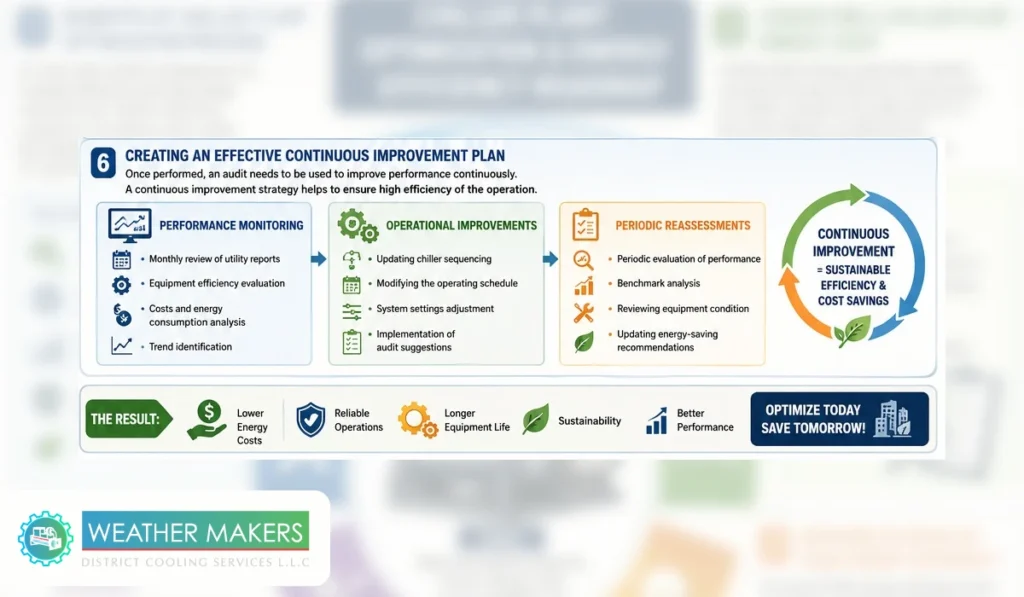
Creating an Effective Continuous Improvement Plan
Once performed, an audit needs to be used to improve performance continuously. A continuous improvement strategy helps to ensure high efficiency of the operation. The plan consists of several components:
Performance Monitoring
- Monthly review of utility reports,
- Equipment efficiency evaluation,
- Costs and energy consumption analysis,
- Trend identification.
Operational Improvements
- Updating chiller sequencing,
- Modifying the operating schedule,
- System settings adjustment,
- Implementation of audit suggestions.
Periodic Reassessments
- periodic evaluation of performance,
- benchmark analysis,
- reviewing equipment condition,
- updating energy-saving recommendations.
The above-listed components ensure a steady increase in energy efficiency.
Conclusion
An HVAC energy audit framework enables a company to reduce energy consumption and control operation costs in relation to chilled water systems. It provides a basis for efficient performance, system reliability, and informed decision-making. The process of continuous improvement and energy management helps save money, optimize operations, and achieve higher levels of efficiency.
WeatherMakers helps businesses improve chilled water system performance through professional energy audits and efficiency-focused solutions.
Frequently Asked Questions
What is an HVAC energy audit for chilled water systems?
An HVAC energy audit determines the efficiency level of system operation. It helps to find the possible ways of energy saving within the system.
How often should the chilled water system be audited?
To ensure continuous efficiency of the operation, it is recommended to perform a detailed audit every one to three years.
Can I improve the energy efficiency of my system without any replacement?
Yes. Many organizations improve energy efficiency through maintenance, control adjustments, and operational improvements without replacing equipment.



No comment