
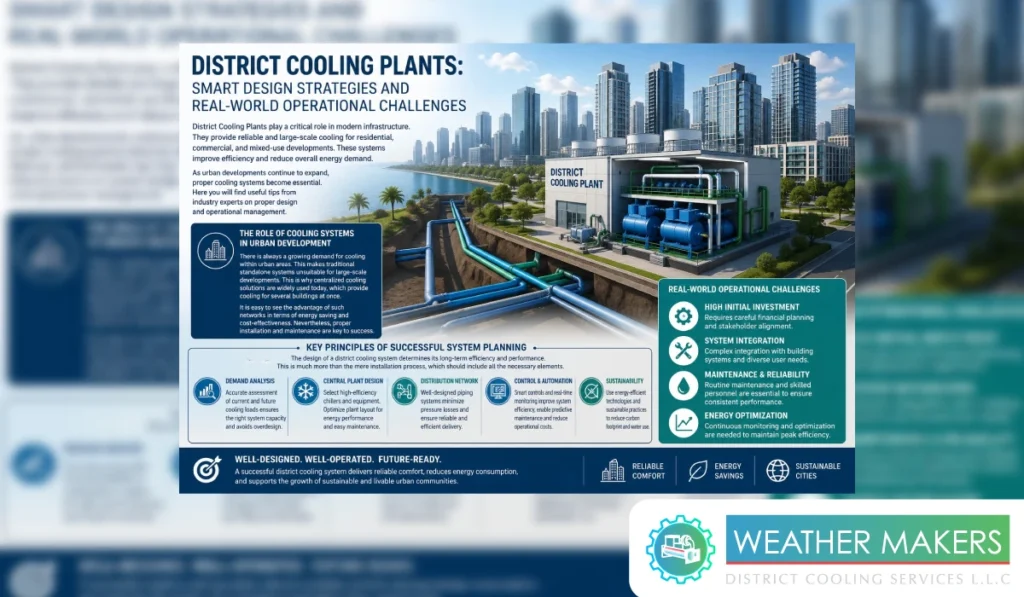
District Cooling Plants play a critical role in modern infrastructure. They provide reliable and large-scale cooling for residential, commercial, and mixed-use developments. These systems improve efficiency and reduce overall energy demand. As urban developments continue to expand, proper cooling systems become essential. Here you will find useful tips from industry experts on proper design and operational management.
The Role of Cooling Systems in Urban Development
There is always a growing demand for cooling within urban areas. This makes traditional standalone systems unsuitable for large-scale developments. This is why centralized cooling solutions are widely used today, which provide cooling for several buildings at once.
It is easy to see the advantage of such networks in terms of energy saving and cost-effectiveness. Nevertheless, proper installation and maintenance are key to success.
Key Principles of Successful System Planning
The design of a district cooling system determines its long-term efficiency and performance. This is much more than the mere installation process, which should include all the necessary elements.
The most important elements of any successful cooling system include:
- Proper load calculation based on the season
- Appropriate piping with correct insulation
- Optimal arrangement of the plant
- Choice of quality equipment, including chillers and pumps
- Installation of an effective monitoring system
Proper cooling system installation and planning are key to success.
Practical Tips for Designing the District Cooling Plants
Nowadays, engineers are expected to create sustainable and energy-efficient cooling systems. In particular, they focus on making systems more effective and less energy-consuming.
Useful design strategies include:
- Application of variable speed drives to increase efficiency
- Thermal energy storage for handling peak demands
- Advanced monitoring and control
- Proper redundancy
All these strategies can help save energy and ensure a longer lifespan of equipment.
The Most Frequent District Cooling Challenges
Sometimes, even a good installation cannot guarantee that a system will function properly. Many district cooling challenges require special attention. These difficulties might cause problems and even lead to breakdowns.
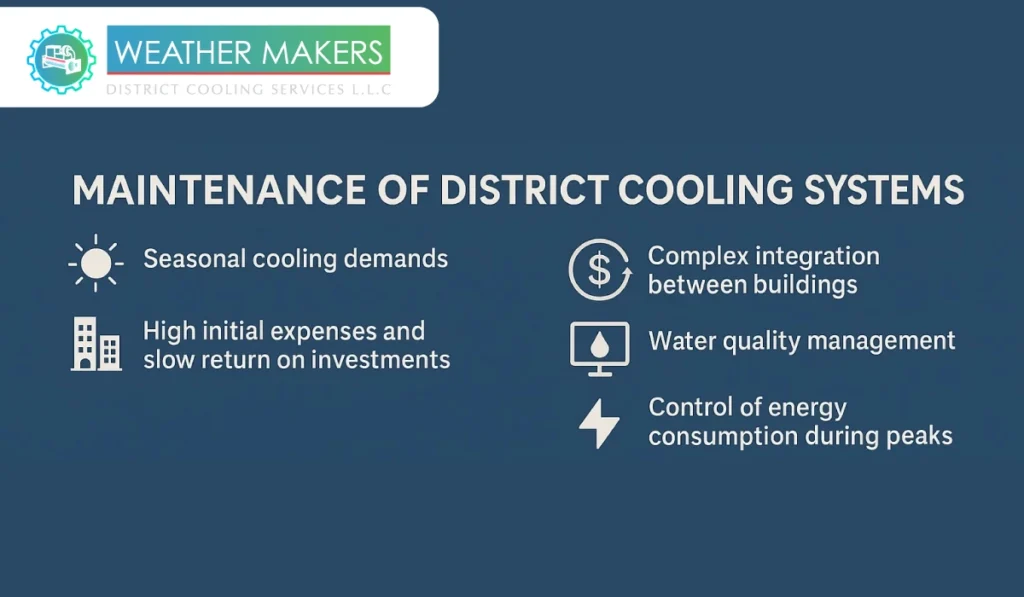
Common challenges in managing cooling systems include:
- Seasonal cooling demands
- High initial expenses and slow return on investments
- Complex integration between buildings
- Water quality management
- Control of energy consumption during peaks
Maintenance of District Cooling Systems
Proper maintenance guarantees the effectiveness of cooling plants. The failure to address this issue might cause breakdowns and other problems with equipment operation. Thus, you need to take maintenance seriously. Professional chiller maintenance services help ensure efficient system operation.
Main maintenance practices include:
- Regular system inspection
- Condenser and evaporator coil cleaning
- Refrigerant monitoring
- Electrical components inspection
- Calibration of controllers
A structured chiller preventive maintenance plan reduces downtime and extends equipment life. It also improves energy efficiency.
Role of Specialized Service Providers
Using the services of a good chiller maintenance company guarantees that the system is always running efficiently. The experts in chiller maintenance companies know about the intricacies of these systems and can thus provide customized solutions.
In challenging conditions, chiller maintenance Dubai helps in maintaining the system’s efficiency and reliability. The periodic servicing of chillers avoids sudden problems.
Older systems may no longer meet current performance standards. Thus, it is reasonable to perform a chiller retrofit and update your equipment.
The main advantages of retrofitting include:
- Higher energy efficiency;
- Lower operating costs;
- Longer life of equipment;
- Increased system reliability.
Overall, retrofits are more affordable and feasible compared to replacing the whole plant. Chiller repair Dubai is essential when system issues occur and require immediate attention.
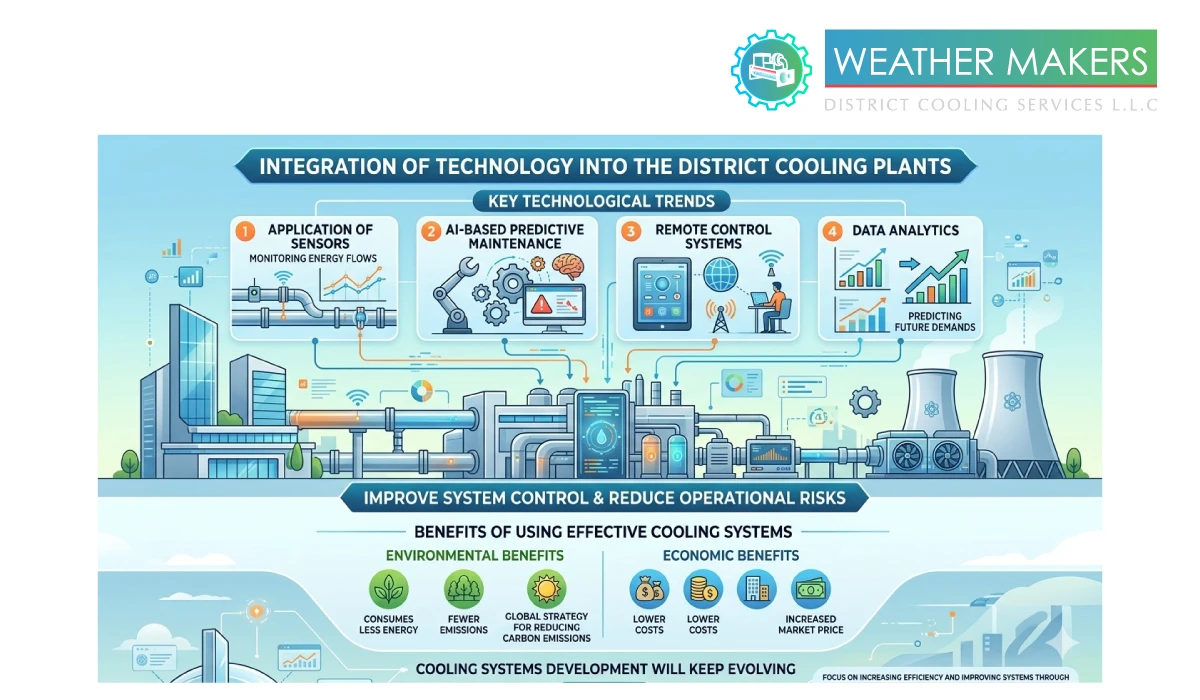
Integration of Technology into the District Cooling Plants
Today, advanced cooling systems require special technologies. Automation helps to optimize systems management and decrease human intervention.
Key technological trends in this sector include:
- Application of sensors to monitor energy flows;
- AI-based predictive maintenance software;
- Remote control systems;
- Data analytics to predict future demands.
These technologies improve system control and reduce operational risks. They also support long-term sustainability goals.
Benefits of Using Effective Cooling Systems
Using an effective system is beneficial in both environmental and economic terms. Firstly, it consumes less energy. Consequently, such a system causes fewer emissions. This corresponds to the global strategy of reducing carbon emissions. From the economic side, energy efficiency means lower costs for running the building. Moreover, it increases its market price.
Trends in Cooling Systems Development
Cooling systems development will keep evolving. In particular, the focus will be on increasing efficiency and improving systems through technologies. Developers and operators must stay updated with new trends. Adopting modern strategies ensures better performance and long-term success.
Conclusion
District Cooling Plants are essential components of modern infrastructure. Proper system planning, design, and maintenance will provide you with consistent results. Dealing with potential issues early will ensure system stability. Investing in advanced technology and professional services ensures better outcomes. As demand grows, these systems will remain a key part of modern infrastructure.
Partner with Weathermakers for reliable and efficient district cooling solutions tailored to your project needs.
Frequently Asked Questions (FAQ)
What are District Cooling Plants used for?
They are intended to provide cooling to different buildings using a single system.
What is the main benefit of district cooling systems?
They improve energy efficiency and reduce operational costs.
How often should cooling systems be maintained?
Regularly inspect your equipment to prevent failures and ensure its proper functioning.

No comment