
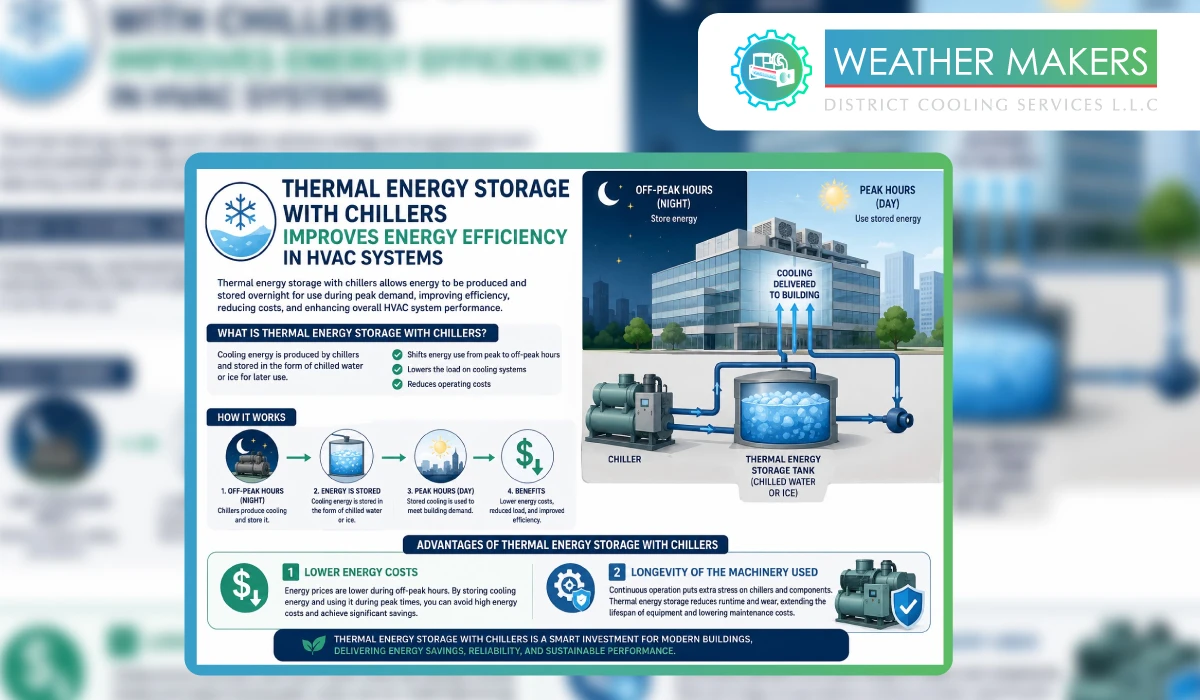
Thermal energy storage with chillers is revolutionizing the way modern HVAC systems operate. This approach allows energy to be produced and stored overnight for use during peak demand. The basic premise behind the technique is straightforward yet effective. It allows for more energy-efficient operation of air conditioning systems in modern buildings. With the current trends related to managing energy in HVAC systems, the approach provides an effective solution for modern facilities.
What Is Thermal Energy Storage with Chillers?
The core principle of this concept is relatively simple. The thermal storage system produces cooling energy, which can be stored in the form of either chilled water or ice. The energy accumulated in the storage tank can be used later during peak hours in lieu of continuous operation of the chiller.
The idea is rather beneficial and provides the following advantages:
- Allows for shifting energy consumption from peak to off-peak hours.
- Lowers the load on cooling systems.
- Reduces operating costs.
Overall, this process contributes significantly to enhanced HVAC system performance.
Advantages of Thermal Energy Storage with Chillers
1. Lower Energy Costs
As mentioned above, the main benefit provided by this system is energy savings. It can be achieved simply because the price of energy varies depending on peak and off-peak times. With this approach, it is possible to avoid energy consumption during peak hours, saving money.
2. Longevity of the Machinery Used
Continuous operation of machinery puts extra stress on it. The approach discussed allows for lowering the load on chillers and their components.
Main advantages:
- Lower maintenance frequency
- Low risk of breakdowns.
- Higher equipment life span.
This also supports effective preventive maintenance for chillers.
3. Effective Load Balancing
In some cases, the cooling load may vary drastically between certain hours. For instance, in the morning, cooling load increases sharply after everyone has returned to work and offices are filled with warm air. With thermal storage, it is possible to provide constant cooling without any peaks.
4. Enhanced Energy Efficiency
Use of energy-efficient chillers with thermal energy storage systems allows for achieving even greater efficiency and performance. In this case, less energy is wasted. The approach helps comply with modern environmental and energy standards.
Application of the Concept in Modern Buildings
There are many places where the idea of thermal energy storage can be effectively applied:
- Commercial buildings.
- Hospitals.
- Hotels.
- Industrial facilities.
- Multi-use real estate developments.
District cooling plants often utilize thermal storage systems to enhance their performance.
Thermal Storage for Smart Buildings
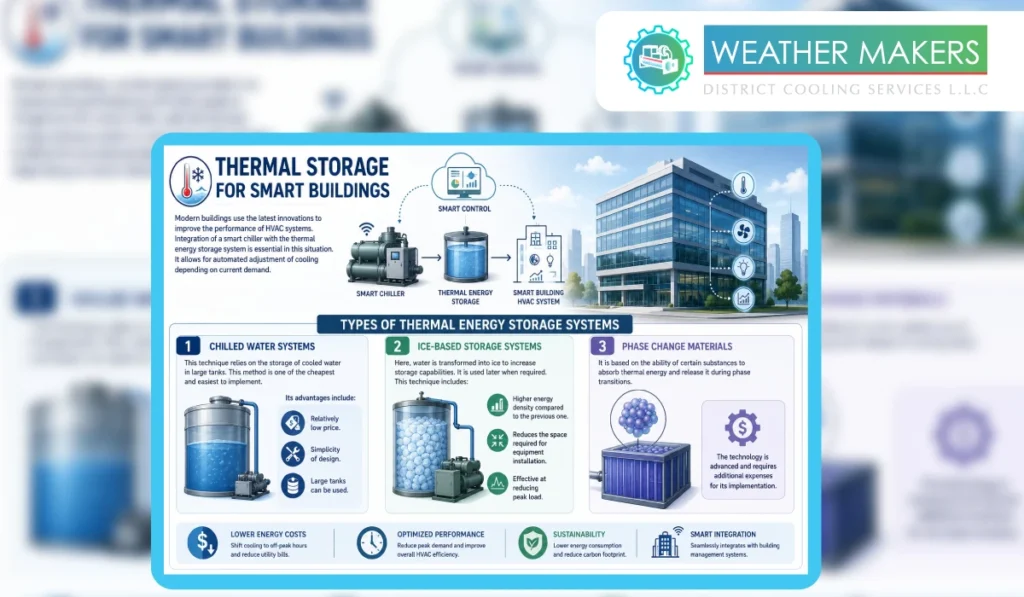
Modern buildings use the latest innovations to improve the performance of HVAC systems. Integration of a smart chiller with the thermal energy storage system is essential in this situation. It allows for automated adjustment of cooling depending on current demand.
Types of Thermal Energy Storage Systems
1. Chilled Water Systems
This technique relies on the storage of cooled water in large tanks. This method is one of the cheapest and easiest to implement.
Its advantages include:
- Relatively low price.
- Simplicity of design.
- Large tanks can be used.
2. Ice-Based Storage Systems
Here, water is transformed into ice to increase storage capabilities. It is used later when required. This technique includes:
- Higher energy density compared to the previous one.
- Reduces the space required for equipment installation.
- Effective at reducing peak load.
3. Phase Change Materials
It is based on the ability of certain substances to absorb thermal energy and release it during phase transitions. The technology is advanced and requires additional expenses for its implementation.
Its main characteristics include:
- Advanced technology.
- Small sizes of tanks.
- Efficiency.
Integration of Thermal Energy Storage into Existing Systems
This process is relatively complex because thermal energy storage is not just a tank that can be added easily. It requires careful planning of other aspects of a cooling system, such as system design, cooling load evaluation, etc. Key processes include evaluation of cooling loads, tank sizing, piping layout, and control adjustments. To make sure your system is compatible, it is recommended to consult with experts from a chiller maintenance company in Dubai.
Maintenance and Proper Operation of Thermal Energy Storage Systems
Proper operation of storage systems depends greatly on maintenance. Otherwise, the efficiency of the entire system might be reduced considerably.
Key maintenance techniques:
- Regular checkup of storage tanks.
- Inspection of insulating material.
- Checks for the correct operation of pumps and valves.
- Analysis of water quality in the system.
Reliable chiller maintenance services are required for proper operation.
Why Timely Repairs Are So Important
Maintenance is essential for ensuring timely repairs of malfunctioning parts of the system. Delayed repairs might turn out to be rather expensive, affecting system performance negatively. Professional chiller repair Dubai services help prevent this problem.
Challenges Associated with the Approach
As already mentioned, there are a number of challenges associated with this technique.
Main obstacles:
- Expensive initial investments.
- Extra space is required for tanks.
- Complicated engineering.
- Skilled labor might be required.
These drawbacks can be overcome with careful planning.
Tips for Obtaining the Optimal Result
To ensure efficient operation of the thermal energy storage system, one should pay attention to:
1. Design Optimization
It includes:
- Calculations of loads.
- Proper design of the tanks.
- Correct layout of pipelines.
2. Smart Control
It implies:
- Installation of automatic controls.
- Demand-driven cooling system operation.
- Use of building management systems.
3. Proper Maintenance
It consists of the following stages:
- Scheduled inspections.
- Continuous analysis of performance.
- Timely preventive servicing.
Future Trends of Thermal Storage in HVAC
There is no doubt that the idea of energy storage will gain popularity in the future. The key drivers of development in the sector will be:
- Increasing interest in smart cities.
- Focus on energy efficiency.
- Integration of alternative energy sources.
Conclusion
The idea of thermal energy storage is a great way to improve the performance of cooling systems. It allows for saving energy costs, reducing the risk of malfunctions, and improving the environmental performance of HVAC systems.
With professional assistance, the concept is easily implemented. It not only ensures efficiency but also high performance in challenging conditions.
WeatherMakers delivers advanced solutions for Thermal Energy Storage with Chillers, helping you improve efficiency and reduce operational costs with expert system design and support.
Frequently Asked Questions (FAQ)
What is the idea of thermal energy storage with chillers?
It is a system that is used for the production and storage of energy to be consumed later.
What are the ways that can enhance the energy efficiency of the system?
Firstly, the system allows for energy consumption shifting to off-peak periods. Secondly, it balances the load on chillers.
Is the thermal energy storage concept applicable to all types of buildings?
It is especially beneficial for large facilities with significant cooling loads.






No comment