
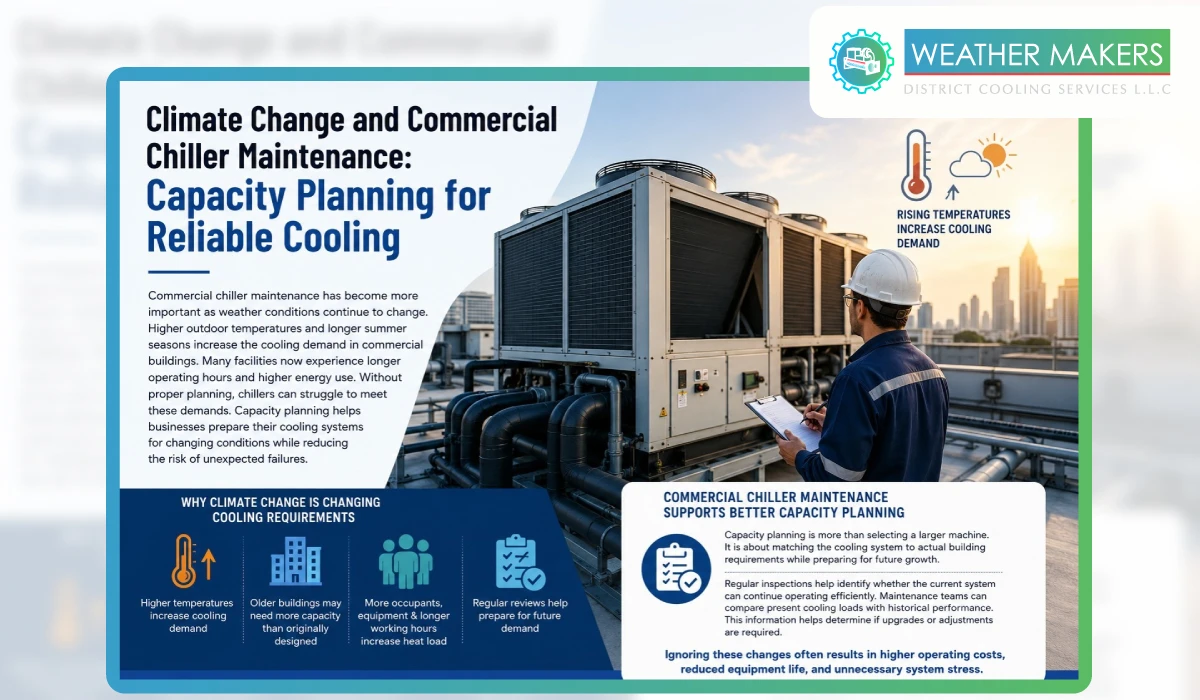
Commercial chiller maintenance has become more important as weather conditions continue to change. Higher outdoor temperatures and longer summer seasons increase the cooling demand in commercial buildings. Many facilities now experience longer operating hours and higher energy use. Without proper planning, chillers can struggle to meet these demands. Capacity planning helps businesses prepare their cooling systems for changing conditions while reducing the risk of unexpected failures.
Why Climate Change Is Changing Cooling Requirements
The demand for cooling is increasing across commercial properties. Rising temperatures place more pressure on cooling equipment throughout the year. Buildings that were designed years ago may now require greater cooling capacity than originally expected.
Many businesses also expand their operations over time. New equipment, additional occupants, and extended working hours increase heat inside the building. These changes affect the cooling load and require regular reviews of system performance.
A well-planned cooling strategy helps building owners prepare for future demand instead of reacting to emergency situations.
Commercial Chiller Maintenance Supports Better Capacity Planning
Capacity planning is more than selecting a larger machine. It is about matching the cooling system to actual building requirements while preparing for future growth.
Regular inspections help identify whether the current system can continue operating efficiently. Maintenance teams can compare present cooling loads with historical performance. This information helps determine if upgrades or adjustments are required.
Ignoring these changes often results in higher operating costs, reduced equipment life, and unnecessary system stress.
Signs That Cooling Capacity May No Longer Be Enough
Facility managers should monitor their systems for early warning signs. Small performance changes often indicate that cooling demand has increased beyond the original design.
Common signs include:
- Longer operating cycles during normal weather.
- Uneven temperatures across occupied areas.
- Frequent equipment alarms.
- Higher electricity consumption than previous years.
- Reduced cooling during peak daytime hours.
- More service calls than usual.
Recognising these signs early allows businesses to plan improvements before major failures occur.
Improving System Performance Through Chiller Efficiency
A well-maintained system delivers better cooling without unnecessary energy use. Improving chiller efficiency is one of the simplest ways to manage increasing cooling demand.
Several maintenance activities support better performance:
- Clean condenser and evaporator tubes regularly.
- Check refrigerant levels.
- Inspect pumps and water flow.
- Calibrate sensors and control settings.
- Replace worn components before failure.
These simple actions help the system operate closer to its original design performance.
Using chiller capacity planning for Long-Term Reliability
Capacity planning should become part of every facility management strategy. It allows building owners to evaluate both current and future cooling requirements.
Planning includes reviewing:
- Building occupancy trends.
- Expansion projects.
- New heat-generating equipment.
- Seasonal cooling patterns.
- Utility consumption records.
These factors provide valuable information before making equipment investment decisions.
Preparing Older Equipment with Chiller retrofit
Many older chillers continue operating even though cooling demands have increased significantly. Replacing the entire system is not always necessary.
A chiller retrofit can improve performance by upgrading controls, replacing major components, or improving heat transfer efficiency. Modern upgrades often increase system performance while extending equipment life.
Retrofits also reduce operational disruptions compared with complete equipment replacement.
Building Stronger Commercial cooling systems
Modern buildings require flexible cooling solutions. Reliable commercial cooling systems should be designed to adapt to changing environmental conditions.
Important design considerations include:
- Future building expansion.
- Variable cooling loads.
- Equipment redundancy.
- Smart monitoring systems.
- Easy maintenance access.
These design principles improve long-term system stability while reducing unexpected downtime.
Avoiding Problems With predictive chiller maintenance
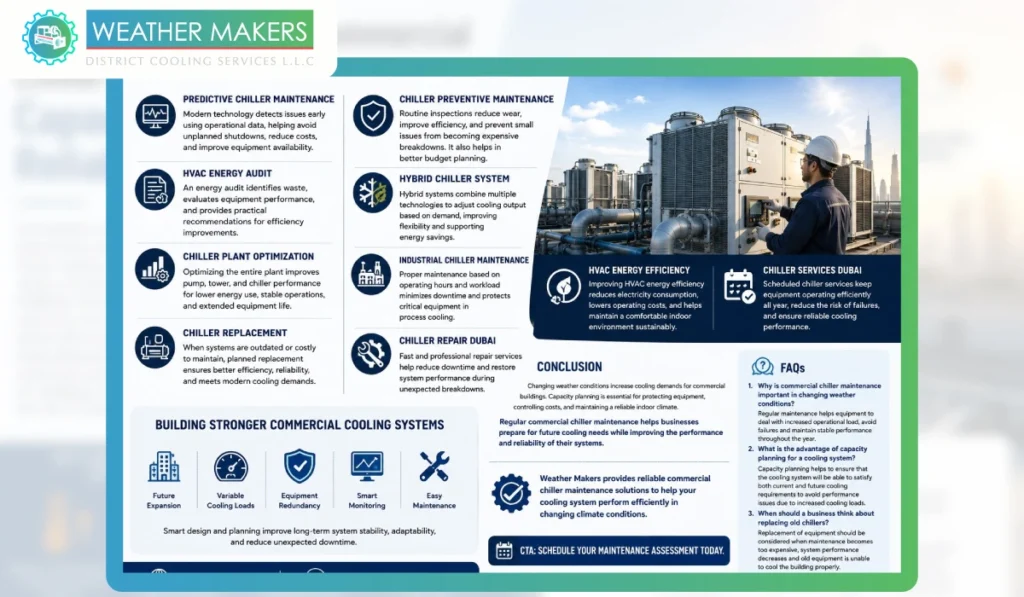
Modern technology helps detect problems before they become serious. Operating data is collected from the chiller to detect changes that cannot be seen in the routine inspection.
Proactive maintenance helps avoiding unplanned shutdowns and facilitates better scheduling. This type of maintenance decreases expenses and increases the availability of equipment throughout the year.
Making Wise Decisions By Using HVAC energy audit
An HVAC energy audit performed by professionals can provide information regarding the efficiency of the whole cooling system. It helps identify areas of energy waste and offers opportunities for improvement.
It typically includes:
- Equipment performance test.
- Analysis of energy consumption.
- Air and water flows measurement.
- Control system evaluation.
- Improvement recommendations.
It helps facility managers make informed investment decisions.
Improving Efficiency through Chiller plant optimization
The whole cooling equipment functions most efficiently when all its parts work effectively. In this case, chiller plant optimization means the improvement of the performance of pumps, cooling towers, controls and chillers as a whole system.
Chiller optimization can bring multiple benefits including:
- Decrease in energy consumption.
- More stable performance of the system.
- Lower operational costs.
- Longer equipment lifespan.
- Higher reliability.
Planning Equipment Replacement with Chiller replacement
Some aged systems may need more maintenance and become outdated. Chiller replacement allows installing equipment that would better meet the current cooling requirements.
Planned replacement of equipment helps avoiding business interruption and proper planning of the project.
Businesses should work with an experienced chiller maintenance company in Dubai when planning long-term cooling strategies. Professional guidance helps improve maintenance planning and supports better equipment performance over time.
Increasing Equipment Lifespan With Chiller preventive maintenance
Routine chiller preventive maintenance remains one of the most efficient methods to protect cooling equipment. Scheduled inspections decrease wear of equipment, create favorable conditions for its functioning and detect small defects before they turn into serious ones.
Preventive maintenance also allows planning budget effectively as equipment failures occur less frequently.
Many facility owners compare different chiller maintenance companies in UAE before selecting a long-term service partner. Choosing the right provider helps ensure consistent support and technical expertise.
Thinking About Hybrid Chiller System
Hybrid chiller systems combine different types of cooling equipment to increase flexibility of the cooling process depending on different conditions. Such a system allows adjusting the cooling production according to actual requirements instead of working one system continuously.
This way of operation supports energy savings and maintains constant cooling performance throughout the year.
Sustaining Constant Performance of Cooling Process With Industrial Chiller Maintenance
Facilities with high cooling requirements for processes should work without interruptions. Proper industrial chiller maintenance helps minimizing production interruptions and protecting valuable equipment from overheating.
The maintenance schedule should be adjusted according to the conditions of operation, not only the calendar date.
Unexpected equipment failures may still require professional chiller repair Dubai services. Fast technical support helps reduce downtime and restore normal operations quickly.
Increasing Efficiency and Saving Energy With HVAC energy efficiency
HVAC energy efficiency helps achieve environmental goals and operational cost control. Cooling equipment consumes less electricity while providing a comfortable indoor temperature.
Simple improvements in operations can lead to considerable energy savings without changing equipment.
Many planned maintenance agreements include regular chiller services Dubai to keep cooling equipment operating efficiently throughout the year.
Facilities with process cooling equipment should schedule industrial chiller maintenance according to operating hours and system workload. This approach improves reliability and supports consistent performance.
Conclusion
Changing weather conditions force increasing cooling requirements for commercial buildings. Capacity planning is now essential. It is an integral part of equipment protection, cost control and maintaining a reliable indoor climate. Regular commercial chiller maintenance helps businesses to prepare for cooling needs of the future while increasing the performance and reliability of their cooling system.
During an unexpected breakdown, many facility managers begin their search with chiller repair near me to find immediate technical assistance and reduce operational disruption.
Weather Makers provides reliable commercial chiller maintenance solutions to help your cooling system perform efficiently in changing climate conditions.
Frequently Asked Questions
Why is commercial chiller maintenance important in changing weather conditions?
Regular maintenance helps equipment to deal with increased operational load, avoid failures and maintain stable performance throughout the year.
What is the advantage of capacity planning for a cooling system?
Capacity planning helps to ensure that the cooling system will be able to satisfy both current and future cooling requirements to avoid performance issues due to increased cooling loads.
When should a business think about replacing old chillers?
Replacement of equipment should be considered when maintenance becomes too expensive, system performance decreases and old equipment is unable to cool the building properly.

No comment