Chiller Selection is the foundational step in designing an efficient cooling system for any modern commercial facility. When planning a large building project, engineers must carefully consider how the local climate affects equipment efficiency. Ambient temperature is a major factor here, as it directly drives daily power consumption. Choosing a system based only on standard factory ratings without looking at local peak summer heat is a shortcut to operational failures and massive energy bills.
Understanding the Impact of External Heat on Cooling Systems
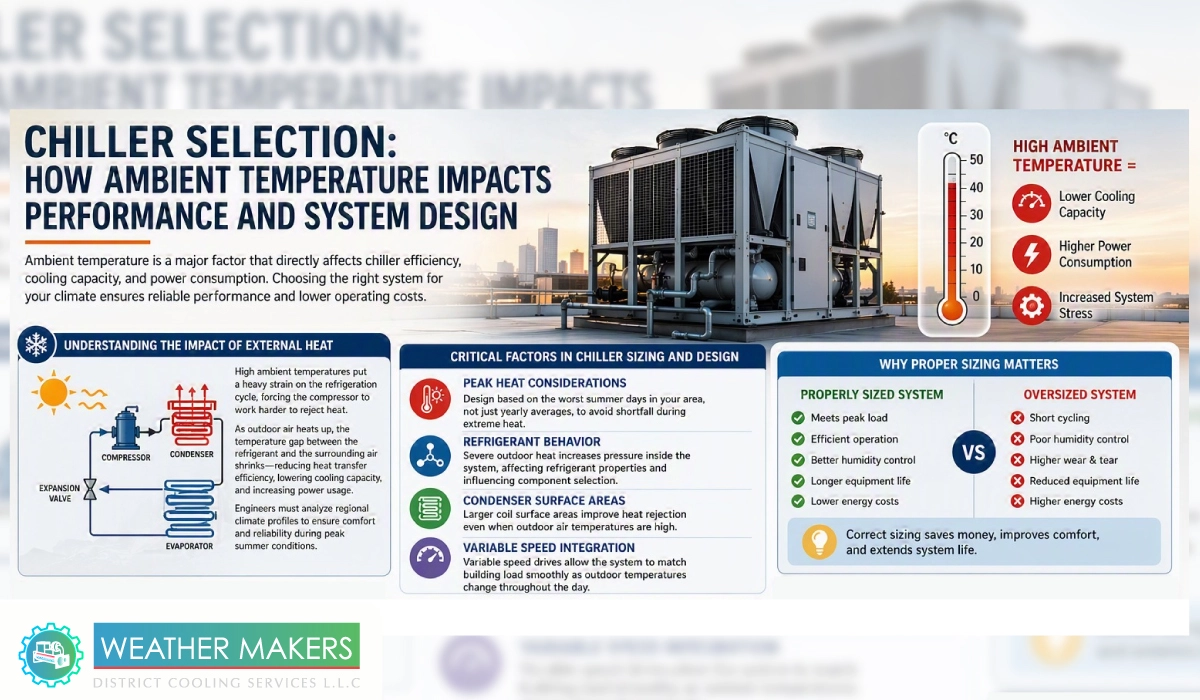
High ambient temperatures put a heavy strain on the refrigeration cycle, forcing the compressor to work much harder to push heat outside. As the outdoor air heats up, the temperature gap between the refrigerant and the surrounding air shrinks. This drop in heat transfer efficiency lowers the machine’s actual cooling capacity while spiking power usage. Engineers must analyze regional climate profiles to ensure the equipment can maintain comfortable indoor spaces during peak summer heatwaves.
Critical Factors in Chiller Sizing and Design
Getting the right setup means looking closely at actual weather data and real building loads instead of just guessing.
- Peak Heat Considerations: You need to design the system based on the worst summer days in your area, not just yearly averages, so you don’t run out of cooling when it’s hottest.
- Refrigerant Behavior: Severe outdoor heat pushes up the pressure inside the machine, which changes how the gas reacts and dictates which parts you should buy.
- Condenser Surface Areas: Having larger coils makes a huge difference because it helps the system dump heat even when the outside air is boiling.
- Variable Speed Integration: Using variable speed drives helps the system smoothly match the building’s changing needs as outdoor temperatures shift throughout the day.
Proper chiller sizing saves companies from the common mistake of over-specification, which causes the equipment to turn on and off too frequently, ruins humidity control, and shortens the machine’s lifespan.
Heavy Industrial Configurations for Extreme Climates
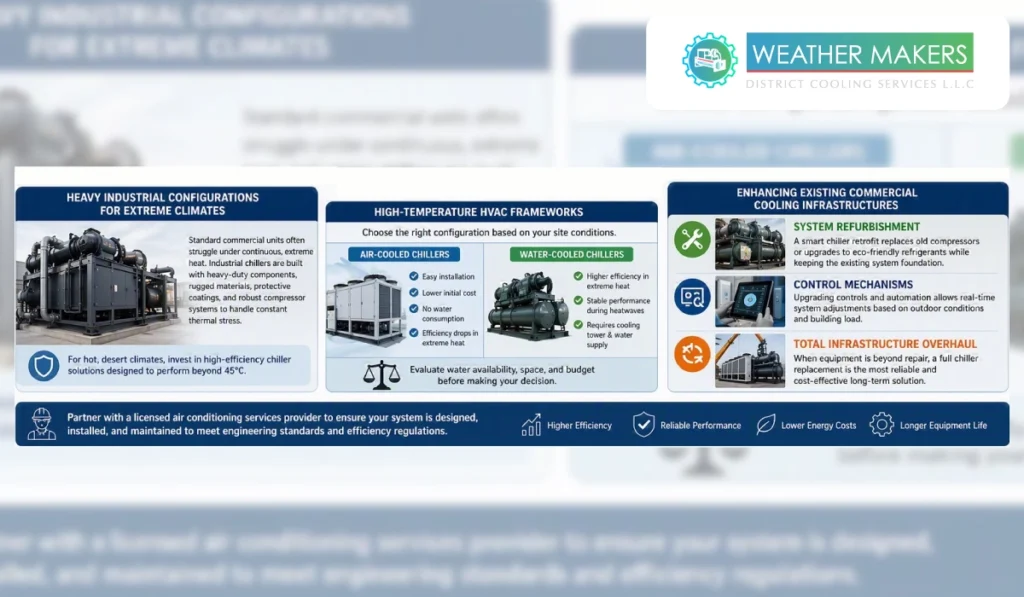
Standard commercial units often break down under continuous, extreme heat. A reliable industrial chiller design uses heavy-duty components built to handle constant thermal stress. These specialized systems feature rugged materials, protective coil coatings, and tougher compressor setups to keep factories, data centers, and production lines running without a hitch.
For local businesses operating in harsh, desert climates, standard off-the-shelf specs won’t cut it. Investing in a high-efficiency chiller selection for hot climate applications ensures the refrigeration circuit stays stable even when outdoor temperatures climb past forty-five degrees Celsius.
High-Temperature HVAC Frameworks
When planning a heavy-duty HVAC chiller design for hot regions, your main decision comes down to picking between air-cooled and water-cooled setups. Air-cooled models are simple to set up, but their efficiency drops fast when summer heat gets brutal. On the other hand, water-cooled systems deal with extreme heatwaves much better since they use cooling towers to reject heat through evaporation. Before deciding, you just have to weigh your local water supply, available space, and overall budget.
Enhancing Existing Commercial Cooling Infrastructures
When an older setup starts choking in the summer heat, facility managers do not have to jump straight into throwing the whole system away. There are actually a few practical ways to fix things up and make the setup reliable again:
- System Refurbishment: Opting for a smart chiller retrofit is a great shortcut where you just swap out the old compressors or switch to modern, eco-friendly refrigerants while keeping the original foundation intact.
- Control Mechanisms: Getting a proper chiller upgrade lets you install smart automation controls that tweak your system settings on the fly based on real-time outdoor weather changes.
- Total Infrastructure Overhaul: When an old unit is completely worn down, constantly breaks down, and runs up huge electric bills, a full chiller replacement becomes the only smart long-term financial move.
Just make sure you team up with a licensed air conditioning services provider so the work actually matches up with the original engineering standards and modern efficiency rules
Working with Local Tech Partners
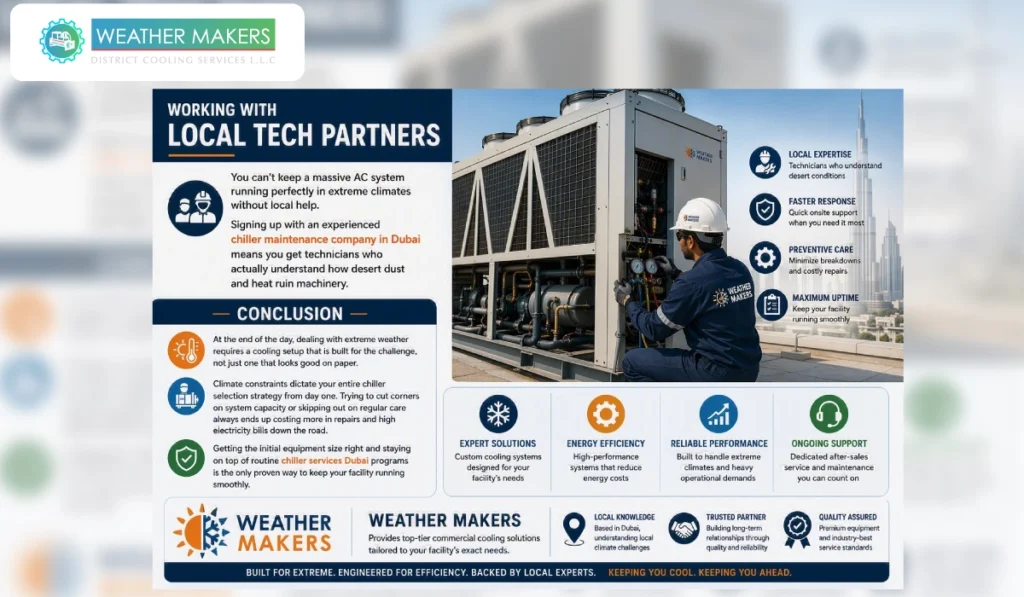
You can’t keep a massive AC system running perfectly in extreme climates without local help. Signing up with an experienced chiller maintenance company in Dubai means you get technicians who actually understand how desert dust and heat ruin machinery.
Plus, partnering with top-tier chiller companies in Dubai gives you quick access to the latest energy-saving tech and keeps you aligned with local green building laws.
Keeping Your System Efficient Long-Term
Don’t wait for a major breakdown during a heatwave. A solid chiller preventive maintenance routine catches minor issues before they turn into expensive disasters.
Make sure your team covers these three steps regularly:
- Debris Elimination: Clean coils mean better airflow. Regular chiller cleaning removes sand and dirt so the system doesn’t overheat.
- Advanced Diagnostic Programs: Use smart predictive chiller maintenance methods like oil tests and vibration checks to spot bad parts early.
- Comprehensive Industrial Oversight: Stick to a tight industrial chiller maintenance schedule to keep heavy process lines safe.
If things go wrong, fast chiller repair Dubai services will protect your operations from costly downtime.
For businesses with multiple sites, hiring chiller maintenance companies in UAE guarantees the exact same service quality across your whole portfolio.
Conclusion
At the end of the day, dealing with extreme weather requires a cooling setup that is built for the challenge, not just one that looks good on paper. Climate constraints dictate your entire chiller selection strategy from day one. Trying to cut corners on system capacity or skipping out on regular care always ends up costing more in repairs and high electricity bills down the road.
Getting the initial equipment size right and staying on top of routine chiller services Dubai programs is the only proven way to keep your facility running smoothly. When you take care of the machinery, it takes care of your business by keeping your energy costs manageable and your indoor spaces perfectly cool, no matter how brutal the weather gets outside.
Weather Makers provides top-tier commercial cooling solutions tailored to your facility’s exact needs.
Frequently Asked Questions
How does high outdoor heat affect overall chiller performance?
It shrinks the temperature gap needed for heat transfer, forcing the compressor to use way more power. This immediately drops your overall chiller performance.
When should a business consider a retrofit over a complete system replacement?
If the main frame is still solid, do a retrofit. Upgrading just the compressor or controls saves lots of cash while giving the machine a second life.
Why is precise chiller selection critical for commercial facilities?
A precise chiller selection keeps you from buying an undersized unit that can’t cool or an oversized unit that wastes power. It gives you the best return on your investment.