
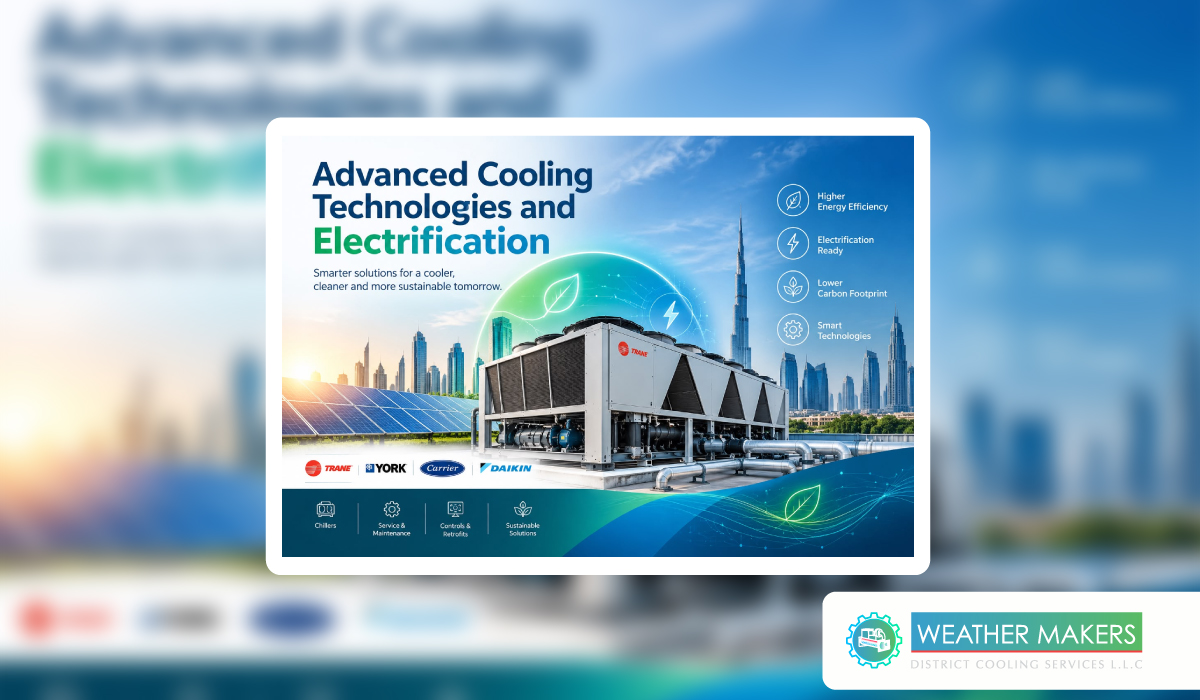
Advanced cooling technologies are changing how modern buildings approach comfort, energy use, and system performance. Cooling systems are moving beyond basic temperature control. New solutions now focus on lower energy use, smarter operation, better equipment integration, and reduced environmental impact. Electrification is also becoming an important part of this change. As cooling demand continues to rise, businesses need systems that can deliver reliable performance while using energy more intelligently.
Why Cooling Technology Is Changing
Cooling systems consume a significant amount of energy in large commercial and industrial facilities. Older equipment can also become less efficient as components age. Changing operating conditions can place additional pressure on cooling plants. These factors are encouraging facility owners to look beyond routine equipment replacement.
Modern cooling strategies focus on the complete system. Chillers, pumps, controls, heat exchangers, cooling towers, and electrical equipment must work together. A change in one part can affect the performance of the entire plant.
The move towards electrification adds another important factor. Electric equipment can work effectively with modern control systems and cleaner power sources. This creates opportunities for facilities to improve operating efficiency while preparing their cooling infrastructure for future energy requirements.
The Growth of Advanced Cooling Technologies
The next generation of cooling will not depend on one single machine or method. It will combine efficient equipment with digital controls, better system design, and improved operating strategies.
Advanced cooling technologies can include modern compressors, intelligent controls, improved heat transfer equipment, variable-speed drives, connected monitoring systems, and other solutions designed to improve cooling performance.
Several developments are expected to shape the industry:
- More efficient electric-driven cooling equipment will become common in new projects.
- Smart controls will help systems respond to changing cooling demand.
- Connected sensors will provide more information about equipment performance.
- Data-based maintenance will help identify developing equipment problems.
- Modern retrofits will help older cooling plants operate more efficiently.
- Integrated systems will allow different cooling components to work together more effectively.
These changes are especially useful for facilities that operate cooling systems for long hours. Even small improvements in operating efficiency can have a meaningful effect over time.
Electrification and the Future of Cooling
Electrification is becoming an important part of modern energy planning. Cooling systems are already heavily dependent on electricity, but future solutions can make electrical operation more efficient and controllable.
Cooling electrification technologies can include high-efficiency electric chillers, variable-speed equipment, advanced compressors, smart controls, and systems that can respond to changes in electrical demand.
Electrification can support several practical goals:
- Better control of equipment operation.
- More efficient use of electrical power.
- Easier integration with renewable energy sources.
- Improved monitoring of energy consumption.
- Greater flexibility during periods of changing cooling demand.
The transition does not mean that every existing system needs immediate replacement. In many facilities, a phased approach can provide a more practical solution. Equipment condition, cooling demand, operating hours, available electrical capacity, and future building requirements should all be considered before making a major change.
High-Efficiency Equipment for Modern Cooling
Equipment efficiency will remain a major part of future cooling strategies. Modern high efficiency chillers can deliver the required cooling capacity while using less energy under suitable operating conditions.
However, selecting efficient equipment is only one part of the process. The system must also be correctly sized and operated. Oversized equipment can cycle unnecessarily. Poor water flow can reduce performance. Incorrect control settings can also increase energy consumption.
Facility teams should consider the full operating profile before selecting new equipment. Seasonal demand, load patterns, water temperatures, equipment redundancy, and available plant space can all influence the right solution.
Smarter Plant Operation
Modern cooling plants are becoming more connected. Sensors and digital systems can provide information about temperatures, pressures, flow rates, energy consumption, and equipment status.
A chiller plant management system can bring this information together. Facility teams can use the available data to understand how the plant is operating and identify areas that require attention.
Smart operation can help teams:
- Track changes in equipment performance.
- Compare energy use across operating periods.
- Identify unusual operating conditions.
- Improve equipment scheduling.
- Coordinate multiple cooling components.
- Support better maintenance decisions.
The value of digital systems depends on how the information is used. Data should support practical decisions rather than simply create more reports.
Better Energy Management
Future cooling systems will also place greater emphasis on Energy Management. Cooling demand changes throughout the day. A plant that operates at full capacity all the time may use more energy than necessary.
Effective energy management considers actual demand and adjusts equipment operation accordingly. Variable-speed equipment, automated controls, equipment sequencing, and accurate monitoring can all support this approach.
Facility teams can also review historical operating data to identify recurring patterns. This information can help determine when equipment should operate, how much capacity is required, and where energy losses may occur.
Energy planning should also consider future building requirements. A cooling plant designed only for current demand may become difficult to manage if the facility expands or operating conditions change.
The Role of Smart Controls
Modern cooling equipment needs effective control. Controls / Building Management Systems can connect different parts of a cooling plant and help coordinate their operation.
Smart controls can respond to changes in load, temperature, water flow, and equipment status. This allows the system to operate according to actual conditions instead of following fixed settings at all times.
Good control strategies can also reduce unnecessary equipment operation. For example, equipment can be started or stopped according to demand. Operating temperatures can be adjusted within suitable limits. Alarms can help operators identify problems before they become major failures.
This creates a more responsive cooling system and supports better long-term operation.
Modernising Existing Cooling Plants
New technology does not only apply to new buildings. Existing facilities can also benefit from modernisation.
Equipment Retrofits can provide a practical way to improve the performance of older systems. A retrofit may involve selected components rather than a complete plant replacement.
Possible upgrade areas include:
- Variable-speed drives.
- Compressors and compressor controls.
- Pumps and motors.
- Sensors and monitoring equipment.
- Control panels.
- Heat transfer components.
- Building automation connections.
The right retrofit depends on the age and condition of the equipment. A technical assessment should come before any major upgrade. This helps identify which improvements can provide useful performance benefits and which components may need replacement.
Chiller Retrofit and Future-Ready Systems
A well-thought-out chiller retrofit in Dubai can help prepare an existing plant for future changes in its cooling needs. Retrofitting may be necessary in situations where the existing equipment is still good enough for use but cannot meet the performance standards that exist today.
This kind of project should take into account the state of the equipment, operational history, cooling needs, electricity needs, control compatibility, and the available space.
It is not the intention to introduce a new piece of equipment just because it is new.
The upgrade should be considered based on the specific benefits it can provide.
Improving Heat Transfer Performance
Another critical feature of contemporary cooling is efficient heat transfer. Heat exchanger performance has a direct impact on how efficiently the cooling system can transfer heat. Water quality problems, fouling, scaling, flow restrictions, or inappropriate operating conditions can lower heat transfer efficiency. Such situations might force equipment to operate harder to provide the needed cooling effect.
Routine performance tests can help detect changes early before they cause bigger problems. Cleaning, water treatment, flow optimization, and component upgrades may help establish appropriate operating conditions.
Future cooling systems will still require efficient heat transfer. Contemporary equipment will not be able to function if the conditions for heat transfer are poor.
Predictive Maintenance and Connected Equipment
Maintenance is also increasingly becoming data-driven. In addition to using set service intervals, facilities can also analyze data from the equipment to see how the conditions have changed.
Predictive maintenance of chillers will help to detect abnormal trends in vibration levels, temperatures, pressures, energy consumption, and other operational parameters. Earlier detection will give maintenance personnel more time to diagnose the issue.
This method can help reduce downtime and improve maintenance planning. Predictive maintenance will also be useful in helping facility managers decide what equipment requires urgent attention.
The success of the predictive maintenance method requires having correct data and interpreting it properly. The technology helps in maintenance, but human experts are still needed for diagnosis and maintenance.
The Importance of Future-Ready Chiller Design
Future cooling demands should be kept in mind while designing the system. In chiller system design, the designer must keep in mind the present as well as future demands of the building.
While doing this, the designer must ensure that the system is designed with sufficient capacity, proper functioning, an efficient control system, and enough flexibility for future upgrades. The designer must also consider accessibility, maintenance, plant space, power capacity, and redundancy of the system.
How Service Expertise Supports the Transition
Just having technology does not mean good performance in cooling processes. The equipment must be selected, installed, controlled, maintained, and upgraded correctly. Technical experts who provide professional chiller services Dubai may assist facilities at various stages of the lifecycle of their cooling system. Experts can check equipment condition, identify performance problems, and suggest suitable improvements.
The most efficient solution for the majority of facilities will be to combine the equipment currently used with some other technology.
Conclusion
The future of cooling will be determined by efficiency, electrification, digitalization, maintenance, and integration of equipment. Advanced cooling technologies will provide building owners with a greater range of choices to increase efficiency without having to depend solely on one method.
It all depends on what works best for a particular building based on its needs, requirements, and other factors. Assessment will therefore become extremely important in order to make any choice.
Weathermakers Cooling Services LLC supports practical cooling improvements for modern facilities.
Frequently Asked Questions
What are advanced cooling technologies?
Advanced cooling technologies include efficient chillers, smart controls, connected monitoring, modern compressors, and other solutions that improve cooling performance and energy use.
Why is electrification important for future cooling?
Electrification can improve equipment control and energy management. It can also support the integration of modern electrical systems and renewable power.
Can older cooling systems use new technologies?
Yes. Suitable upgrades can improve existing systems without requiring complete replacement. A technical assessment can identify practical upgrade options.

No comment