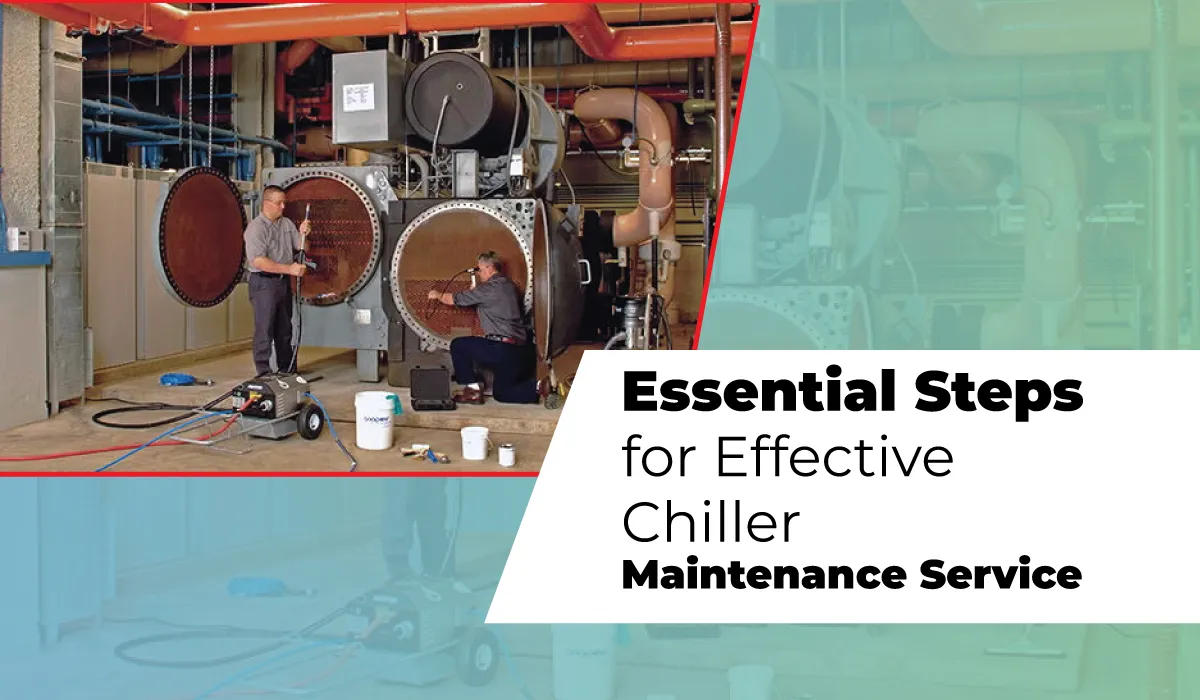
Chiller maintenance service is essential in keeping cooling systems in optimal operating conditions year round. Regular upkeep of chillers in commercial buildings and on industrial sites can reduce costly repairs and unexpected downtime. The changing of seasons allows facility managers to ensure their systems are operating effectively and efficiently, especially before winter. For this reason, taking proactive maintenance measures promotes reliability, saves on energy costs, and extends the life of equipment.
Why You Should Maintain Your Chiller Service
Avoiding preventive maintenance results in unforeseen expenses, such as higher repair costs and higher energy charges. In a typical water cooled chiller, condenser tube scale ( fouling ) is one of the most frequent sources of problems that contribute to reduced system efficiency. The scale and debris works as insulation, inhibiting normal heat flow compelling the chiller to strain in order to meet the cooling demands.
Due to inefficient performance, energy consumption continues to gain pace. The added strain leaves lasting effects on system performance and increases wear and tear. Certain companies forgo or delay their chiller maintenance based on time or cost concerns, but in most cases, it ends up being more expensive in the long term.
As per industry information, HVAC systems consume roughly one-third of all of a facility’s energy. An inefficiently operating chiller impacts operating expenses directly. Clean, well-maintained heat exchangers facilitate optimal heat transfer, and scaling and corrosion in neglected tubing lead to energy losses. Regular chiller maintenance enables facility managers to obtain greater efficiency, reduced power consumptions, and extended equipment life.
Major Steps in Upgrading Chiller Maintenance Service
As a measure of making your cooling system more reliable and longer lasting, it is recommended that you follow a formal maintenance process. The following are the key steps that keep your chiller system in a functional state.
Step 1: Maintain a Daily Journal
Daily records are one of the easiest and most effective maintenance routines. Regularly logging chiller operation data allows you to catch early warnings before they turn into expensive issues. Make records of key parameters like temperature, pressure and flow rate.
Best practice is to take readings several times a day, but regular daily logs give useful information. Long-term records in turn indicate performance trends, foretell potential problems, and assist in making proactive maintenance choices. They also help service personnel and staff stay informed about the chiller’s performance relative to its operating load.
Step 2: Maintain Tubes Spotless and Scale-Free
Scale and deposition within tubing in water cooled and dirty coils in an air -cooled system are among the most common reasons for unsatisfactory performance. The system has to operate longer to achieve set point temperature since deposits decrease heat transfer efficiency, and this will raise the cost of operation.
You can avoid this by scheduling cleaning of the tubes/ coils at least once per year, and more often for systems running in harsh conditions. Based on the type and level of build up, mechanical cleaning methods could be effective, chemical descaling is effective. Routine observations daily or weekly, can assist in identifying evidence of under deposit corrosion or pitting, both of which could be detrimental and can result in catastrophic damage in a water cooled system.
By cleaning the tubes, you can help ensure the chiller operates efficiently and reduce the likelihood of unanticipated system failures.
Step 3: Leak Tests on the System
A refrigerant leak could be one of the more commonly experienced problems affecting chiller performance. Minor refrigerant leaks can diminish cooling capacity, and release harmful gases to the outdoor air.
Keeping refrigerant quantities in balance, as the manufacturer suggests, is critical.
Daily inspections should cover:
- Checking the saturation pressures and temperatures
- Checking for bubbles in the refrigerant sight-glass
- Testing connections and fittings using a gas analyzer
Leak detection and repair at an early stage give system efficiency, reduce energy losses and safeguard the environment.
Chiller maintenance is often neglected, but it is important for optimal chiller system performance. Effective water treatment will avoid the accumulation of contaminants on heat-transfer surfaces and do much to lessen the development and growth of bacteria and algae. These contaminants can rapidly lead to fouling, which will severely reduce your operational efficiency if left removed.
You will need to develop your own specific process since the environmental conditions and the quality of the water will be different from plant to plant. Consult a chiller maintenance or water treatment expert about developing an appropriate water treatment plan in your case. Periodically checking the chemistry of your water will help to guarantee even operation to perform your cleaning schedule, and maximize the life of your chiller.
Step 5: Take Up a Standard Maintenance Program
After planning for maintenance, regular execution is then implemented. The program shall specifically define procedures, scheduling, as well as assigned responsibilities. Concerned parties shall also be trained properly for appropriate and safe operating as well as maintenance of the equipment.
It is important to keep all team members up to date to ensure maintenance is carried out on schedule and to standards. Assessing maintenance outcomes helps show that preventive care improves efficiencies and saves money.
Developing a Comprehensive Chiller Maintenance Plan
Maintenance for chillers is more than cleaning and inspections: it takes a methodical long-range approach. Start by determining your chiller’s specific needs (i.e., age, load, and environmental factors). Then, create your maintenance schedule to include daily observations, monthly inspections, and thorough cleanings yearly.
It is a good investment to entrust the service to a qualified chiller maintenance company. Trained technicians utilize specialized tools and diagnostic methods to identify potential issues and ensure that the chiller functions within the manufacturer’s specifications. Expert maintenance also offsets downtime and improves energy efficiency.
Understanding the Advantages of Preventative Maintenance
Preventative maintenance (PM) can mitigate problems with chiller performance before equipment failure occurs. Instead of reactive maintenance to repair a broken system, PM enhances reliability and efficiency. It also reduces repair expenses, and equipment problems while ensuring consistent performance.
Routine maintenance activities, such as cleaning the tubes, checking the refrigerant pressure and temperature, should be carried out regularly. If the focus is on keeping the chiller running, working with an experienced chiller service company has the power to keep your system running safe and efficient year round.
Conclusion
A routine chiller maintenance service is one of the smartest investments for any facility. It minimizes energy expenses, avoids unexpected downtime and enhances system longevity. As long as you keep daily records, clean tubes, inspect for leaks, handle water quality and stick to a maintenance routine, you’ll be able to maintain your system in top form for years.
A professional maintenance service provider ensures reliable chiller performance by keeping your system in the hands of highly qualified experts who deliver consistent reliability and efficiency.
Frequently Asked Questions
Why should I take chiller maintenance service regularly?
Proper maintenance of the chiller optimizes energy use, avoids breakage, and ensures you longer-lasting equipment.
How frequently should I obtain my chiller maintenance service?
It is recommended that you contract a specialist maintenance company at least once yearly for cleaning and inspecting in order to achieve optimal system performance.
What would a typical service provider of chillers normally do?
Chiller service provider performs tube cleaning, leak detection, preventive maintenance, and inspection among other steps that make the system run safely and efficiently.