
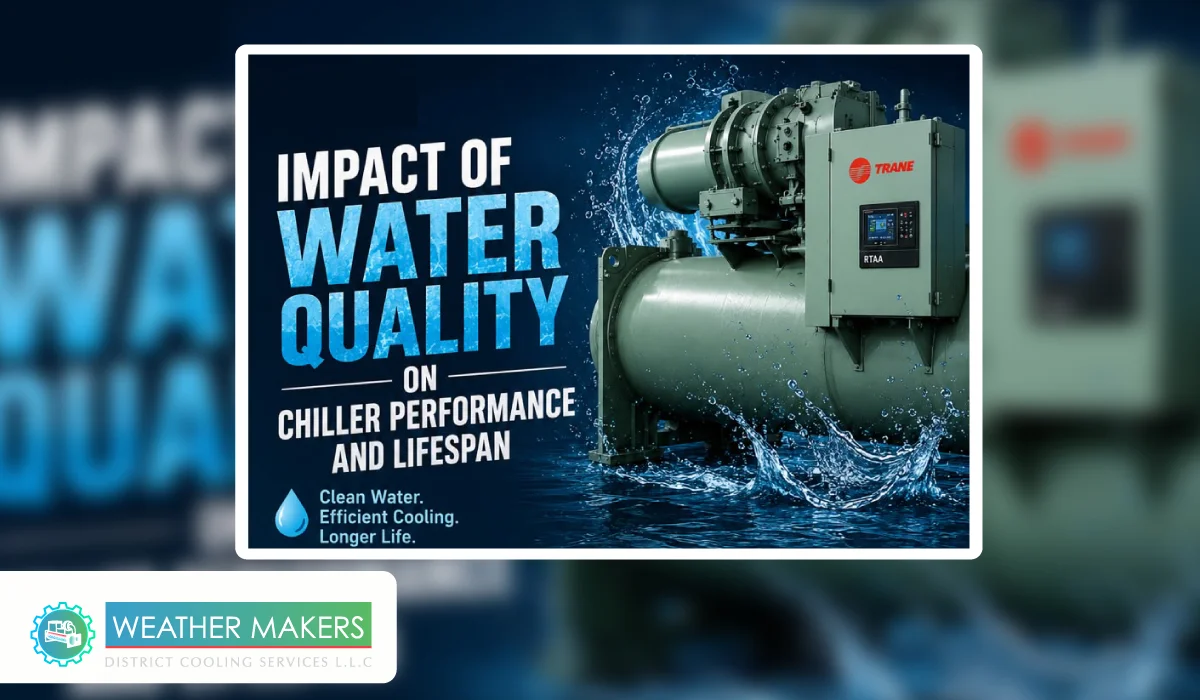
Chiller maintenance Dubai is not limited to cleaning, refrigerant checks, or mechanical inspections. Water quality can also have a major effect on chiller performance and equipment life, especially in water-cooled systems. Hard water can cause scale and mineral deposits on heat-transfer surfaces, while poor water treatment can contribute to corrosion and fouling. These problems can reduce heat-transfer efficiency and increase the operating load on the chiller.
Electrical conditions should also be checked during maintenance when required. Voltage imbalance, harmonics, poor connections, and other electrical faults can affect motors, compressors, and controls. Routine electrical checks can help identify these issues when they occur.
For water-cooled chillers, regular attention to water quality is particularly important. Monitoring water conditions and maintaining proper treatment can help control scale, corrosion, and fouling and support reliable chiller performance.
How Voltage Problems Affect Chiller Operation
Power interruptions can create another set of problems. Frequent starts and stops place additional stress on compressors and electrical controls. Repeated disturbances can also cause protective devices to trip.
A regular electrical inspection should therefore include:
- Voltage measurement across all phases.
- Current measurement during normal operation.
- Phase balance checks.
- Inspection of electrical terminals and connections.
- Review of alarms and protection-device trips.
- Checking for unusual motor temperature.
These checks provide useful information about the electrical condition of the equipment.
How Power Quality and Water Quality Affect Chiller Efficiency
A chiller can consume more energy when its electrical and mechanical systems are not operating under suitable conditions. Poor electrical performance can increase motor losses and place additional load on the system.
This can reduce chiller plant efficiency over time. The impact becomes more important in large facilities where chillers operate for long periods. Operators should compare electrical readings with cooling output.
Protecting Compressors From Electrical Stress
The compressor is one of the most important and expensive parts of a chiller. Electrical problems can place additional stress on compressor motors and related components.
High current can cause overheating. Repeated voltage disturbances can affect motor insulation and control components. Phase imbalance can also create uneven motor loading.
Good water chiller maintenance should therefore include electrical checks as part of the wider service process.
Poor condenser-water conditions can also increase the load on the compressor by making heat rejection less effective.
Using Smart Monitoring to Find Problems Earlier
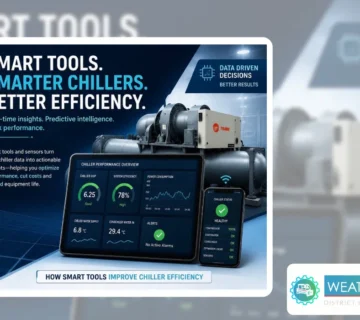
Modern facilities can collect more operating information than traditional systems. Sensors and connected controls can track important chiller parameters continuously.
A chiller monitoring system can record voltage, current, temperatures, pressures, alarms, and operating hours. This information helps facility teams identify changes in performance.
Monitoring is particularly useful when a problem happens intermittently. A technician may not see the fault during a scheduled visit. Historical data can show when the issue occurred and what the equipment was doing at that time.
Useful monitoring data can include:
- Phase voltage and current.
- Compressor operating hours.
- Motor temperature.
- Refrigerant and water temperatures.
- Pressure readings.
- Alarm history.
- Energy consumption.
- Equipment starts and stops cycles.
This approach makes maintenance more informed. It also gives technicians better information before they begin detailed troubleshooting.
Moving From Routine Checks to Predictive Maintenance
Traditional servicing focuses on scheduled inspections. This remains important, but modern facilities can use operating data to identify potential problems earlier.
HVAC predictive maintenance uses equipment condition and performance information to support maintenance decisions. Instead of waiting for a component to fail, technicians can investigate changes in operating behaviour.
A good maintenance programme should combine scheduled inspections with condition-based checks. This creates a more complete view of equipment health.
Power Quality Checks During Chiller Servicing
Electrical testing should be part of a wider service programme. For water-cooled chillers, technicians should also check condenser-water conditions, heat-transfer performance, and signs of scale or fouling. They can also compare current results with previous service records.
This makes it easier to identify gradual changes. A small increase in current may not appear serious during one inspection. However, repeated increases over several months may indicate developing mechanical or electrical stress.
Good records are therefore important. They help technicians understand the normal operating condition of each system and identify changes more quickly.
When Repair or Modernisation May Be Needed
A chiller retrofit may include updated controls, improved monitoring, new electrical components, or other system upgrades. The right solution depends on the equipment condition, operating requirements, and long-term plans for the facility.
Repair should be considered when the problem is limited to specific components. If failures are frequent and the equipment has reached the end of its useful service life, a wider assessment may be more suitable.
Choosing the Right Maintenance Approach
Industrial Chiller Maintenance often requires closer attention to operating loads, production schedules, equipment criticality, and downtime risks. Industrial facilities may depend on continuous cooling for processes where a chiller failure can interrupt operations.
A maintenance plan should reflect these requirements. It should consider equipment age, operating hours, manufacturer recommendations, electrical conditions, cooling demand, and previous failures.
Professional predictive chiller maintenance is also beneficial when operating at high loads or having a high cost of replacement. Condition monitoring will give the maintenance staff more data to base decisions on whether to repair or replace parts.
The Role of Professional Chiller Service
A complete service programme should cover mechanical, electrical, control, and water-side conditions. Focusing on only one area can leave other problems undetected.
Professional air conditioning services can support inspection and maintenance across connected cooling equipment. This is especially useful when several systems work together and a chiller problem may affect the wider HVAC operation.
Specialist technicians can also investigate repeated faults instead of simply resetting alarms. This helps address the underlying cause and reduces the chance of recurring problems.
For facilities comparing AC chiller maintenance companies in Dubai, technical experience should be an important consideration. The provider should understand both chiller operation and electrical performance.
Why Maintenance Records Matter
Maintenance records provide a useful history of the equipment. They can show how operating conditions have changed over time. A service provider offering chiller repair in Dubai should investigate why the failure occurred rather than only replacing the damaged part. If an electrical problem caused the component failure, replacing the component alone may not prevent another breakdown.
When Emergency Repair Is Not the Best Solution
A sudden chiller failure often creates pressure to restore cooling as quickly as possible. Immediate repair may be necessary, but repeated emergency repairs can become expensive.
An annual service agreement can also help organise inspections and response requirements. A chiller AMC company in Dubai may provide scheduled maintenance, breakdown support, performance checks, and other planned services under a structured agreement.
Chiller Maintenance Dubai for Better System Reliability
A long-term plan should combine regular servicing, performance monitoring, electrical testing, and timely repairs.
Facilities using chiller services Dubai can benefit from a maintenance schedule based on actual operating conditions. High-use systems may need closer monitoring than equipment that operates for shorter periods.
The goal should be simple. Keep the chiller stable, identify problems early, and avoid unnecessary operating stress.
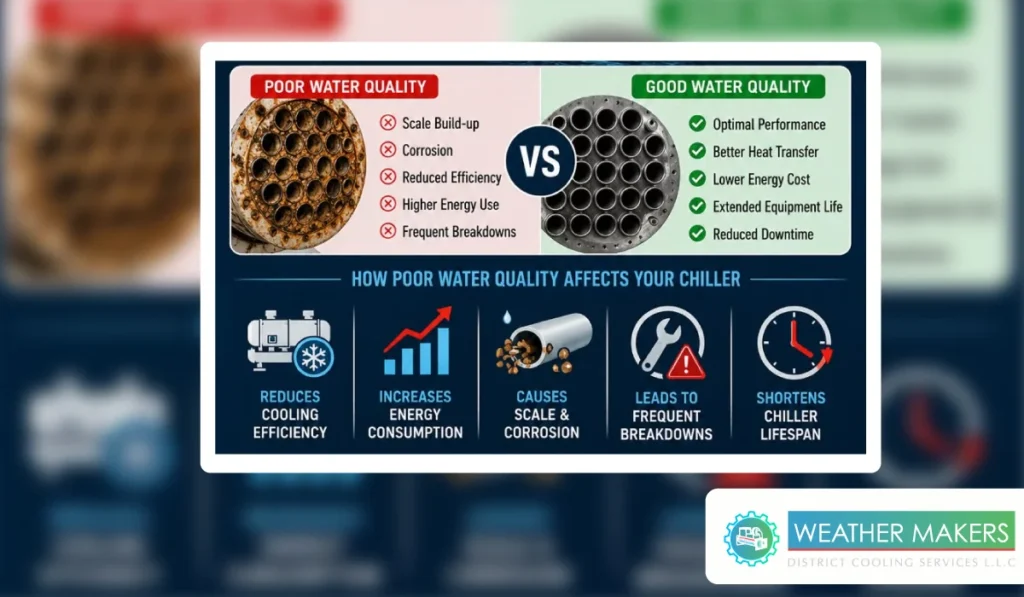
Water quality is also an important part of equipment health, particularly for water-cooled chillers. Hard water can cause scale and mineral deposits on heat-transfer surfaces. Corrosion and fouling can also affect heat transfer and increase operating load. Regular water-quality checks and proper treatment can help control these problems and support longer equipment life.
Conclusion
Chiller maintenance Dubai should include mechanical, water-side, and electrical checks. For water-cooled chillers, water quality is especially important because hard water, scale, corrosion, and fouling can affect heat transfer, efficiency, and equipment life. Electrical conditions should also be checked when required to identify issues that may affect compressors, motors, and controls.
For facilities that depend on continuous cooling, water quality, equipment condition, and electrical performance should all be considered as part of the overall maintenance strategy. Early detection is easier to manage than a major equipment failure.
Weather Makers District Cooling Services LLC provides reliable chiller inspection, maintenance, and repair solutions to help protect your equipment and maintain consistent cooling performance.
Frequently Asked Questions
How does hard water affect a water-cooled chiller?
Hard water can cause scale and mineral deposits on heat-transfer surfaces. This can reduce heat-transfer efficiency and increase the load on the chiller.
How often should electrical checks be performed?
The electrical test should be incorporated as part of the routine maintenance work. This would depend on the condition of the equipment and its usage hours, as recommended by the manufacturer.
How can chiller maintenance help extend equipment life?
Routine maintenance helps detect any electrical or mechanical problems early enough before they become a serious issue. The maintenance will also ensure that the chiller operates under acceptable conditions.


[…] chiller maintenance Dubai services can help facilities keep equipment records organised and identify developing concerns. The […]
[…] Chiller plant maintenance should cover the complete plant rather than focusing on one machine. Pumps, valves, sensors, controls, cooling equipment, and heat transfer surfaces all affect efficiency. […]
[…] chiller maintenance checklist can help identify the components that require regular inspection. It can also help designers […]