
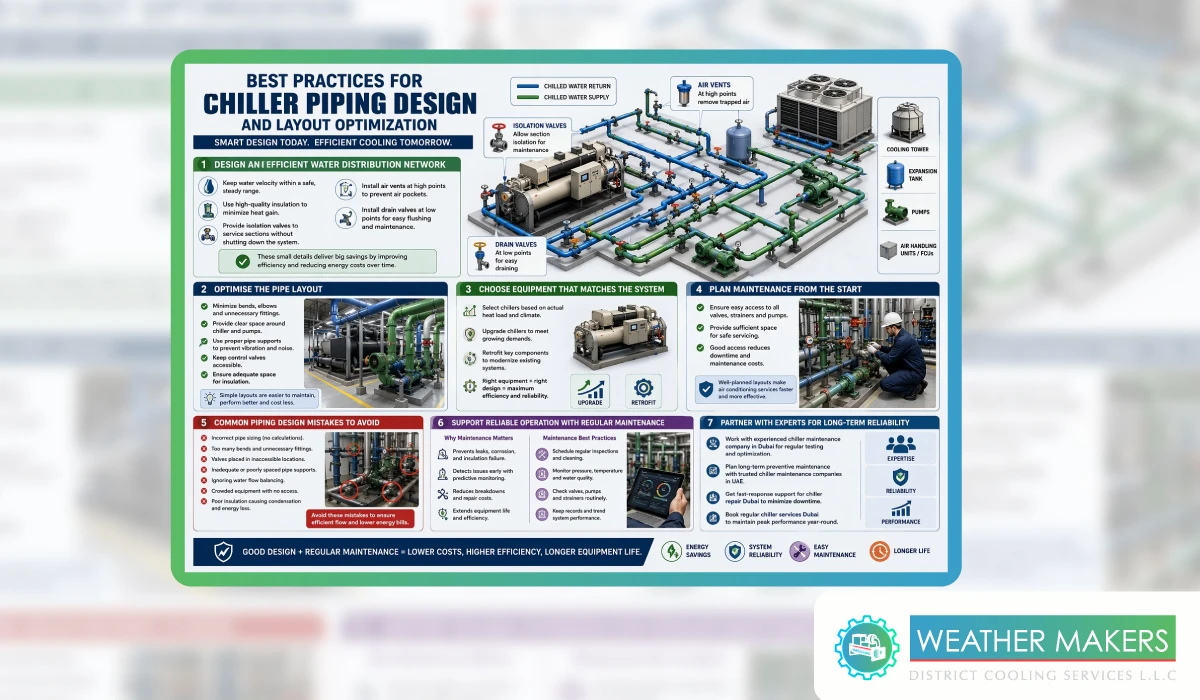
Chiller piping design is easily the most critical factor when it comes to the real-world performance of your cooling system. You could spend a fortune on the most high-tech chiller on the market, but if your piping network is messy or poorly planned, you are basically throwing that money away. A smart, well-engineered layout keeps water moving smoothly, holds temperatures steady, and stops your energy bills from going through the roof. It also means your maintenance crew won’t have to struggle when doing routine checks or upgrading parts down the road. Getting this design right on day one saves you from constant headaches, lowers your monthly bills, and adds years of life to your entire cooling plant.
Why Proper Piping Design Matters
Think of your pipes as the veins of your building’s AC system. They route cold water back and forth between your chiller, the pumps, and all the cooling units. When this layout is poorly planned, you get uneven water flow, high pressure drops, and pumps that have to work overtime just to keep up.
A smooth, well-thought-out piping system gives you some immediate wins:
- Your cooling units actually work the way they are supposed to.
- You stop wasting power and money.
- Water flows evenly to every single room.
- You prevent pressure drops that wear out your pumps.
- Routine servicing becomes incredibly easy.
- Your expensive equipment lasts much longer.
The best part of getting a professional chiller plant piping design done early is that it leaves room for your building to grow. If you need to expand later, you can boost your cooling capacity without having to rip out and replace all your existing pipes.
Chiller Piping Design Best Practices
Every building has its own quirks, but a few basic design rules never change. No matter the size of your project, keeping these tips in mind will save you a lot of trouble.
Maintain Balanced Water Flow
To get consistent cooling on every floor, you have to balance the water flow. This basically means making sure every single unit gets its fair share of water without starving other parts of the system or causing pressure spikes.
Why is balancing so important?
- It helps you keep indoor temperatures exactly where you want them.
- It takes the strain off your main pumps.
- It stops those annoying hot and cold spots in different offices.
- It keeps the entire system running at peak efficiency.
Don’t guess here. Make sure your team actually measures and tests the water balance before wrapping up the installation.
Select the Correct Pipe Size
Picking your chiller pipe sizing is all about managing water speed. If your pipes are too skinny, the water has to squeeze through, creating a ton of friction that forces your pumps to work double-time. On the flip side, going with oversized pipes doesn’t really boost your performance—it just eats up a huge chunk of your budget right at the start. When figuring out the right size, make sure to check:
- The actual cooling load your building needs.
- How many gallons of water need to flow per minute.
- How fast the water is moving inside the pipes.
- Friction and pressure loss calculations.
- Plans for future building expansions.
Taking a bit of extra time to get these numbers right saves you from massive, expensive headaches later.
Design an Efficient Water Distribution Network
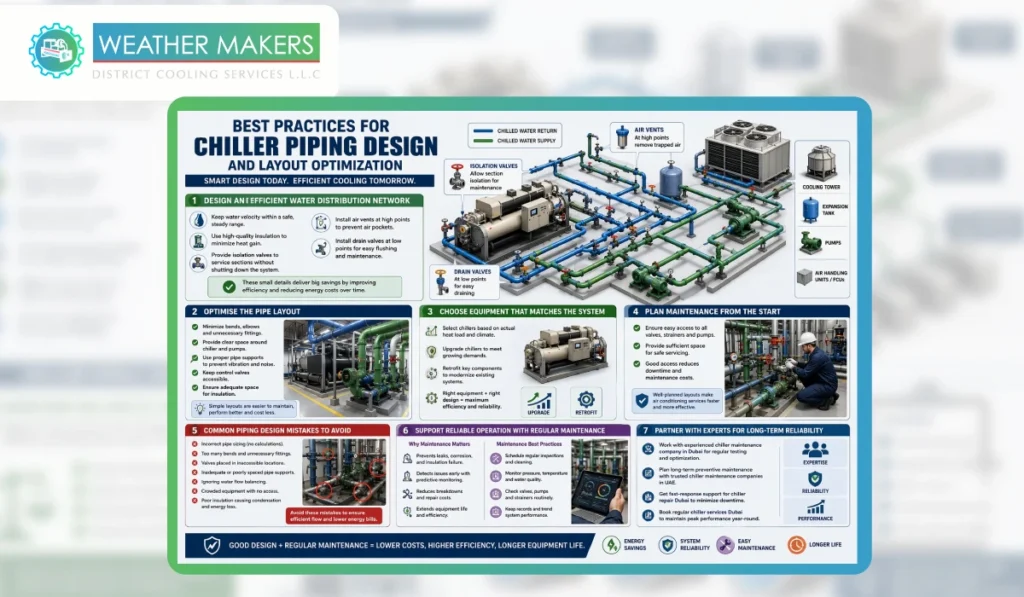
A good water distribution network is all about keeping things moving with as little struggle as possible. You want a clean loop that circulates chilled water smoothly throughout the property.
To build a system that works, engineers should:
- Don’t let the water rush or drag; keep its speed at a safe, steady pace.
- Wrap those pipes in top-tier insulation to stop cold air from slipping away.
- Throw in plenty of isolation valves so you can work on one section without turning off the AC for the whole building.
- Put air vents at the highest spots to keep trapped air from blocking the flow.
- Install drain valves at the lowest points so flushing the system is a breeze.
You might think these are just tiny details, but honestly, they make a world of difference. Over the years, these little adjustments add up to massive savings on your power bills.
Optimise the Pipe Layout
An organized, chiller water piping layout is a total lifesaver for any maintenance team. Try to run your pipes as directly as possible without unnecessary loops. Most importantly, leave enough physical breathing room around your equipment so technicians can actually get in there, move around, and do their jobs comfortably without struggling.
To keep your layout clean:
- Cut down on unnecessary bends, elbows, and extra fittings.
- Leave plenty of elbow room around the chiller and pumps.
- Use solid, reliable supports to stop pipes from vibrating and making noise.
- Keep your control valves right where you can reach them.
- Make sure there is a wide enough gap to insulate the pipes properly.
Simple layouts are always easier to look after, run better, and cost far less to maintain than complex, crowded systems.
Choose Equipment That Matches the System
Your piping network can only do so much it really depends on the hardware you connect to it. When in the case of chiller selection, look at your actual heat load numbers and the climate it has to face, rather than just grabbing the biggest, most expensive model on the shelf.
As your cooling needs grow over the years, you don’t always have to throw everything out and start from scratch. A lot of times, a simple chiller upgrade is more than enough to give your setup a modern boost. In other cases, a targeted chiller retrofit lets you upgrade key parts of your existing system while keeping your original pipes perfectly intact.
Maintenance Planning Should Be Included from the Start
Never approve a design without thinking about how someone is going to fix it. If a valve or pump is buried behind a wall of other pipes, it is going to take twice as long to service and that means higher repair bills. Designers need to leave clear, safe access paths to every strainer and valve from day one.
When your piping layout makes sense, your regular air conditioning services go much faster, you experience way less downtime, and technicians can actually do a thorough job.
Common Piping Design Mistakes to Avoid
A lot of cooling systems run poorly because of simple, preventable mistakes made during the drafting phase. Knowing what to watch out for can save you a lot of money.
Keep an eye out for these common errors:
- Skipping the math and just guessing the pipe sizes.
- Using too many unnecessary bends and fittings.
- Placing valves where nobody can reach them.
- Using weak or poorly spaced pipe hangers.
- Forgetting to balance the water flow.
- Cramming machines so close together that you can’t walk between them.
- Rushing the insulation job, which leads to dripping pipes and energy loss.
Avoiding these mistakes keeps your water flowing perfectly and stops your power bills from climbing.
Support Reliable Operation with Regular Maintenance
No matter how flawless your piping layout is, it won’t stay perfect forever without some hands-on care. That’s where setting up a solid schedule for Industrial Chiller Maintenance comes in. It’s your best defense against those sneaky leaks, early signs of rust, or peeling insulation that can quietly wreck your system’s efficiency over time.
Instead of just waiting around for something to break and halt your operations, smart teams now rely on predictive chiller maintenance. By keeping an eye on actual daily running data, you can catch performance drops early. This means you can easily schedule minor fixes during normal, planned shutdowns without any stress.
Work with Experienced Specialists
Piping networks that get professional care last much longer and run far more efficiently. Partnering with a reliable chiller maintenance company in Dubai ensures that your water flow is regularly tested, valves are checked, and your entire system is optimized for the local weather.
Plan for Long-Term Reliability
Many businesses team up with established chiller maintenance companies in UAE to set up long-term preventive care plans. Running regular pressure checks, monitoring the water chemistry, and giving the whole system a routine tune-up is the best way to keep your bills predictable and stop sudden breakdowns.
Respond Quickly to Unexpected Problems
But let’s be real even with the best care, mechanical parts eventually give up. When that happens, you need a quick-response team you can count on for chiller repair Dubai. Getting fast, reliable help keeps your building comfortable and stops a small, cheap-to-fix issue from destroying your incredibly expensive compressor.
Maintain Peak System Performance
Booking regular chiller services Dubai is the easiest way to make sure your flow rates are healthy and your piping parts are holding up under pressure all year long.
Look at your routine chiller preventive maintenance as a shield for your entire HVAC investment. When you actively scan for tiny leaks, normal wear and tear, or early blockages before they grow into real problems, you keep your running costs low. It’s simply the easiest way to make sure your system continues to run smoothly for decades to come.
Conclusion
Wrapping things up, everything comes down to a smart chiller piping design layout. If you size your pipes correctly, keep the water balanced, and make sure the setup is easy to access, you are going to save a massive amount of money on power and sudden repairs. Focus on getting the design right from the very beginning, and you will enjoy a quiet, trouble-free cooling system for a long, long time.
For professional help with your chiller system, the team at Weather Makers has got you covered.
Frequently Asked Questions
Why is chiller piping design important?
Because it is the foundation of your entire setup. A clean, smart layout ensures water flows effortlessly, stops your energy bills from spiking, and keeps your chiller from working itself to death.
How does proper pipe sizing improve cooling performance?
It keeps the water moving at just the right speed. When the pipes are the perfect size, your pumps don’t have to battle heavy friction, which takes the strain off your equipment and saves power.
How often should a chiller piping system be inspected?
Honestly, you should have your technicians check the pipes during every routine service call. Spotting a bit of rust, a tiny drip, or damaged insulation early on stops a small issue from turning into a massive, budget-breaking repair later.




No comment