Chilled water systems are an important part of modern cooling solutions used in commercial and industrial facilities. They provide consistent cooling by circulating chilled water between the chiller and air handling units. When designed and maintained correctly, these systems deliver efficient performance with controlled energy consumption.
However, performance problems can occur when the temperature difference between supply and return water becomes lower than the designed value. This condition is known as delta T syndrome in chilled water systems. It reduces cooling efficiency, increases energy usage, and places additional stress on major components. Understanding the causes and solutions helps facility teams maintain reliable system operation.
What Is Delta-T Syndrome?
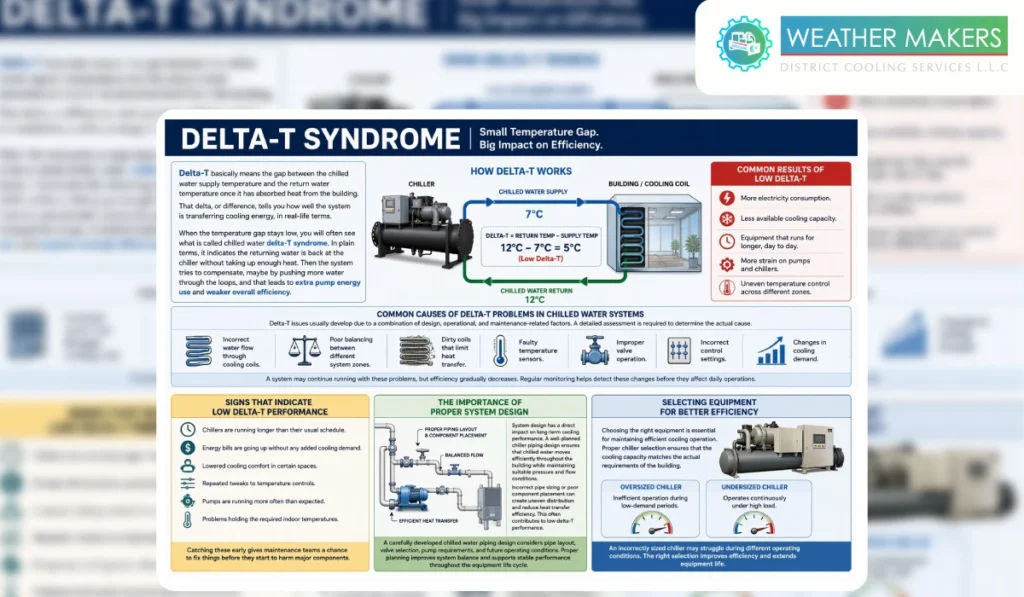
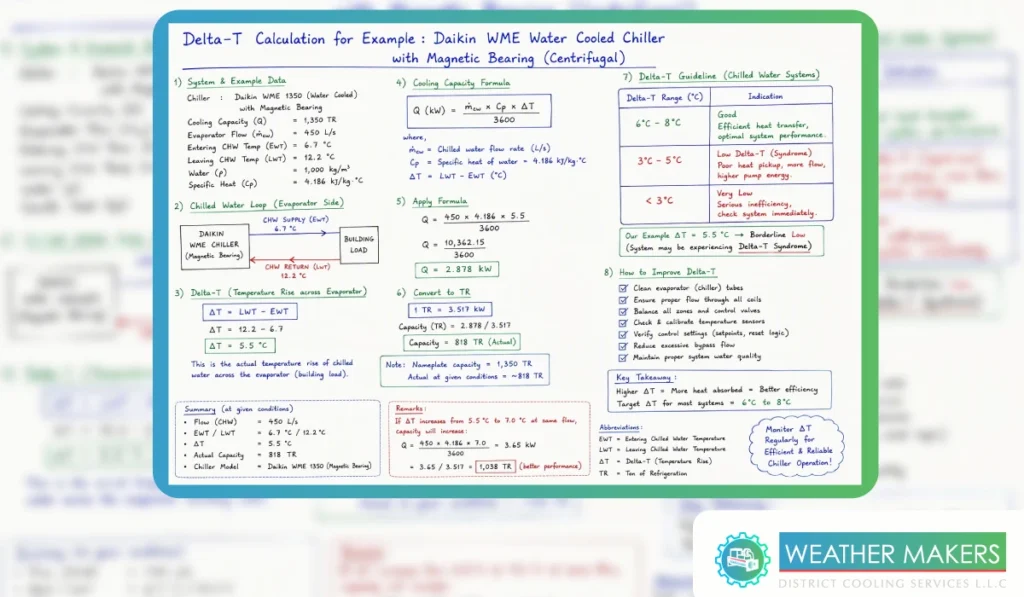
Delta-T basically means the gap between the chilled water supply temperature and the return water temperature once it has absorbed heat from the building. That delta, or difference, tells you how well the system is transferring cooling energy, in real-life terms.
When the temperature gap stays low, you will often see what is called chilled water delta-T syndrome. In plain terms, it indicates the returning water is back at the chiller without taking up enough heat. Then the system tries to compensate, maybe by pushing more water through the loops, and that leads to extra pump energy use and weaker overall efficiency.
Some common results you may notice with low delta-T are, things like:
- More electricity consumption.
- Less available cooling capacity.
- Equipment that runs for longer, day to day.
- More strain on pumps and chillers.
- Uneven temperature control across different zones.
If this is spotted early, it can stop avoidable operating costs, and it also supports dependable equipment performance.
Common Causes of Delta-T Problems in Chilled Water Systems
Delta-T issues usually develop due to a combination of design, operational, and maintenance-related factors. A detailed assessment is required to determine the actual cause.
Some common reasons include:
- Incorrect water flow through cooling coils.
- Poor balancing between different system zones.
- Dirty coils that limit heat transfer.
- Faulty temperature sensors.
- Improper valve operation.
- Incorrect control settings.
- Changes in cooling demand.
A system may continue running with these problems, but efficiency gradually decreases. Regular monitoring helps detect these changes before they affect daily operations.
The Importance of Proper System Design
System design has a direct impact on long-term cooling performance. A well-planned chiller piping design ensures that chilled water moves efficiently throughout the building while maintaining suitable pressure and flow conditions.
Incorrect pipe sizing or poor component placement can create uneven distribution and reduce heat transfer efficiency. This often contributes to low delta-T performance.
A carefully developed chilled water piping design considers pipe layout, valve selection, pump requirements, and future operating conditions. Proper planning improves system balance and supports stable performance throughout the equipment life cycle.
Signs That Indicate Low Delta-T Performance
Facility teams should keep an eye on system behaviour regularly. Even small shifts in performance can point toward problems that are starting to form, before they become obvious.
Some common warning signs are :
- Chillers are running longer than their usual schedule.
- Energy bills are going up without any added cooling demand.
- Lowered cooling comfort in certain spaces.
- Repeated tweaks to temperature controls.
- Pumps are running more often than expected.
- Problems holding the required indoor temperatures.
Catching these early gives maintenance teams a chance to fix things before they start to harm major components.
Selecting Equipment for Better Efficiency
Choosing the right equipment is essential for maintaining efficient cooling operation. Proper chiller selection ensures that the cooling capacity matches the actual requirements of the building.
An incorrectly sized chiller may struggle during different operating conditions. Oversized equipment can experience inefficient operation during low-demand periods, while undersized equipment may operate continuously under high load.
For older installations, improving efficiency may not always require complete replacement. A planned chiller upgrade can improve performance by updating outdated components, controls, or operating systems.
In some cases, a chiller retrofit provides a practical solution. This approach allows facilities to improve system efficiency while continuing to use suitable existing infrastructure.
Maintenance Practices That Support Better Delta-T Performance
Regular maintenance is one of the most effective ways to prevent delta-T issues. A properly maintained cooling system can operate more efficiently, maintain stable temperatures, and reduce the risk of unexpected failures.
Professional air conditioning services help identify problems related to cooling performance, airflow, controls, and equipment condition. Regular inspections also allow technicians to correct minor issues before they affect the complete system.
For large cooling applications, industrial chiller maintenance focuses on checking critical components such as compressors, pumps, heat exchangers, and control systems. These inspections help maintain reliable operation and improve equipment lifespan.
Modern facilities are also adopting advanced monitoring methods. Predictive chiller maintenance uses performance data to identify early signs of equipment problems. This approach allows maintenance teams to plan corrective actions before failures occur.
Steps to Prevent Delta-T Problems
A planned maintenance approach helps maintain consistent system performance and reduce the risk of efficiency losses. Facility teams can reduce delta-T problems by using routine inspection and watchful monitoring practices.
Some important preventive measures include:
- Checking supply and return water temperatures.
- Inspecting control valves as well as sensors.
- Cleaning filters, plus cooling coils.
- Reviewing the water flow balance and then confirming the results.
- Keeping an eye on pump performance.
- Checking system controls regularly.
- Maintaining up-to-date operating records.
These habits make it easier to spot efficiency losses early, and they back stronger choices later.
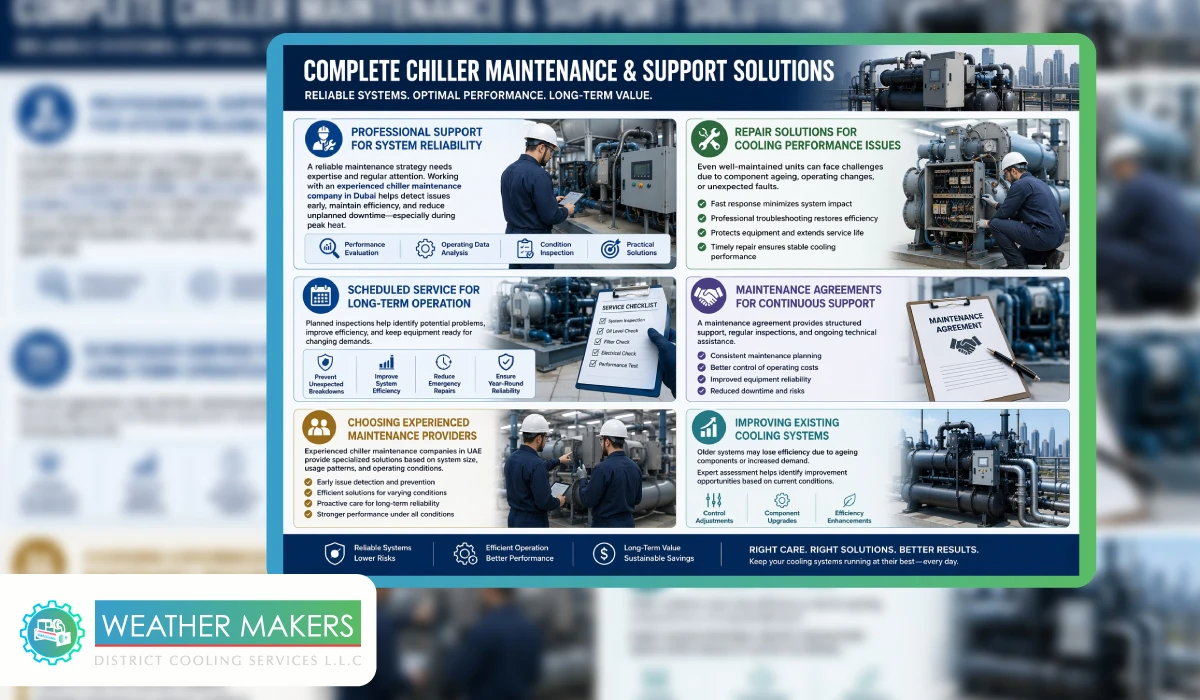
Professional Support for System Reliability
A reliable maintenance strategy really does need technical knowledge and regular attention, even when everything seems fine. Working with an experienced chiller maintenance company in Dubai can help facilities spot performance issues earlier, keep the equipment running efficiently, and reduce unplanned downtime, especially during peak heat. Professional teams can evaluate system conditions, inspect real operating data, and propose appropriate solutions based on what the equipment is doing in practice.
Repair Solutions for Cooling Performance Issues
Even well-maintained units can still face challenges because of component ageing, changing operating conditions, or unexpected faults. Fast response matters because a small malfunction can quietly affect other areas of the cooling system.
Most importantly, the right troubleshooting and repair workflow helps restore stable temperature control, protect efficiency, and extend equipment life. When cooling performance is affected by mechanical problems, professional chiller repair Dubai can help restore normal operation and protect important equipment components.
Timely repair work reduces downtime and helps maintain consistent cooling performance throughout the facility.
Scheduled Service for Long-Term Operation
Regular servicing supports reliable system operation throughout the year. Planned inspections help identify developing problems, improve efficiency, and maintain equipment performance.
Many facilities schedule chiller services Dubai to ensure their cooling equipment remains ready for changing operational demands while reducing the risk of unexpected failures.
A consistent service plan also helps reduce emergency repair requirements, and it boosts the overall dependability of the cooling system, while keeping performance stable.
Maintenance Agreements for Continuous Support
For facilities that need regular technical assistance, a structured maintenance agreement provides a more organised and consistent approach to maintenance.
A professional chiller AMC company in Dubai can offer scheduled inspections, maintenance planning, and ongoing technical support for your cooling system.
With this method, facility teams can manage equipment condition with better clarity and maintain stronger control over operating costs, even when usage changes. Most importantly, it helps keep everything running within safe parameters and reduces avoidable downtime.
Choosing Experienced Maintenance Providers
Large facilities often need specialised maintenance strategies based on equipment size, usage patterns, operating conditions, and system requirements. Experienced chiller maintenance companies in UAE offer technical solutions that keep performance efficient and improve long-term reliability under varying operating conditions.
Their know-how helps facility teams maintain system efficiency and handle possible issues early so they do not turn into major concerns later. This is not just a reaction; it is proactive care, and it makes day-to-day operations steadier.
Improving Existing Cooling Systems
Older cooling installations may lose efficiency due to ageing components, shifting building requirements, or increased cooling demand. Over time, overall system performance may gradually decline. A detailed performance assessment can help spot where things drag, and also point to better options for improvement.
Experienced chiller companies in Dubai can review existing systems and propose suitable solutions based on today’s operating conditions, not just what was planned before. Improvements might include control adjustments, component upgrades, or efficiency-focused modifications to improve overall performance.
The right approach depends on how the system is actually doing, what the operating needs are right now, and what future requirements look like.
Conclusion
Delta-T problems can reduce the efficiency and reliability of chilled water systems when they are not addressed properly. Low temperature differences often indicate that the system is not transferring heat effectively, which can increase energy consumption and operating costs.
Proper design, suitable equipment selection, regular maintenance, and timely repairs all contribute to better system performance. By monitoring system operation and correcting issues early, facilities can improve cooling efficiency and extend equipment service life.
A well-managed cooling system provides dependable performance, lower operating costs, and improved comfort for building occupants.
Keep your chilled water system operating at peak efficiency with expert maintenance, repair, and inspection services from Weathermakers.
Contact our team today to ensure reliable, long-term cooling performance.
Frequently Asked Questions
What causes delta-T problems in cooling systems?
Delta-T problems are usually caused by poor water flow balance, dirty components, incorrect controls, or reduced heat transfer efficiency.
How do chilled water systems improve cooling efficiency?
Chilled water systems improve efficiency by using controlled water circulation to transfer heat effectively and maintain stable cooling performance when properly designed and maintained.
Can regular maintenance prevent delta-T issues?
Yes. Regular inspections, system balancing, and performance monitoring can help identify problems early and maintain efficient operation.

No comment